
A hospital pharmacy safety review identifies recurring near misses where staff nearly select the wrong drug from pairs of medications with similar names, such as hydralazine and hydroxyzine, during order entry and bin picking. Which system-level safeguard best reduces this hazard?
Select an answer to reveal the explanation.
Short Explanation
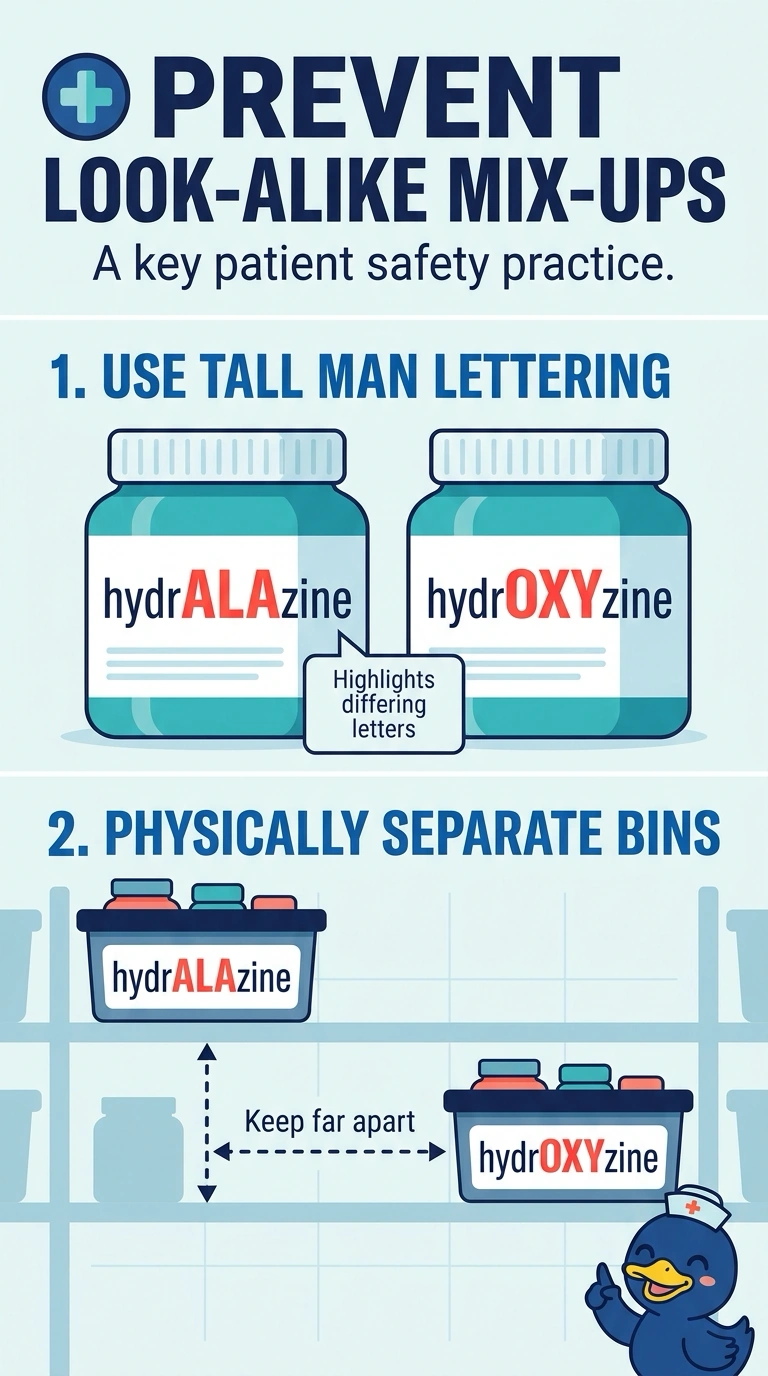
Putting medications with nearly identical names side by side and relying on people to read more carefully creates a visual trap, especially during busy shifts. Reminders alone can fade when work gets hectic. You reduce selection errors by using Tall Man lettering and physically separating look-alike medication bins.
Full Explanation
To reduce confusion between similar drug names, use Tall Man lettering and physically separate look-alike medication bins in electronic order-entry screens and physical storage. Mixed-case Tall Man lettering highlights the differing syllables of look-alike, sound-alike pairs, while separation breaks the habit of reaching into an adjacent bin by muscle memory. Monthly emails reminding nurses and technicians to read labels twice rely on human vigilance, one of the weakest safety interventions under fatigue or time pressure. Storing all high-use medications alphabetically by generic name in adjacent bins can worsen the hazard by placing similarly spelled drugs right next to each other. Handwriting full drug names on supplemental paper stickers adds manual workload and legibility risks without fixing the underlying selection environment. Exam caveat: pair Tall Man lettering and bin separation with barcode scanning at dispensing and bedside administration for layered defense. Practical check: audit automated dispensing cabinets and pharmacy shelves quarterly against the facility's current look-alike, sound-alike medication list.
Prefer to study offline? Printable PDF study book + test engine ($7.50, unofficial). These questions stay free here.