
A medical-surgical unit notices that several unexpected cardiopulmonary arrests occurred on night shifts even though vital sign trends showed hours of worsening tachycardia and tachypnea. Nurses report hesitating to call the rapid response team because the covering physician prefers to be paged first and sometimes criticizes unnecessary activations. Which safety system improvement best addresses this failure-to-rescue pattern?
Select an answer to reveal the explanation.
Short Explanation
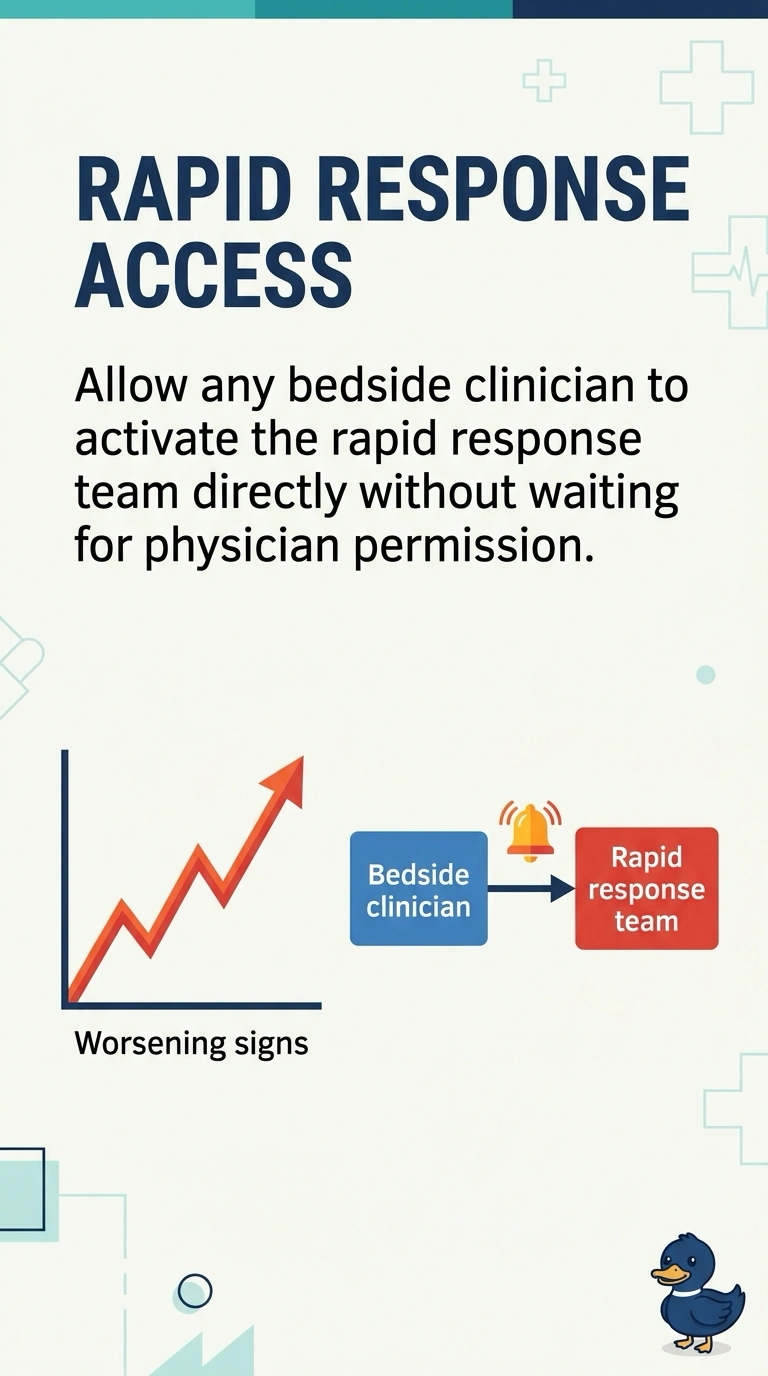
When a patient is sliding toward arrest, asking permission to call for help wastes minutes you do not have. The trap is adding extra approval steps or waiting for retrospective reviews when hierarchical friction is already delaying rescue. Empowering bedside staff to trigger the rapid response team directly removes that barrier.
Full Explanation
Early recognition and rapid escalation are the core mechanisms of a reliable rapid response system, and hierarchical fear is a classic barrier to timely intervention. Leadership should Allow any bedside clinician to activate the rapid response team directly without waiting for physician permission so deteriorating patients receive immediate critical-care assessment without gatekeeping delays. Choosing to Require two abnormal vital sign measurements spaced two hours apart before paging the covering physician builds dangerous delay into an already deteriorating clinical picture. Choosing to Restrict rapid response team activations to charge nurses who have completed critical care certification courses narrows access to rescue resources during busy shifts when the bedside nurse notices subtle decline first. Choosing to Schedule quarterly morbidity and mortality conferences to review cardiac arrest survival outcomes after each quarter ends is purely retrospective and does not fix real-time escalation on night shifts. A key caveat is that leadership must also coach physicians on non-punitive responses to false-positive activations so staff are not criticized for calling early. As an operational check, track the ratio of rapid response calls to non-ICU cardiac arrests monthly to verify earlier escalation.
Prefer to study offline? Printable PDF study book + test engine ($7.50, unofficial). These questions stay free here.