
During closure of an abdominal laparotomy, the circulating nurse and scrub technician identify a missing laparotomy sponge on the final count, and the surgeon suggests closing the incision because the wound looks clear. Which safety protocol should the surgical team follow?
Select an answer to reveal the explanation.
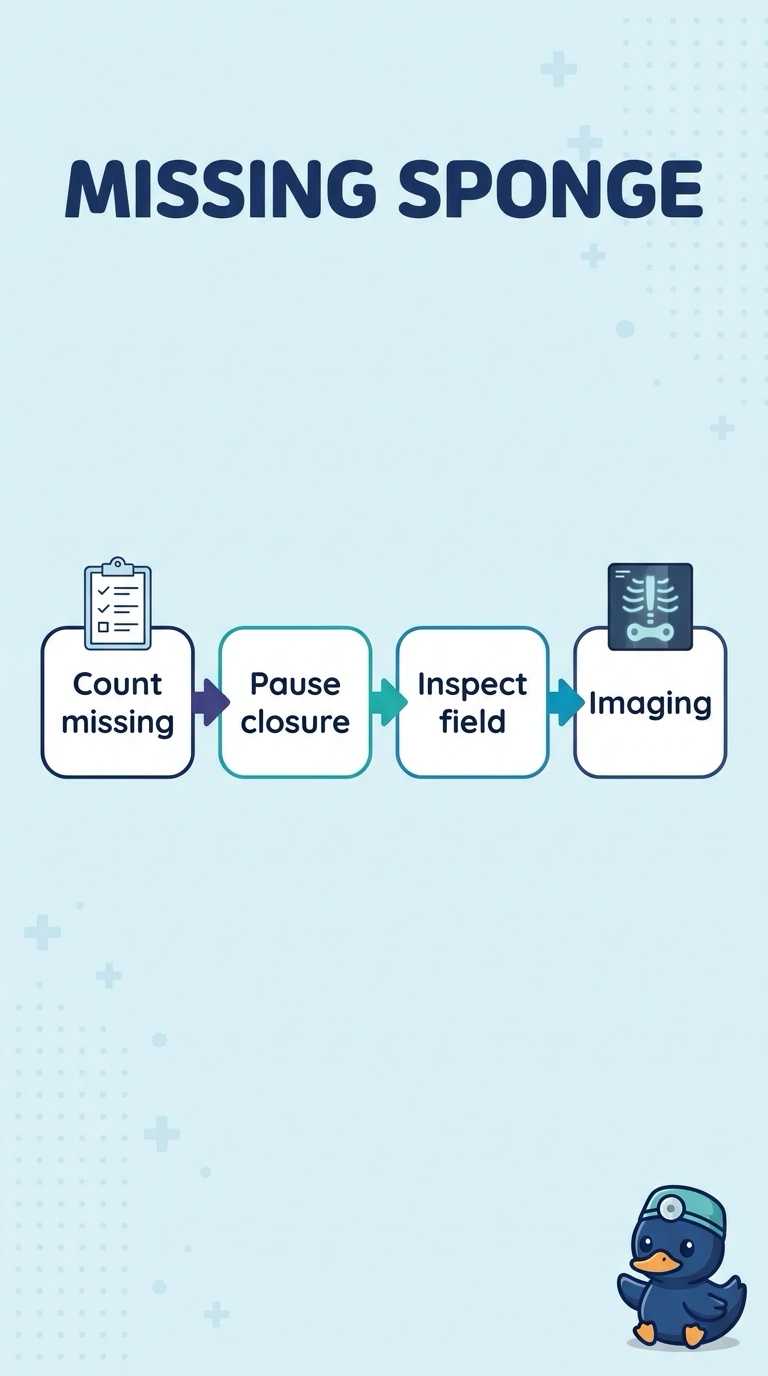
Short Explanation
Think of a missing sponge count like losing your car keys before locking the house—you never walk away hoping they turn up later. Closing anyway and ordering a scan in recovery is a classic trap that turns a preventable catch into a second operation. When a surgical count does not reconcile, you must pause, search the field, and image on the table.
Full Explanation
Surgical count discrepancies require immediate intraoperative resolution because retained surgical items are preventable serious safety events. Choosing to Pause closure, inspect the surgical field, and obtain intraoperative imaging ensures the team halts wound closure, performs a methodical wound and room search, and uses radiography before the patient leaves the operating room. Opting to Close the incision and order a postoperative abdominal radiograph in the recovery room delays detection, breaks sterile closure, and forces a risky return to surgery if a sponge is found. Asking the surgeon to palpate the wound and close if no sponge is felt is unsafe because palpation alone cannot reliably exclude a retained sponge and omits the required complete recount, methodical search, and intraoperative imaging. Deciding to Document the discrepancy in the operative note and monitor the patient for infection leaves a potential foreign body inside the patient, risking sepsis, perforation, and reoperation. As a caveat, intraoperative radiographs can miss non-radiopaque items or suffer from positioning blind spots, so visual inspection and team communication remain essential even when imaging is negative. For an operational check, audit surgical count discrepancy logs quarterly to verify that unresolved counts consistently trigger intraoperative imaging and structured debriefings.
Prefer to study offline? Printable PDF study book + test engine ($7.50, unofficial). These questions stay free here.