
During a root cause analysis of a delayed sepsis diagnosis in an emergency department, reviewers find the initial clinician anchored on a benign viral illness diagnosis and missed worsening vital signs recorded by nursing. Which safety intervention best addresses this cognitive vulnerability?
Select an answer to reveal the explanation.
Short Explanation
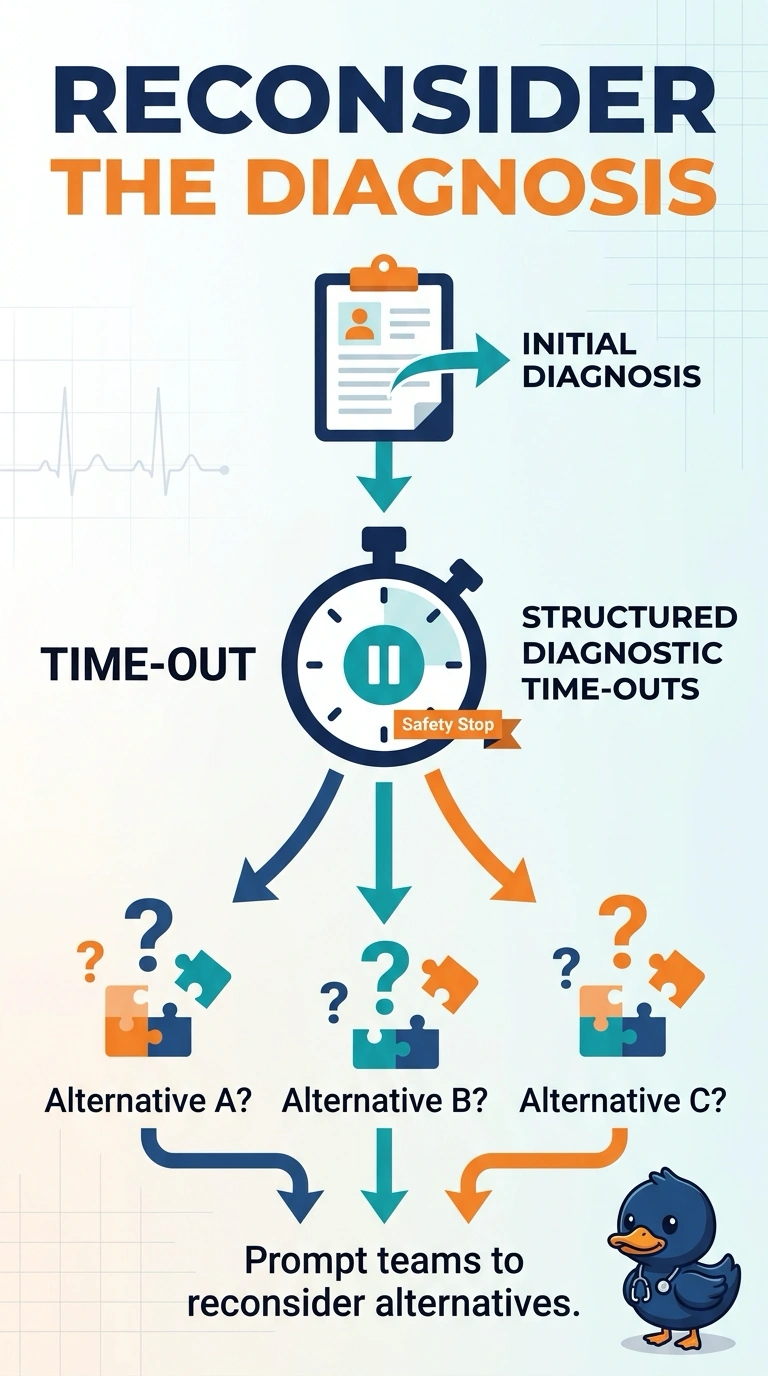
Once a clinician locks onto an early diagnosis, your brain naturally filters out clues that do not fit the story. A structured diagnostic time-out forces a pause to test the working theory against fresh vital signs before harm unfolds. The trap is blaming the individual or adding retrospective paperwork instead of interrupting cognitive bias in real time.
Full Explanation
Implementing structured diagnostic time-outs that prompt teams to reconsider alternatives directly counters anchoring bias and premature closure while the patient is still in the emergency department. Requiring clinicians and nurses to pause when vital signs worsen or clinical trajectories diverge encourages team members to ask what else could explain the presentation. Requiring clinicians to complete an annual online module on sepsis billing documentation targets coding specificity rather than real-time clinical reasoning under time pressure. Issuing a formal written warning to the clinician who documented the initial viral impression punishes a common human cognitive error and discourages open reporting of diagnostic near misses. Adding a mandatory retrospective chart review by risk management thirty days after discharge identifies errors long after treatment windows have closed and cannot protect the patient at the bedside. As a caveat, diagnostic time-outs work best when triggered by objective criteria such as abnormal vital-sign trends so teams do not experience pause fatigue on routine visits. For an operational check, track the percentage of patients with escalating early warning scores who receive a documented team reassessment within one hour.
Prefer to study offline? Printable PDF study book + test engine ($7.50, unofficial). These questions stay free here.