
A hospital relies solely on its voluntary incident reporting system to monitor inpatient medication harm, yet monthly adverse drug event rates remain near zero despite frequent pharmacy interventions on the wards. How should the patient safety officer uncover missed harm?
Select an answer to reveal the explanation.
Short Explanation
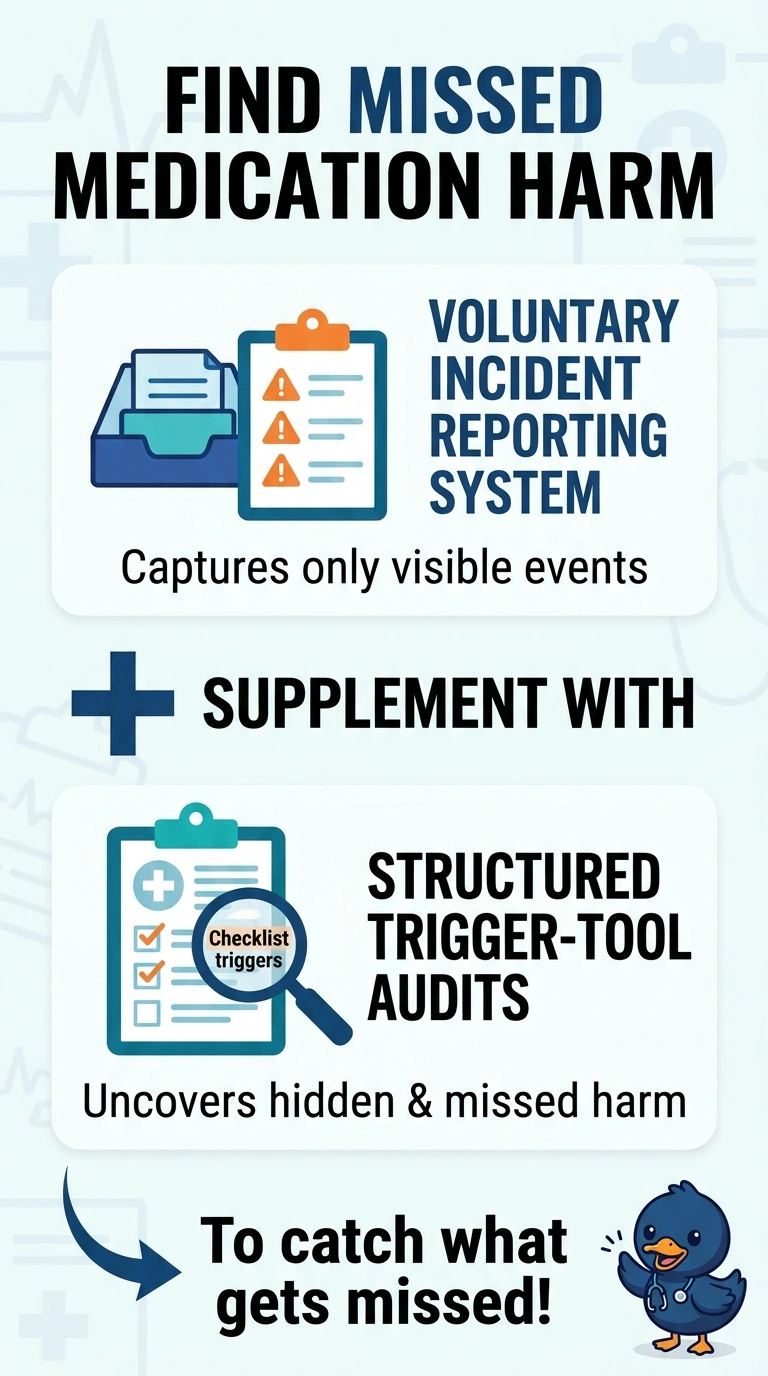
Voluntary incident reports are like the tip of an iceberg—they only show what staff have time and courage to flag. The trap is mistaking zero reports for zero harm, so you should actively scan records with objective clinical triggers to see what is really happening.
Full Explanation
Voluntary safety reporting captures only a small fraction of actual patient harm because frontline clinicians often miss subtle adverse events or lack time to file reports during busy shifts. Choosing to Supplement voluntary reporting with structured trigger-tool audits—such as scanning sampled records for rescue medications like naloxone, abrupt medication stops, or abnormal laboratory alerts—provides a reliable, objective measure of true harm rates over time. By contrast, to Lengthen the incident-report form so each submission captures more narrative detail increases burden and deters reporting, improving detail on the few submitted reports while leaving undetected harm still hidden. Choosing to Benchmark the monthly voluntary report count against a peer hospital's reporting volume is invalid because both counts reflect reporting culture and willingness to report rather than true harm incidence, so comparison cannot reveal missed events. Meanwhile, to Discipline unit managers whose monthly incident counts stay at zero undermines Just Culture and encourages gaming or trivial submissions rather than systematic detection. As a caveat, a trigger itself is only a screening clue rather than confirmed harm; trained reviewers must examine the chart to verify whether an adverse event occurred. Operationally, sample a consistent set of discharged charts each month for trigger review and trend confirmed harm rates per 1,000 patient-days.
Prefer to study offline? Printable PDF study book + test engine ($7.50, unofficial). These questions stay free here.