
A pediatric oncology clinic plans to launch a new high-alert intravenous chemotherapy infusion workflow and wants to identify potential failure points before treating any patients. Which safety tool should the quality team use first?
Select an answer to reveal the explanation.
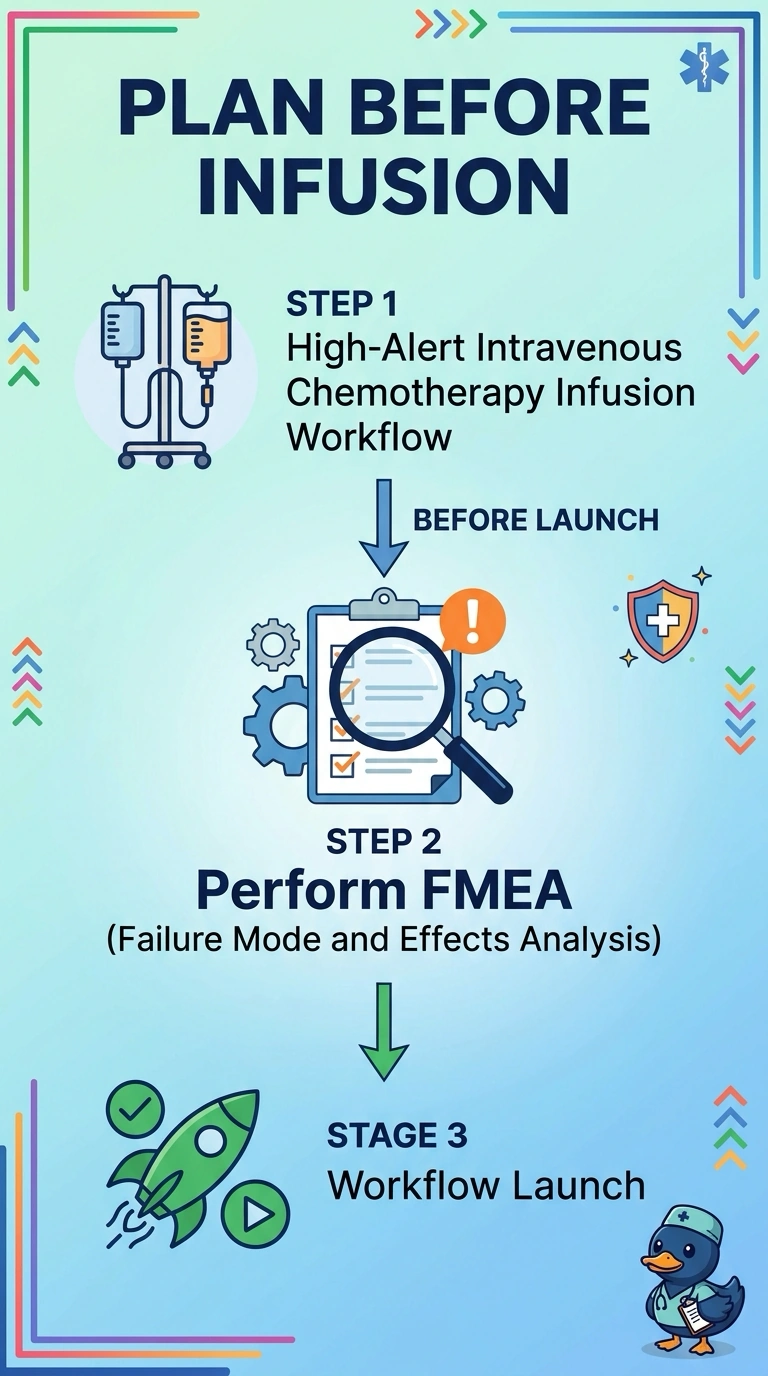
Short Explanation
Think of proactive risk assessment like inspecting a bridge before the first truck ever crosses it. If you wait for an adverse event before analyzing a high-alert workflow, you put patients in harm's way unnecessarily. Failure Mode and Effects Analysis lets your team spot and mitigate hazards before launch.
Full Explanation
Performing a Failure Mode and Effects Analysis before workflow launch is the right choice because FMEA is a proactive, team-based risk assessment method that maps each step of a new process, identifies how a step could fail, and prioritizes safeguards based on severity, occurrence, and detectability before any patient is exposed. By contrast, Conducting a retrospective Root Cause Analysis on prior infusion-pump orders is reactive and designed to investigate an adverse event or near miss after it has already occurred rather than stress-testing a brand-new workflow. Implementing a mandatory incident reporting campaign after workflow go-live relies on staff detecting and reporting problems only after patients are already in the new process, which leaves early adopters vulnerable to preventable harm. Auditing completed medication administration records for dosing variances is also a post-hoc review that measures past compliance rather than anticipating upstream design flaws. Caveat: FMEA scoring relies on team estimates, so high-severity failure modes deserve mitigation even when their overall risk priority number appears moderate. Operational check: convene pharmacists, nurses, and prescribers to walk through the new infusion steps, score failure modes, and verify that engineered safeguards are built into the electronic order set prior to go-live.
Prefer to study offline? Printable PDF study book + test engine ($7.50, unofficial). These questions stay free here.