
A health system plans to replace all inpatient smart infusion pumps across its facilities and wants to prevent user-interface confusion and programming errors before signing a vendor contract. Which proactive human factors step should the safety team recommend?
Select an answer to reveal the explanation.
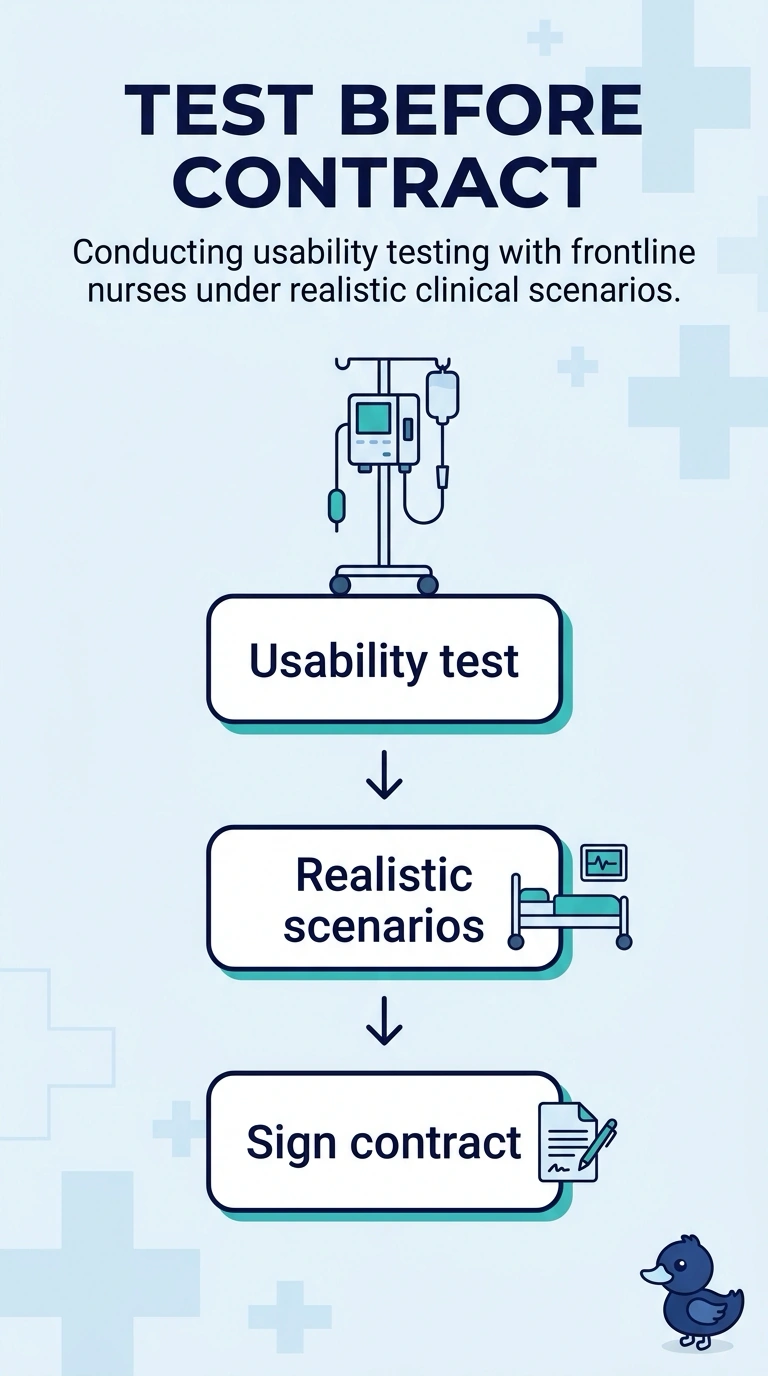
Short Explanation
A glossy vendor demo in a quiet conference room will never tell you how an infusion pump behaves during a chaotic night shift. The trap is buying equipment on price or marketing slides and expecting training paperwork to fix confusing screens later. Put the device in your nurses' hands for realistic usability testing before you sign the contract.
Full Explanation
Human factors engineering recognizes that poorly designed device interfaces invite predictable user errors, especially under time pressure and cognitive load. Choosing "Conducting usability testing with frontline nurses under realistic clinical scenarios" uncovers hidden hazards—such as confusing keypads, unclear alarm tones, or awkward secondary-infusion programming—while the organization still has leverage to choose a safer device or require configuration fixes. Selecting "Evaluating vendor proposals mainly on unit purchase price and warranty length" ignores clinical safety and total lifecycle risk from medication errors. Depending on "Requiring staff to sign an acknowledgment form after the pumps are delivered" is a weak administrative step that cannot overcome flawed ergonomics or confusing software prompts. Trusting "Relying on vendor marketing demonstrations in a conference room for final selection" showcases ideal-case scripted clicks rather than real-world workflow interruptions and lighting conditions. A caveat is that usability testing should include diverse clinician roles, such as float nurses and pharmacists, not just super-users. As an operational check, score each candidate pump using standardized task-completion times and observed programming error rates before final procurement approval.
Prefer to study offline? Printable PDF study book + test engine ($7.50, unofficial). These questions stay free here.