
An adult intensive care unit experienced a near miss when a nurse almost connected an enteral feeding tube to a central venous catheter port because both lines used compatible luer connectors. Which human factors solution provides the strongest long-term barrier against recurrence?
Select an answer to reveal the explanation.
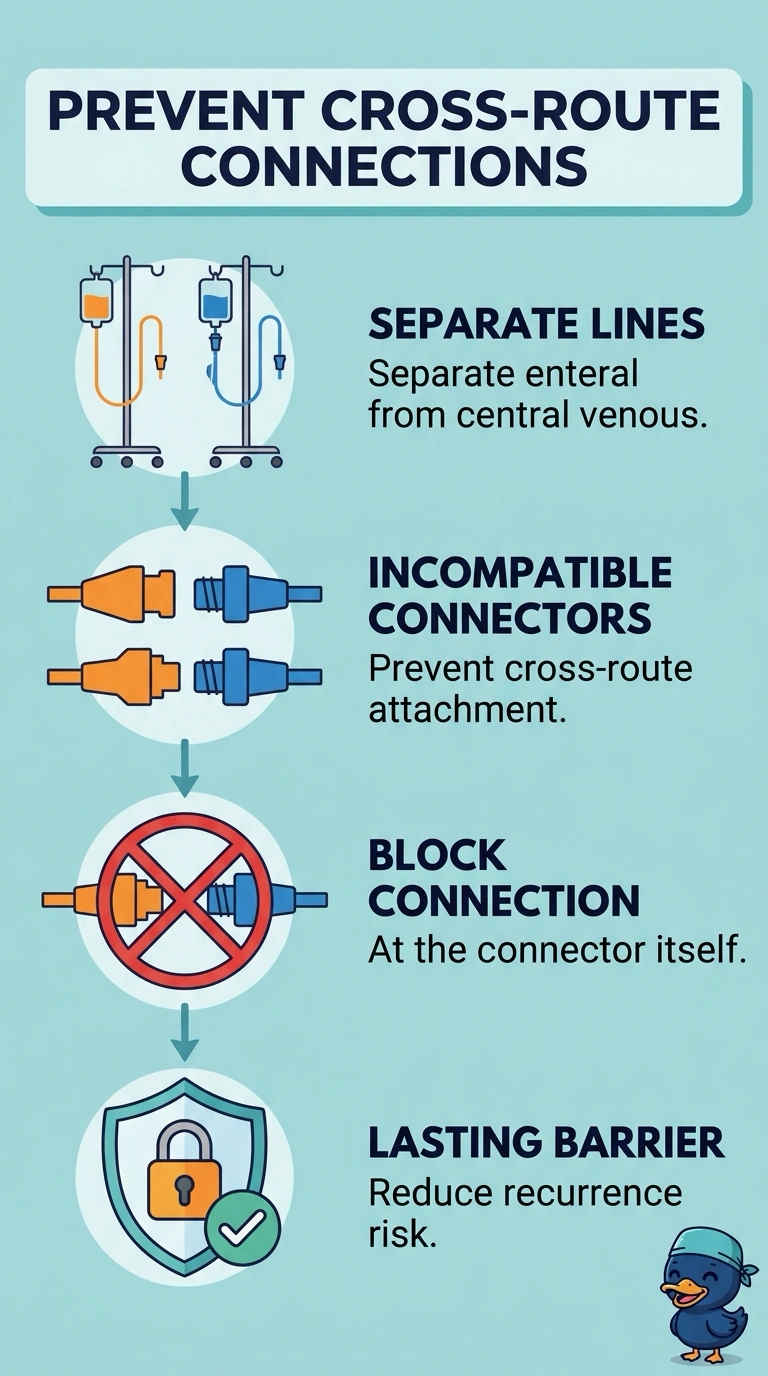
Short Explanation
Warning signs and annual modules rely on tired clinicians never having a bad shift, which is a classic safety trap. In human factors engineering, education and double-checks are weak barriers compared to designing the physical equipment so a wrong connection cannot happen. You get the strongest protection when incompatible connectors make the error impossible.
Full Explanation
Standardizing physically incompatible connectors that prevent cross-route attachment is correct because the human factors hierarchy of effectiveness ranks physical forcing functions and engineered design constraints above administrative controls; when enteral and intravenous connectors cannot mechanically mate, the wrong-route hazard is engineered out of the bedside workflow. Posting laminated warning signs above every bedside infusion pump in the unit is a weak administrative reminder that staff quickly tune out during high-acuity emergencies. Requiring annual online nursing education modules on tubing verification steps depends on memory and vigilance under fatigue rather than fixing the underlying design flaw. Adding a written policy requiring two nurses to verbally verify tubing lines each shift adds workload and remains vulnerable to confirmation bias and staffing pressures. Caveat: transitioning to dedicated enteral connectors requires coordinated supply-chain conversion across syringes, feeding tubes, and extension sets so temporary adapters do not recreate the hazard. Operational check: inventory all bedside enteral and vascular supplies with materials management to confirm full conversion to incompatible connectors and remove legacy adapters from unit stock.
Prefer to study offline? Printable PDF study book + test engine ($7.50, unofficial). These questions stay free here.