
A health system's analytics team builds an internal risk-adjusted inpatient mortality model and proposes adding hospital-acquired venous thromboembolism as a risk-adjustment covariate. Why should the quality director reject this proposal?
Select an answer to reveal the explanation.
Short Explanation
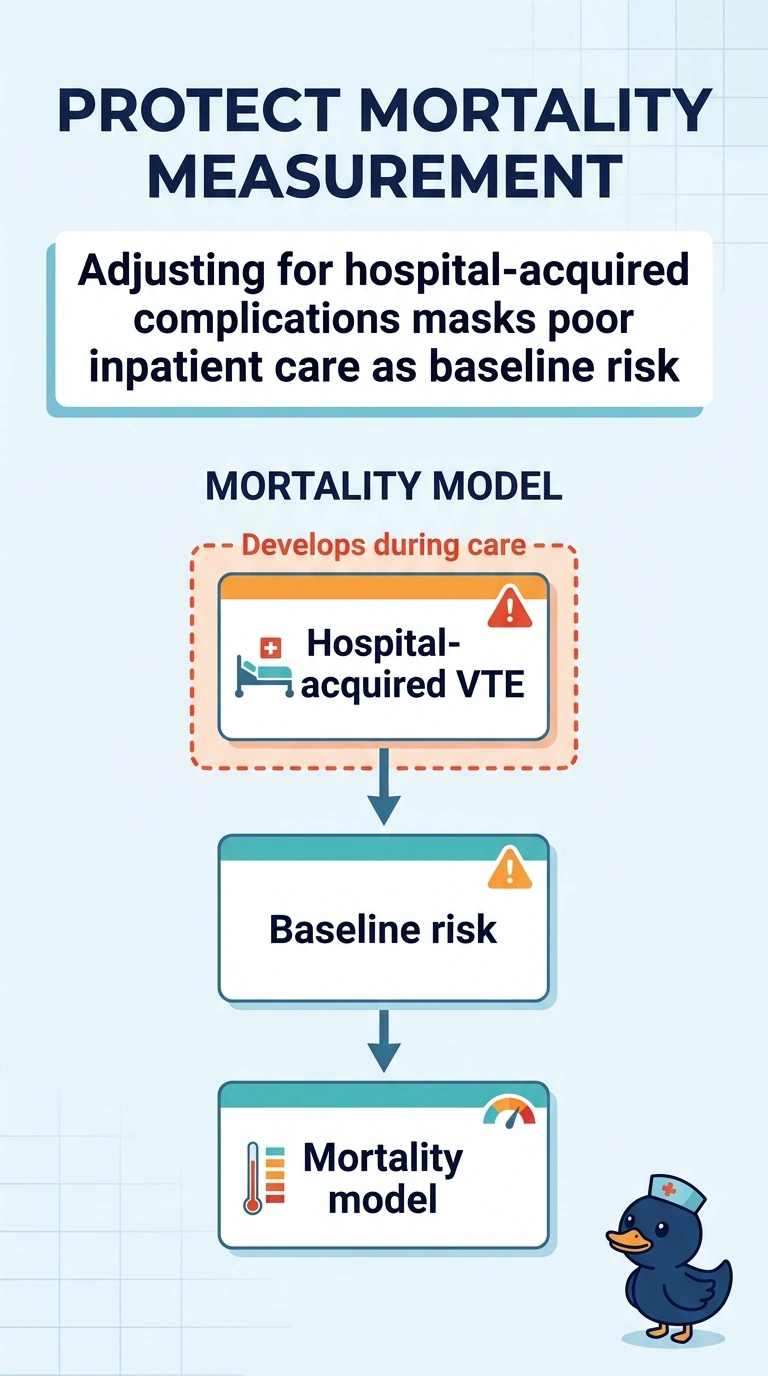
Risk adjustment is meant to level the playing field for patient sickness on arrival, not excuse preventable harm after admission. The trap is tossing every available diagnosis into your regression model because more variables sound more accurate. Keep hospital-acquired complications out of your baseline covariates, or you will hide the very safety gaps you need to fix.
Full Explanation
Valid risk-adjustment models account for patient factors present at the start of care, such as age, comorbidities, and Present on Admission severity, so facilities treating sicker populations are compared fairly. The proposal must be rejected because "Adjusting for hospital-acquired complications masks poor inpatient care as baseline risk," artificially inflating expected mortality and making preventable harm look normal. Choosing "Adding another clinical variable will reduce the statistical power of small-unit comparisons" misses the fundamental methodological flaw, because the issue is causal distortion rather than sample size. Choosing "Venous thromboembolism is already captured inside administrative length-of-stay metrics" is inaccurate and irrelevant, since length of stay is also an outcome influenced by care quality rather than a baseline risk factor. Choosing "Risk-adjustment models should include demographic factors and exclude comorbid clinical diagnoses" is false because validated models routinely include baseline clinical comorbidities present on admission. As a caveat, distinguishing baseline disease from a hospital-acquired event depends on accurate Present on Admission coding. As an operational check, audit model covariates against Present on Admission flags before publishing internal risk-adjusted comparisons.
Prefer to study offline? Printable PDF study book + test engine ($7.50, unofficial). These questions stay free here.