
An inpatient quality analyst notices a strong positive correlation across medical units between higher daily nurse call-bell activation counts and higher inpatient fall rates. A unit manager concludes that call bells are distracting staff and causing falls, and proposes limiting call-bell access. How should the analyst respond?
Select an answer to reveal the explanation.
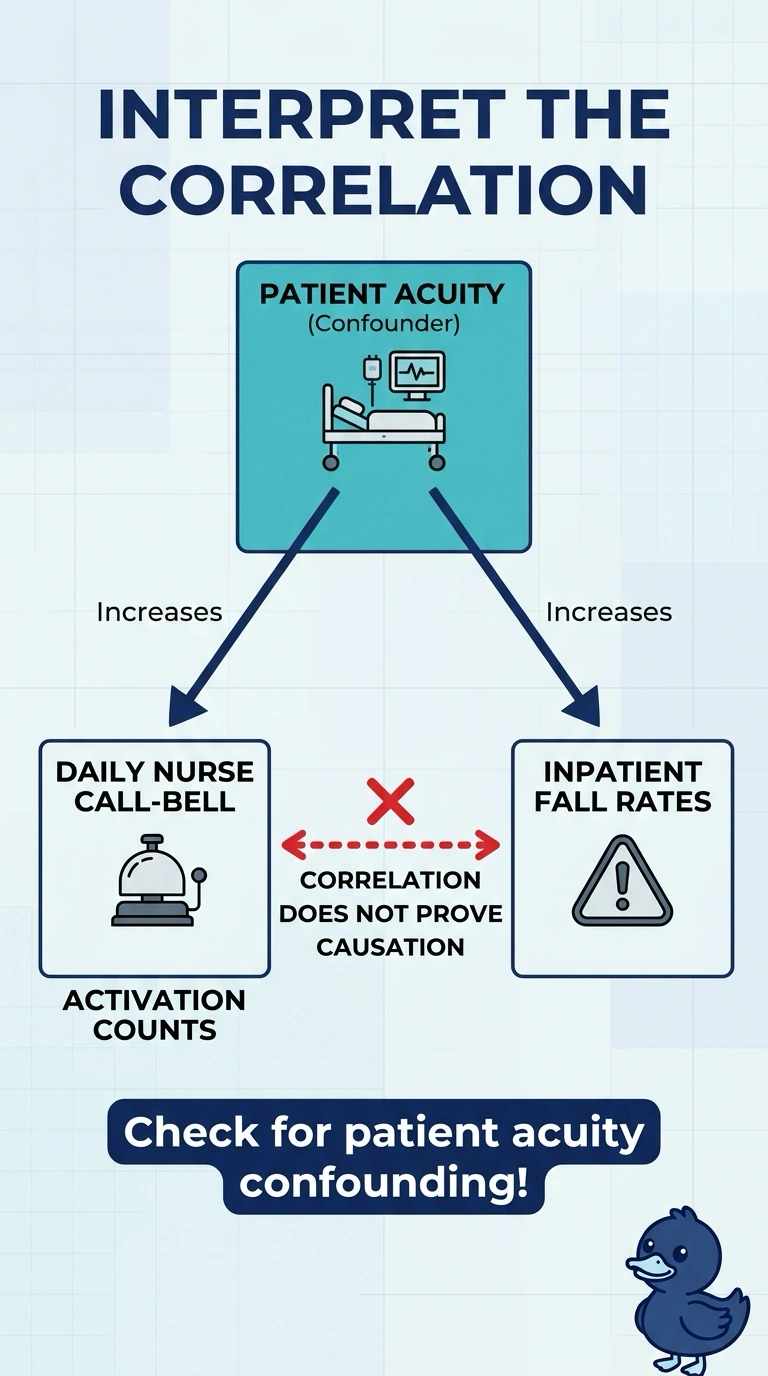
Short Explanation
Seeing two numbers rise together and blaming one for the other is like blaming umbrellas for causing rain. The trap here is confusing a statistical association with direct cause and effect, when higher patient acuity likely drives both. You need to test for confounding factors before changing bedside care.
Full Explanation
The analyst should Explain that correlation does not prove causation and check for patient acuity confounding before anyone alters bedside safety tools. Units caring for frailer, more confused, or post-surgical patients naturally experience both more frequent call-bell requests and higher fall risk, meaning patient acuity confounds the observed relationship. Piloting quieter call-bell tones as the main fall-prevention change still assumes the bells cause falls and does not test acuity confounding. Choosing to Report that call-bell volume is a likely root cause pending further review still labels an unadjusted association as a root cause without controlling for acuity and misleads leadership. Concluding the link is causal because the correlation is statistically strong still mistakes strength of association for causal proof and does not control for acuity, mobility, or unit specialty. Caveat: observational quality metrics often move together due to shared drivers such as staffing ratios, unit specialty, or illness severity. Operational check: stratify fall rates and call-bell volume by unit acuity or mobility score and review fall circumstances before recommending workflow changes.
Prefer to study offline? Printable PDF study book + test engine ($7.50, unofficial). These questions stay free here.