
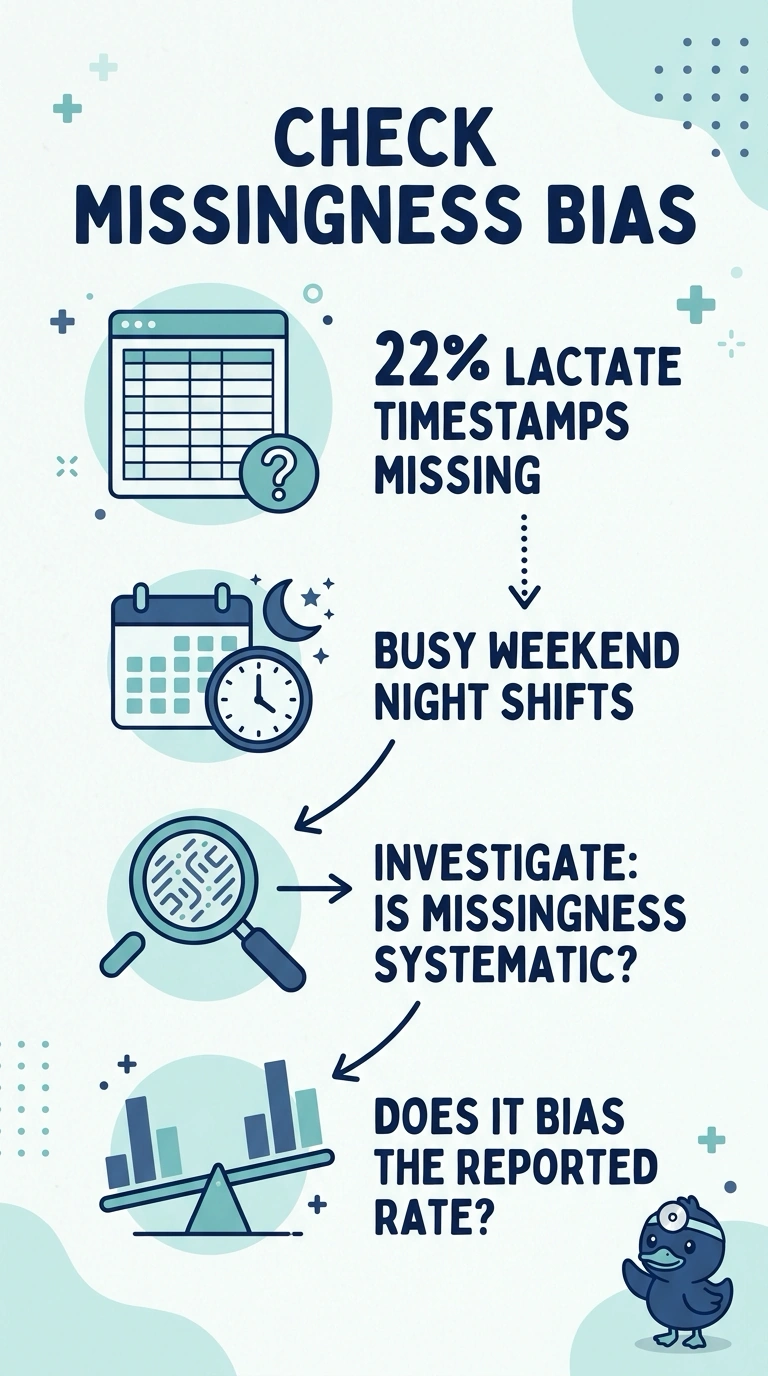
A quality analyst prepares a quarterly emergency department sepsis timeliness report and finds that 22% of eligible charts are missing documented lactate result timestamps, mostly during busy weekend night shifts. What should the analyst do before excluding those incomplete records from the rate calculation?
Select an answer to reveal the explanation.
Short Explanation
Dropping incomplete charts from your dataset feels tidy, like sweeping dust under a rug, until you realize the missing rows are the sickest or busiest cases. The trap is assuming missing data happens at random. Before excluding records, you must check whether systematic missingness is skewing your quality rate.
Full Explanation
When data are missing disproportionately during busy weekend night shifts, the analyst must Investigate whether missingness is systematic and biases the reported rate before dropping any cases. If delays occur most often during understaffed shifts when documentation is also skipped, excluding incomplete records will artificially inflate sepsis compliance and hide a real safety gap. Choosing to Replace the missing timestamps with the hospital's overall quarterly average distorts actual timeliness and masks true variation across shifts. Opting to Delete the incomplete records immediately to keep the denominator clean introduces selection bias and violates measure-integrity principles when missingness is non-random. Trying to Increase the sample size on weekday morning shifts to offset the missing charts worsens the bias by overrepresenting well-staffed daytime hours. Caveat: always report the proportion of missing or unabstracted cases alongside performance metrics so leaders can judge data completeness. Operational check: stratify missing-timestamp rates by shift, day of week, and unit, then audit underlying electronic health record capture workflows with emergency clinicians.
Prefer to study offline? Printable PDF study book + test engine ($7.50, unofficial). These questions stay free here.