
A regional health system operates three clinics with 50, 200, and 1,000 eligible diabetes patients, and their hemoglobin A1c control rates are 40%, 70%, and 80%, respectively. A junior analyst averages the three percentages (63.3%) to report the system-wide control rate to leadership. Why is this calculation inaccurate, and how should the analyst compute the true system rate?
Select an answer to reveal the explanation.
Short Explanation
Averaging percentages from clinics of wildly different sizes is like averaging the batting average of a pinch hitter and a full-time starter. The trap is treating a 50-patient clinic and a 1,000-patient clinic as equal contributors to your system rate. Always pool your actual numerators and denominators instead.
Full Explanation
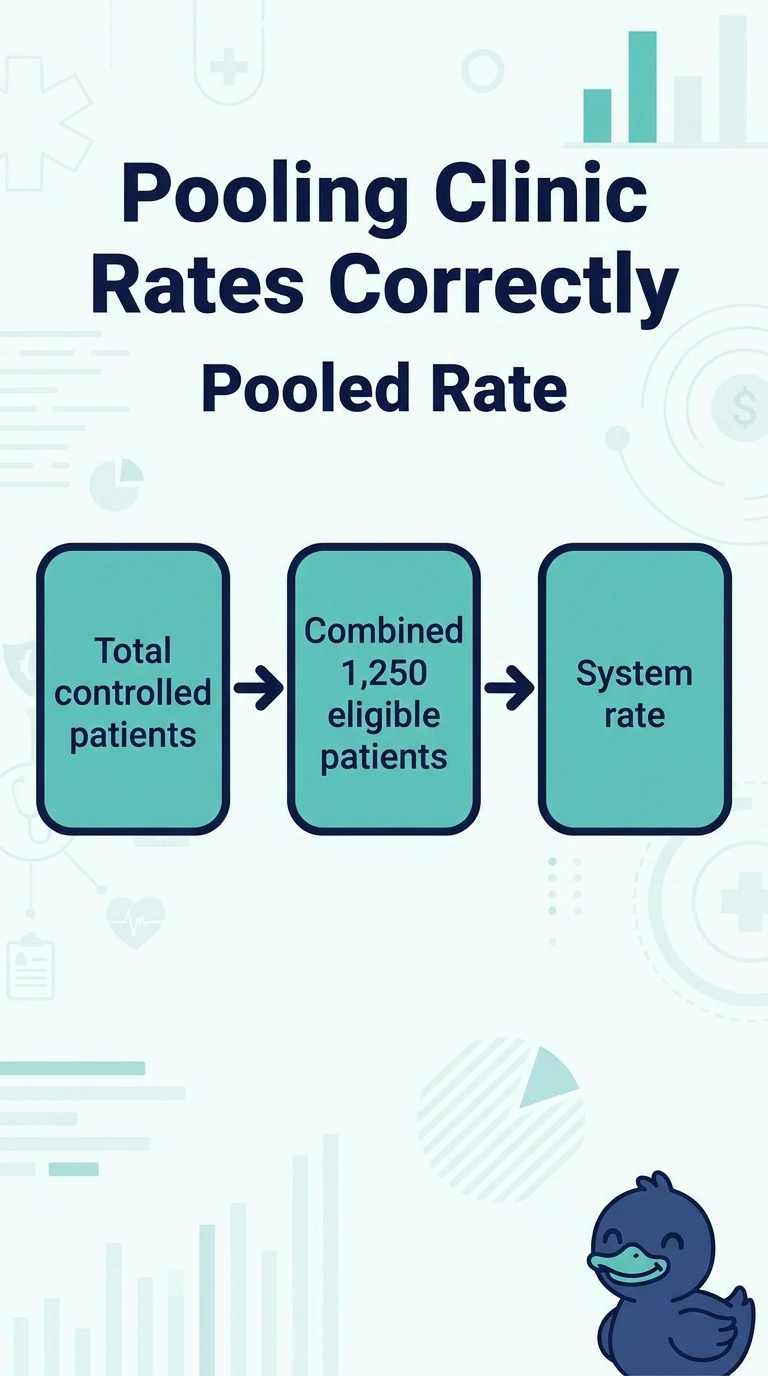
System-level quality rates must reflect the true proportion of the entire eligible population achieving the measure rather than an unweighted average of facility percentages. The analyst must Divide total controlled patients across all clinics by the combined 1,250 eligible patients, which yields 960 divided by 1,250, or 76.8%, rather than the distorted 63.3% unweighted mean. Choosing to Use the median clinic rate of 70% because the smallest clinic skews the arithmetic mean downward still ignores the actual patient volume in the largest clinic. Choosing to Report the highest-volume clinic's 80% rate as the system rate for leadership summaries confuses a subgroup result with a population result and discards 250 patients from smaller sites. Choosing to Exclude the smallest clinic of 50 patients from the system calculation until its eligible volume reaches at least 100 patients introduces selection bias and hides care gaps at that site. A key caveat is that while the pooled rate gives the accurate system figure, clinic-level rates should still be displayed separately so high-volume clinics do not mask local underperformance. As an operational check, verify that automated dashboard formulas sum numerators and denominators before dividing.
Prefer to study offline? Printable PDF study book + test engine ($7.50, unofficial). These questions stay free here.