
A health system plans to post a public community dashboard showing quarterly readmission rates stratified by zip code and race, but several rural zip codes have fewer than five discharged patients in a subgroup. What analytical safeguard should the quality analyst apply before publishing?
Select an answer to reveal the explanation.
Short Explanation
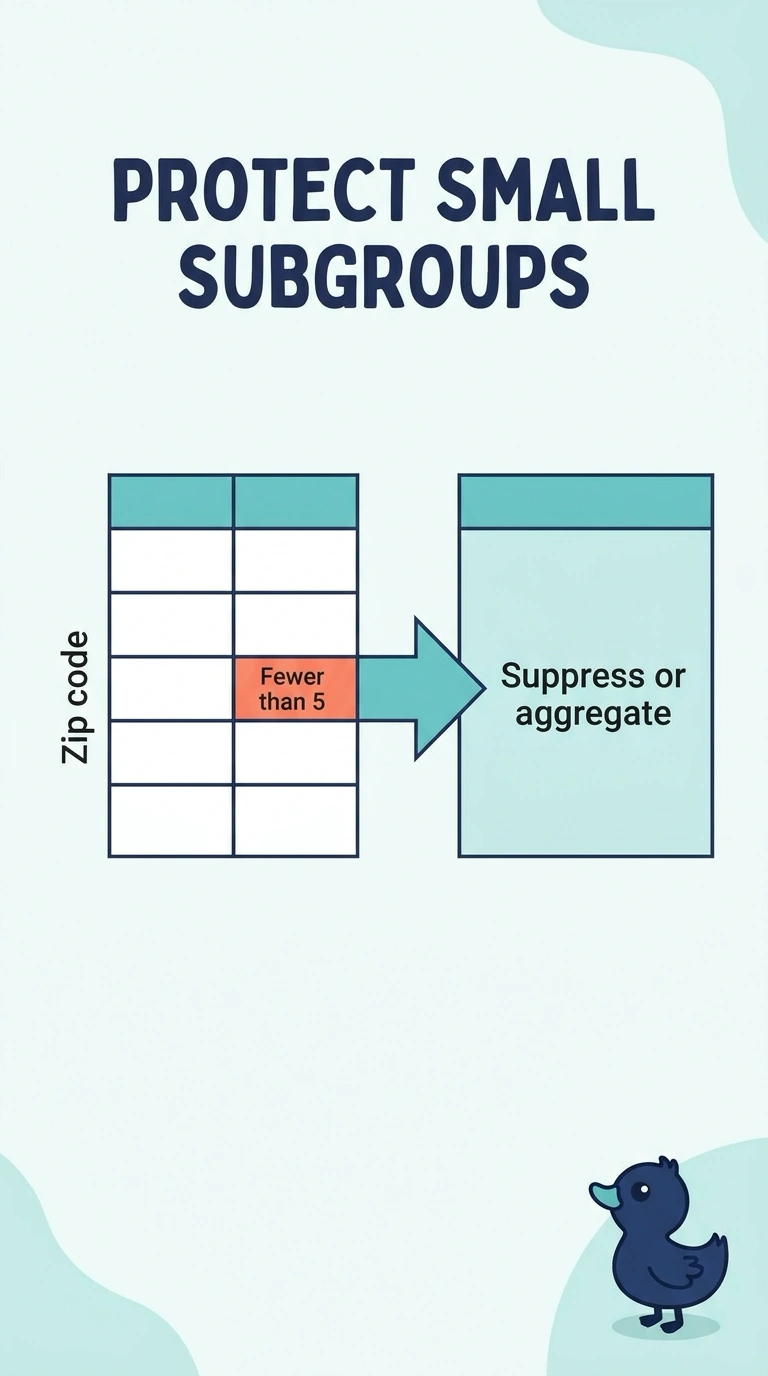
When you stratify by zip code and race, you can spot disparities, but tiny counts may accidentally identify a neighbor. Suppressing or aggregating small cells protects privacy while keeping equity visible; replacing missing denominators with an overall average distorts rates, publishing exact small-cell counts risks confidentiality, and adding a footnote to small rates still leaves patients identifiable.
Full Explanation
Suppressing or aggregating small subgroup counts prevents unintended patient re-identification while preserving useful information on a public dashboard. When a rural zip code and demographic subgroup contain fewer than five discharges, community members or external observers may be able to infer a specific patient’s identity; rates calculated from tiny denominators can also swing widely by chance. Replacing missing subgroup denominators with the health system’s overall average discharge count fabricates local denominators and produces misleading rates. Publishing the exact numerator and denominator for every subgroup, regardless of sample size, creates a serious confidentiality risk and conflicts with standard public-reporting suppression practices. Showing each small zip-code rate on the public page with a footnote that the cell has fewer than five discharges still discloses the identifiable rate and does not satisfy suppression; a warning label does not prevent re-identification. As an exam caveat, small subgroups should not disappear from quality oversight: internal teams can review pooled multi-quarter data under role-based access controls. As a practical check, apply an automated minimum cell-size rule to public dashboard extracts and verify that small cells are masked or aggregated before release.
Prefer to study offline? Printable PDF study book + test engine ($7.50, unofficial). These questions stay free here.