
A foreman writes a one-page plan for a three-story retrofit where a worker uses a harness near a skylight, a forklift moves pallets, and old batteries leak in storage. Which element should the emergency response plan include to cover first aid, hazmat, fire, and fall rescue for this site?
Select an answer to reveal the explanation.
Short Explanation
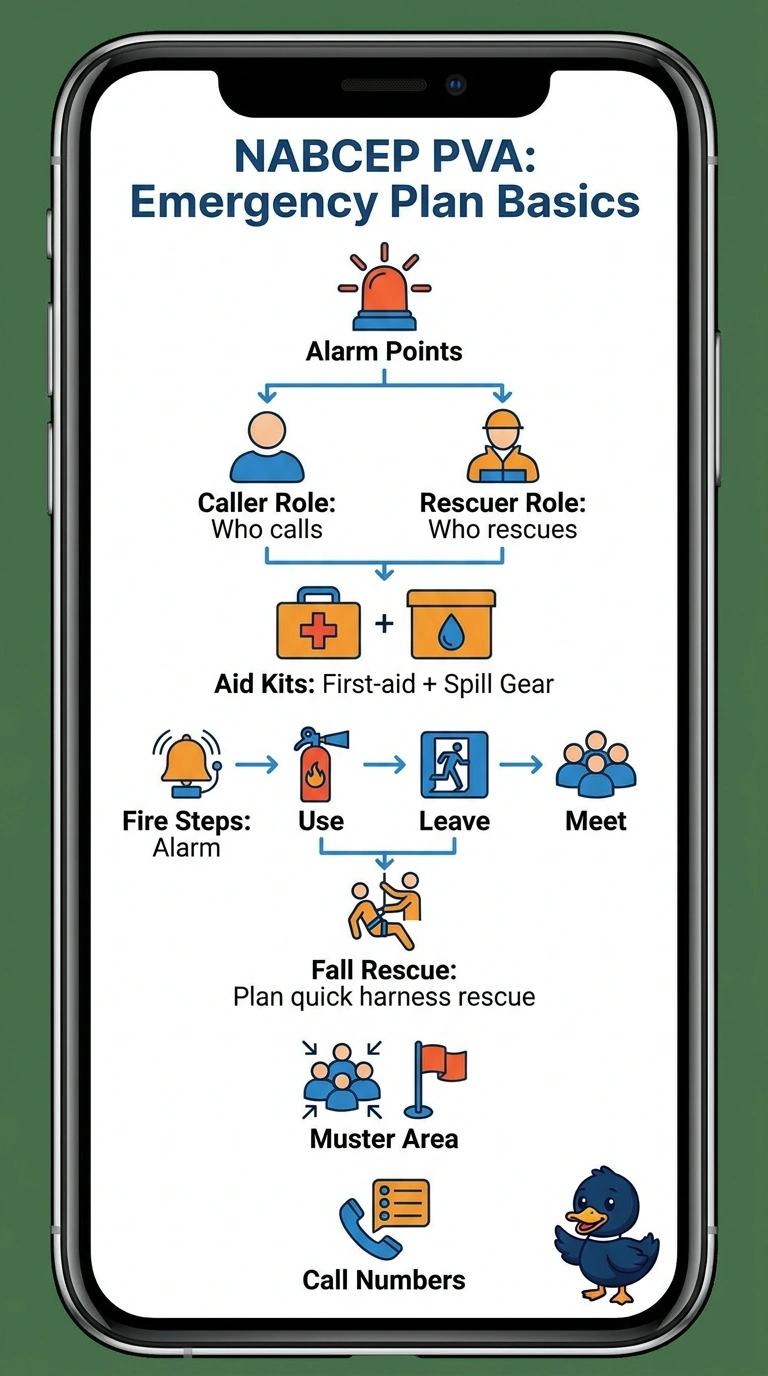
Your response plan should list rescue roles, first-aid and spill kits, alarm points, the muster area, and emergency call numbers. It’s like a fire-drill map: when seconds count, you can find the right people and supplies fast.
Full Explanation
The correct plan element brings together the site’s key emergency functions: assigned rescue roles support a prompt response to a worker’s fall, first-aid and spill kits address injury and leaking batteries, and alarm points, a muster area, and call numbers help alert and account for workers and summon assistance. A plan that substitutes general site contacts for emergency call numbers may leave workers without a clear, immediately usable way to reach emergency services or designated responders. A plan with first-aid supplies, fire alarms, assembly arrangements, and call numbers still lacks spill-response supplies, leaving the battery-leak hazard without a specified means of initial control. A plan that lists evacuation routes and other response resources but omits rescue roles does not assign who will coordinate or carry out fall rescue; evacuation guidance alone is not a fall-rescue procedure. Exam caveat: a written plan should identify resources and responsibilities, but it does not replace hazard-specific training, suitable equipment, or any required rescue procedures. Practical check: walk the site with the crew and verify that alarm points, kits, muster arrangements, and posted call numbers are accessible, understood, and appropriate for the skylight, forklift, and battery-storage hazards.