
You qualify a homeowner with a 12-month utility bill showing kWh use by month, peak demand charges, time-of-use periods, and net-metering credits with rising evening rates. They want bill savings and right-sized solar plus possible batteries. Which utility-bill review best supplies useful data to size and value the project?
Select an answer to reveal the explanation.
Short Explanation
You can turn a year of bills into a useful guide for solar sizing and savings by looking at both how much energy you use and when you use it. Usage plus rates helps you see how solar and possible batteries may affect your bill.
Full Explanation
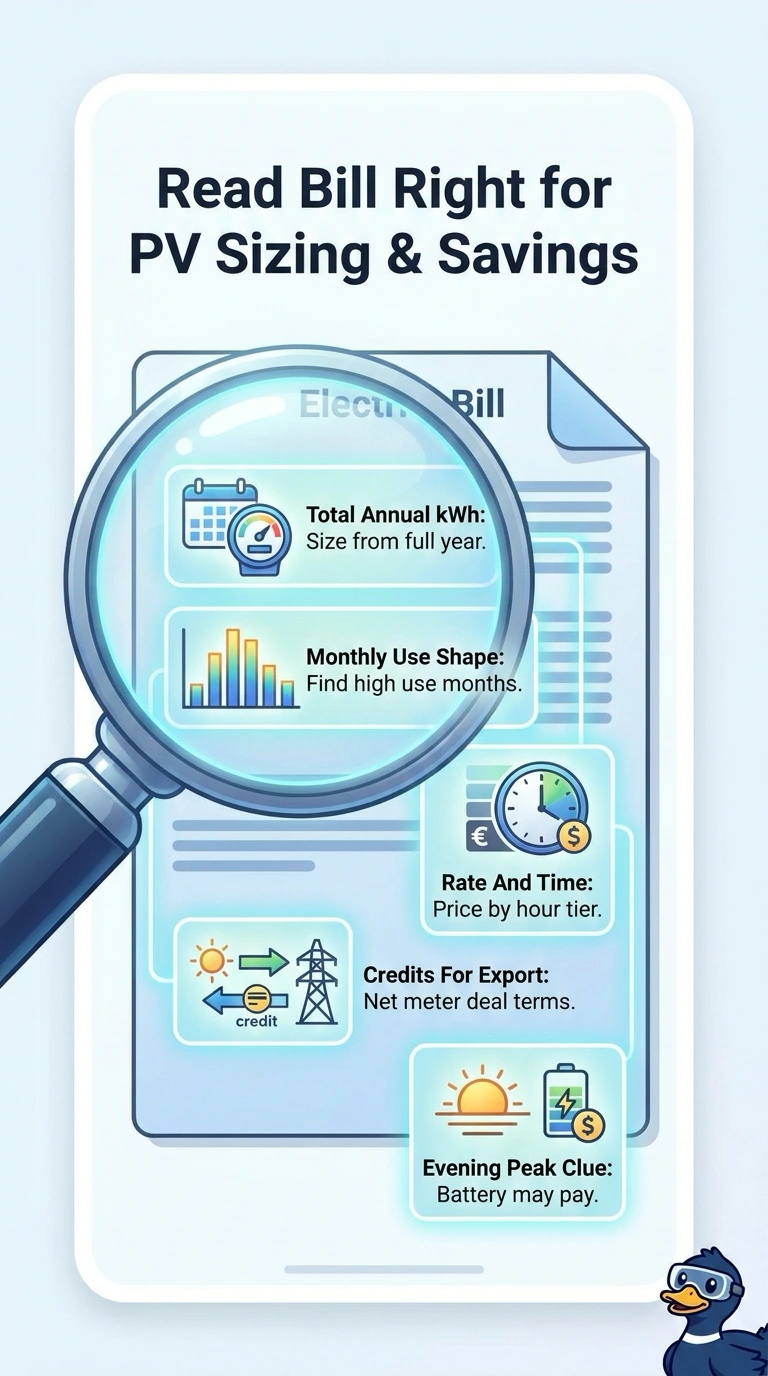
A useful bill review combines annual kWh totals, usage timing, the rate structure, and net-metering rules. These details support sound system sizing and a realistic savings estimate; usage timing and rising evening rates can also show whether batteries may add value. A review that totals annual kWh and applies the full tariff and net-metering rules still misses when the household uses energy, making it harder to match solar production with consumption or value evening battery use. A review that profiles monthly use, peak demand, and time-based rates across the year but values exports without net-metering credits omits a key part of the economics: export compensation can materially change savings. A review of one representative month captures relevant billing details but cannot establish annual use or seasonal patterns, so it may misstate system size and yearly savings. Exam caveat: monthly bills may not provide interval data, which can limit detailed load-shifting or battery analysis. Practical check: reconcile twelve months of bills with the current tariff and export-credit rules, and obtain interval data when available.