
An O&M tech inherits a 250-kW rooftop portfolio where inverters log locally but owners get no alerts, and a new SCADA scope is proposed. Which description correctly states what data acquisition and SCADA should provide for this fleet?
Select an answer to reveal the explanation.
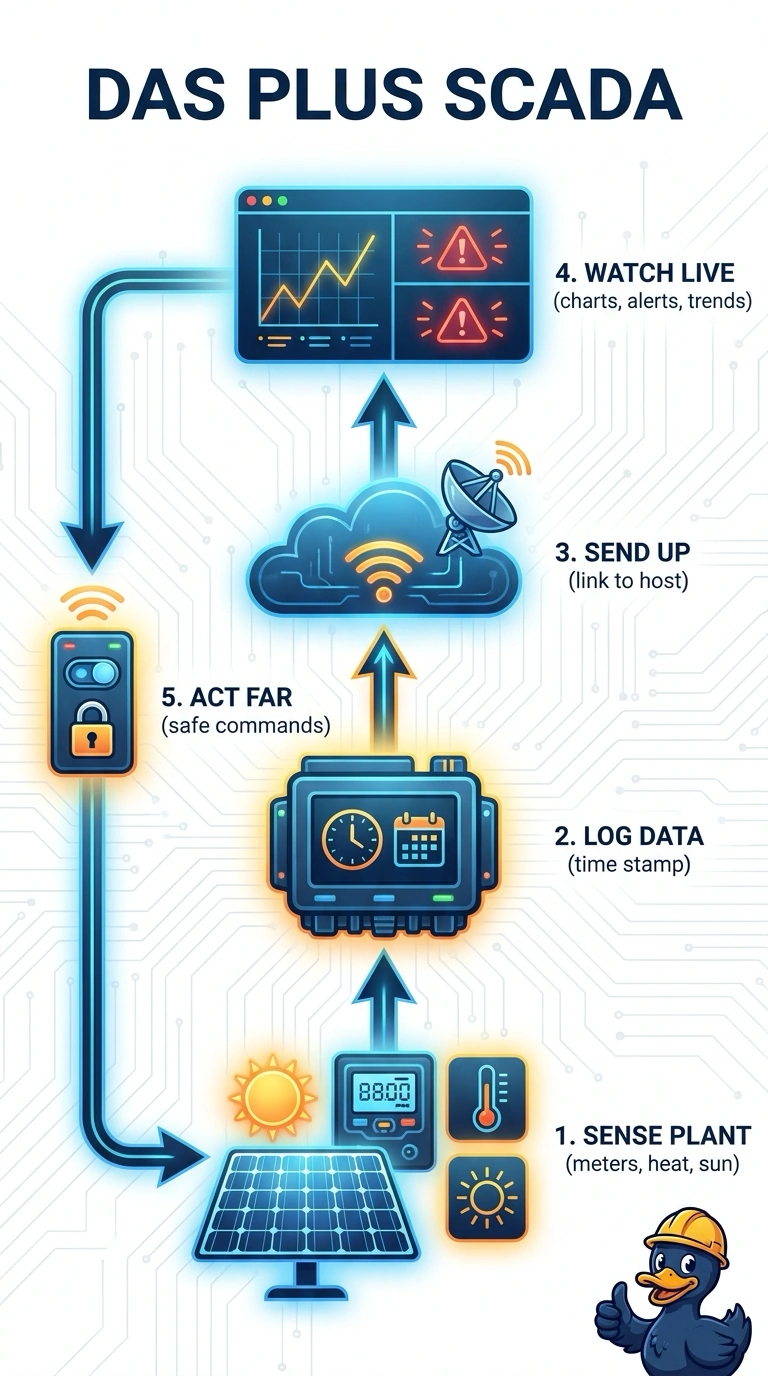
Short Explanation
Owners need eyes on the plant even when nobody is on the roof. Remote monitoring gathers sensor data, spots faults, and lets you act fast, like a nurse call system for your solar array.
Full Explanation
The correct description combines the core data-acquisition path with the operational functions expected of the proposed SCADA scope: sensors and meters provide field measurements, a logger collects and retains trends, and alarms are forwarded so staff can respond remotely and issue control commands. This gives owners fleet visibility beyond locally stored inverter records. The inverter-telemetry approach is a common cloud-monitoring design and includes trending, alarms, and remote control, but it relies on inverter data alone rather than acquiring the stated sensor and meter inputs. The read-only logger design collects and stores measurements and delivers alarms for remote monitoring; it fails specifically because it cannot carry out remote control. The locally retained-history design has networked measurements, alarms, and control, but does not provide centralized trend storage for the fleet: history remains at the inverters. Exam caveat: SCADA is often deployed for monitoring only, so remote control should not be assumed unless it is expressly included in the scope and permitted by the control design. Practical check: verify the point list and communications path for each site, confirm historian retention and alarm delivery, and test authorized remote commands under the agreed operating and safety procedures.