
Your crew will stage a two-day home install on a busy corner lot where kids cut through the yard, pallets and ladders sit overnight, and the neighbor runs a daycare next door. Which site-access control should the safety plan require to limit public exposure during this work?
Select an answer to reveal the explanation.
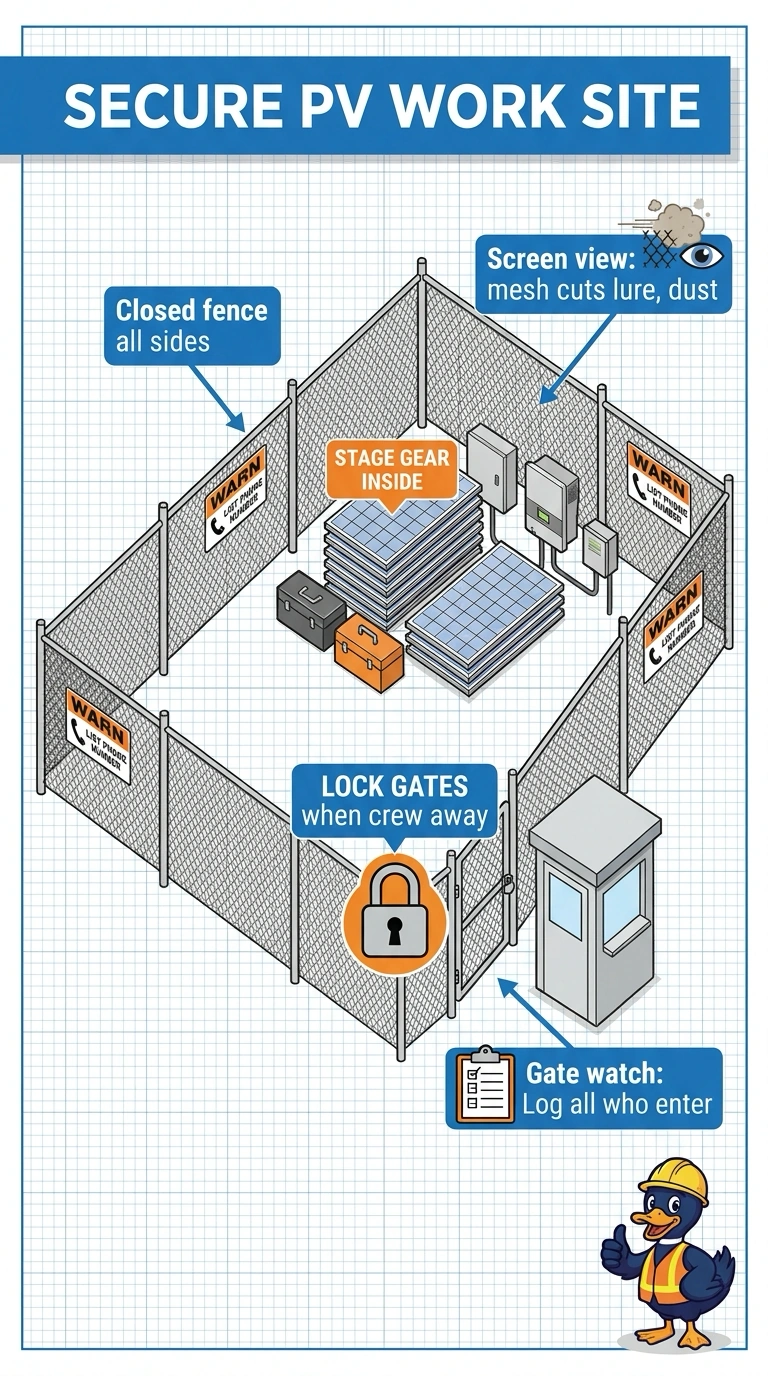
Short Explanation
Curious feet will find every gap on a corner lot, so you need a real barrier. Perimeter control keeps the public out and gear in, much like a locked fence around a backyard pool.
Full Explanation
The correct approach combines a physical barrier with visual screening, clear warnings, protected storage, and controlled entry. That layered setup is especially appropriate for a corner lot where children may approach from more than one direction, equipment remains overnight, and a daycare operates next door. Locked perimeter fencing with signs, interior staging, and gate monitoring provides a secured boundary, but omitting screens fails to provide the specified visual separation from children and daycare users. Screened, signed fencing and interior gear storage protect the boundary, but relying on a locked gate without assigned entry checks leaves no designated person to verify access; workers may admit visitors inconsistently or leave the gate unsecured during deliveries. Locked, screened fencing with signs and entry checks controls the boundary, but keeping pallets and ladders in locked storage outside it leaves equipment beyond the protected work perimeter. Lockable storage reduces theft risk, but does not meet the requirement to keep overnight equipment inside the perimeter, where it is less exposed to public contact. Exam caveat: a strong control may still be wrong when it omits one explicit element of a layered site-access plan. Practical check: walk the entire perimeter before work and at closeout, confirming screens and signs are intact, the gate is secured, checks are assigned, and all materials are inside the boundary.