
A rural clinic wants lights and vaccine refrigeration to ride through nightly outages, with daytime PV often exceeding demand and staff forgetting to turn off extra loads. The designer proposes batteries plus automated switching. Which energy storage and load control role description should the associate use to explain system functionality?
Select an answer to reveal the explanation.
Short Explanation
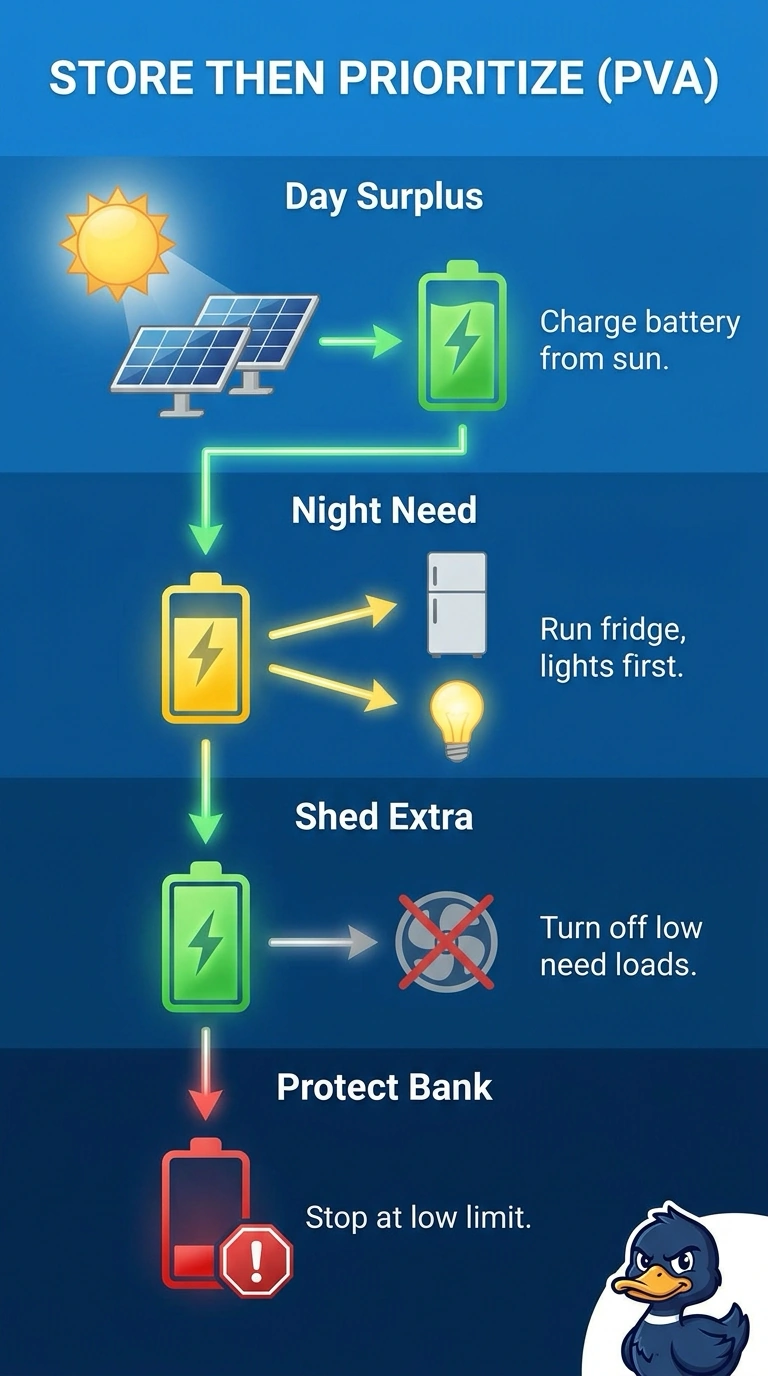
Keeping the fridge cold all night takes more than panels. Your shift-and-shed story works like saving lunch leftovers then skipping snacks. Store midday extra, then trim what runs after dark.
Full Explanation
Batteries can store PV generation that exceeds daytime demand and discharge it later, allowing the clinic to serve critical nighttime loads when the array is not producing. Automated controls can disconnect nonessential loads during an outage, reducing demand and extending the available battery runtime; this is especially relevant when staff may forget to switch extra loads off. Providing backup to all connected loads is a recognized design choice, but it does not describe shifting daytime PV surplus to nighttime use, the key storage role in this scenario. Scheduling discretionary loads to run during sunny hours can make productive use of excess PV, yet it does not shed those loads during outages, so it fails the stated runtime-management need. Staff alerts and manual load selection can support demand management, but they rely on people taking action and therefore do not meet the proposed automated-switching function. A design caveat is that “critical” and “nonessential” loads must be defined with clinic staff; refrigeration and lighting may have different continuity requirements, and compressor starting current can affect inverter sizing. A practical check is to compare measured nighttime critical-load energy and peak starting demand with usable battery capacity and inverter capability, then verify that a simulated outage triggers the intended load-shedding sequence.