
A technician must replace a blown bus fuse in a distribution panel at a fire station. The panel is fed both by the utility service and by a generator through an automatic transfer switch, and the crew has opened, locked, and tagged both handles. Which check proves the panel is de-energized before anyone touches a conductor?
Select an answer to reveal the explanation.
Short Explanation
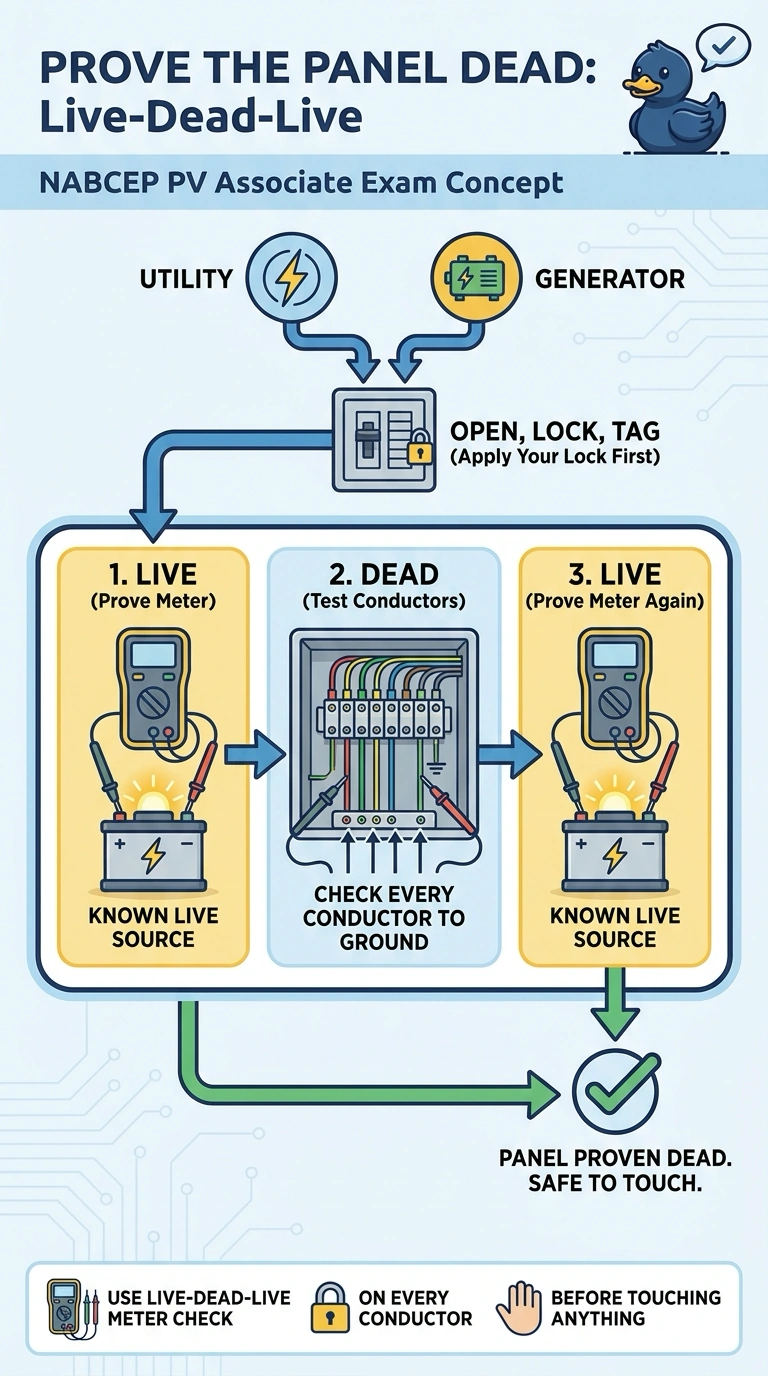
Locking out both feeds puts the panel in a safe state, but it doesn't prove to you that the bus is dead. The step that settles it is test before touch with a meter you've proven on a known live source. A handle, a tag, or a device's own indicator can all look right while a second source still feeds the metal.
Full Explanation
Lockout places equipment in an intended safe state, but it does not prove the bus is at zero volts, so verification is its own required step. With two sources feeding one panel, the generator side can energize the bus even after the utility handle is open, which is why every conductor gets checked individually. The dependable method is test before touch: prove the meter on a known live source, test each conductor against ground and between phases, then prove the meter again so the instrument is known good before and after the check. Reading position indicators or a utility meter display means trusting a mechanical flag or a remote measurement rather than the metal in front of you. A non-contact detector is handy for a quick screen, but it can pick up an adjacent energized conductor, miss a recessed or shielded contact, and cannot certify that one specific conductor is dead. Confirming just the utility-side lock and tag records that a handle was secured, but it never tests the bus and it assumes the transfer switch holds both sources apart. Exam caveat: some items test the order of steps rather than the tool, so keep lockout, verification, and re-verification in sequence. Practical check: store a properly rated meter and leads with your locks and tags.