
A homeowner compares two quotes for the same 8-kW system with identical production: one cash purchase and one high-interest loan, while the local utility filed for multi-year rate hikes. Which statement correctly explains how financing cost and utility rate inflation affect payback for this choice?
Select an answer to reveal the explanation.
Short Explanation
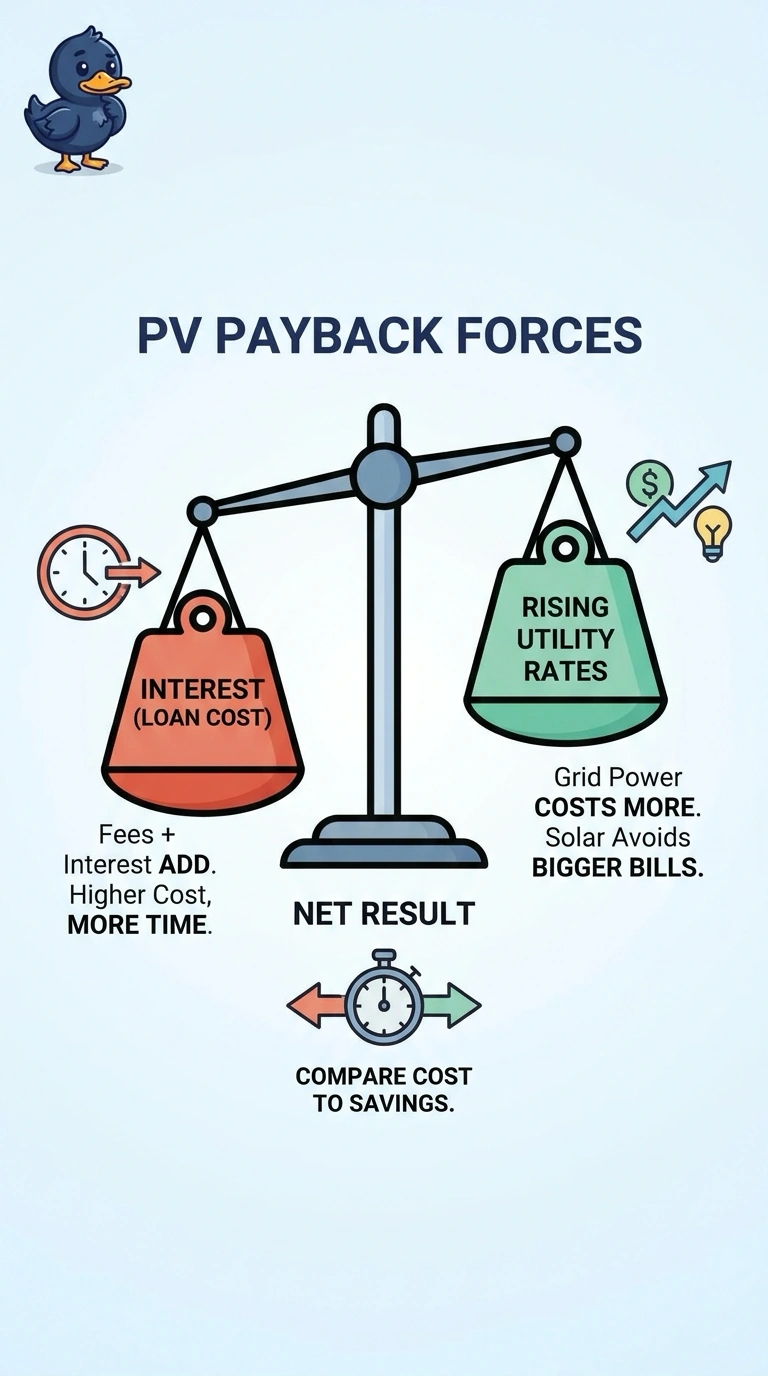
Loans add cost while pricey grid power makes your solar worth more each year. Payback stretches with interest and shrinks when utility rates climb, like a seesaw with costs on one side and savings on the other.
Full Explanation
The correct statement separates the two effects on the homeowner’s payback calculation. Interest on the loan raises the total cost of acquiring the same 8-kW system, so recovering that cost from the system’s bill savings takes longer than with a cash purchase. Rising utility rates increase the value of the electricity the system offsets; assuming production and usage are otherwise unchanged, that increases avoided bills and shortens payback. A flat-rate estimate is a familiar simplifying method, but it deliberately omits utility escalation, so it cannot describe the effect of the multi-year hikes in this scenario. Simple payback is often reported using cash cost and therefore excludes financing charges; that convention can be useful for comparing equipment, but it does not answer this question’s comparison of cash and high-interest financing. Waiting to count a filed increase until regulatory approval is a cautious forecasting practice, yet it treats a stated multi-year rate-hike outlook as irrelevant to the requested comparison rather than accounting for expected escalation. Exam caveat: payback depends on the metric—system-level simple payback and the homeowner’s loan-inclusive cash-flow payback are not interchangeable. Practical check: compare the cash price and total loan repayment, then model annual utility-bill savings using the same production estimate and explicit rate-escalation assumptions.