
You are routing DC conductors down an exterior stucco wall to an inverter on a home with afternoon sun and weed trimmers nearby. The run sags between clips and enters the box from the top without slack. Which wiring best practice should the crew apply to protect this exposed run?
Select an answer to reveal the explanation.
Short Explanation
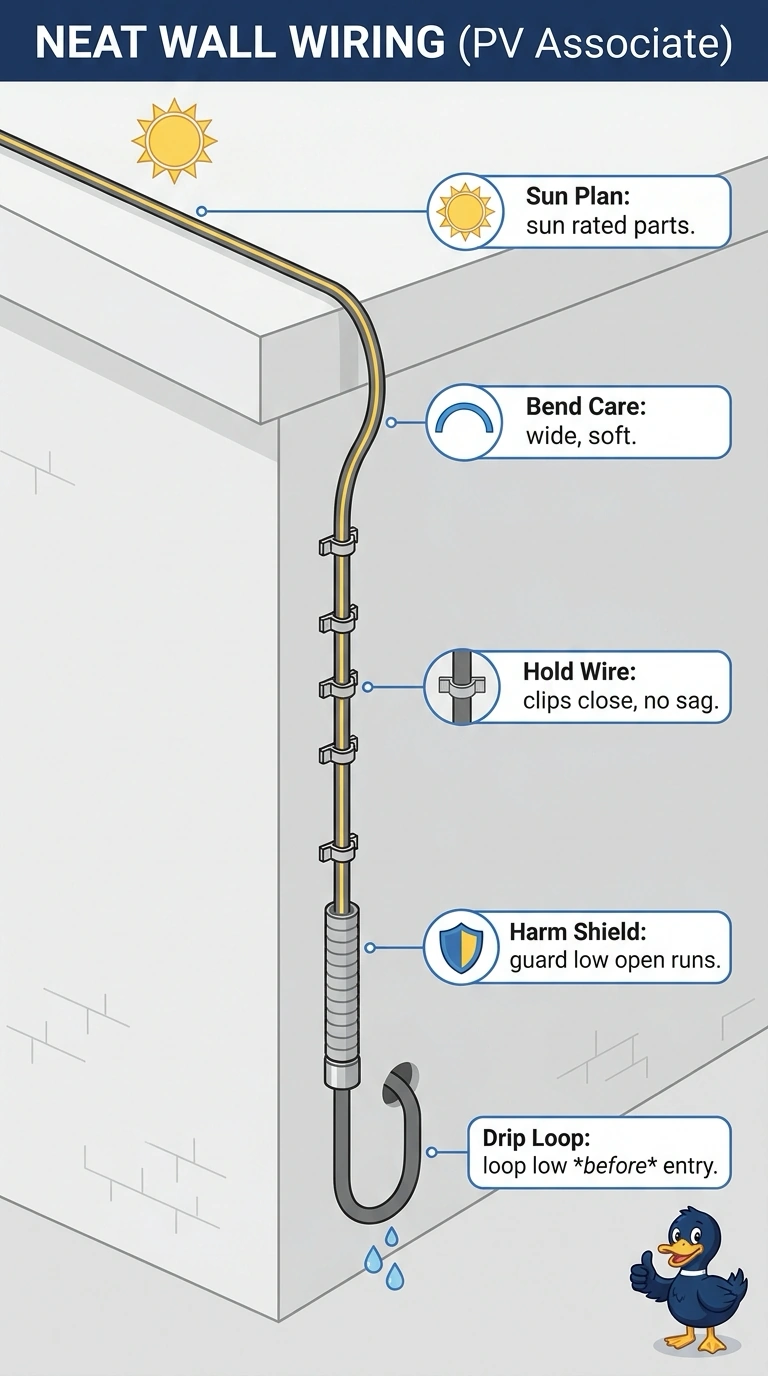
You can protect this run from both rain and weed trimmers with a few thoughtful details. A drip loop sheds water away from the entry, while closer supports and a low-run shield help keep the cable secure and safe.
Full Explanation
The best practice combines a drip loop at the entry, closer supports, shielding for low runs, and respect for bend limits. The drip loop helps keep water from following the conductors into the box, closer supports address the existing sag, shielding protects the cable from nearby weed trimmers, and proper bends help prevent conductor or insulation damage. Supporting the run closely, guarding low cable, and observing bend radii are useful, but sealing a top entry does not provide the same water-shedding path as a drip loop; water can still track along conductors toward the enclosure. Using a drip loop, low-run protection, and proper bend radii is also helpful, but standard support spacing may not be close enough for this sagging run; spacing should suit the installation and cable. A drip loop, shorter support spacing, and a low-section guard address several hazards, but routing around the inverter enclosure does not ensure bends stay within the cable’s permitted radius. Exam caveat: support methods and spacing, entry fittings, and bend limits depend on cable type and applicable electrical code, so no single spacing or fitting rule applies to every installation. Practical check: before energizing, inspect the full route for sag, a downward loop before entry, protection at trimmer height, and bends consistent with the manufacturer’s instructions.