
A trainee is landing aluminum service conductors in a new outdoor inverter cabinet rated for wet locations, with a torque table inside the door. The foreman stresses loose lugs cause heat and water entry voids the rating. Which termination practice should the trainee apply to meet manufacturer torque and NEMA enclosure requirements?
Select an answer to reveal the explanation.
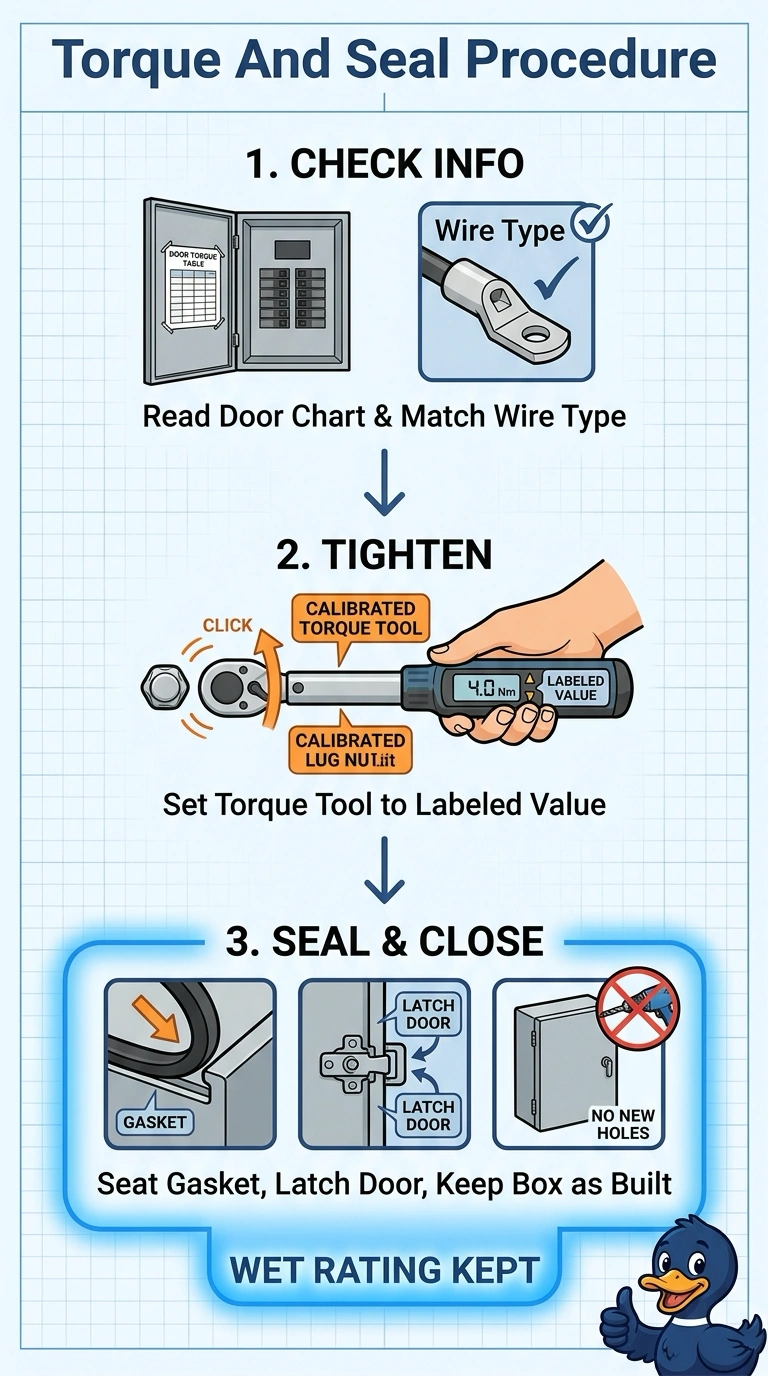
Short Explanation
Lugs and lids both need care to last outdoors. Your torque-plus-seal step is like tightening lug nuts then rolling up windows in rain. Set the right twist, then keep the box shut tight.
Full Explanation
The correct practice works because it satisfies torque and enclosure together: a calibrated tool to the door-table labeled value provides manufacturer-specified pressure to prevent loose-lug heating on creep-prone aluminum, while seating the gasket and engaging all latches maintains the tested NEMA wet-location integrity the foreman warned water entry would void. The uniform shop-standard torque method fails on instruction authority because a calibrated tool at the wrong target still leaves the termination under- or over-torqued despite a sealed door, inviting loosening, resistance and heat. The open-knockout with indoor connector method fails on system rating because correct torque and latched doors cannot preserve wet protection when the cable entry itself is not watertight and admits water. The copper-only lug method fails on material compatibility and listing because correct torque and sealing cannot prevent galvanic corrosion and differential expansion when aluminum lands in terminals not identified for aluminum. For exams, remember manufacturer values and enclosure listings outrank shop habit or neat workmanship whenever the stem cites a torque table, wet location, or aluminum conductors. Practically, check tool calibration date, confirm lug markings allow aluminum, confirm listed wet-location fittings are tight, verify even gasket compression without pinches, then latch fully and plan thermal verification per instructions.