
A two-person crew arrives for a home rooftop job with harnesses, a ladder, and a corded drill that sat in a damp truck overnight. The lead asks for a pre-use check before anyone climbs or starts drilling. Which pre-use inspection routine should the crew apply to confirm safe work practices?
Select an answer to reveal the explanation.
Short Explanation
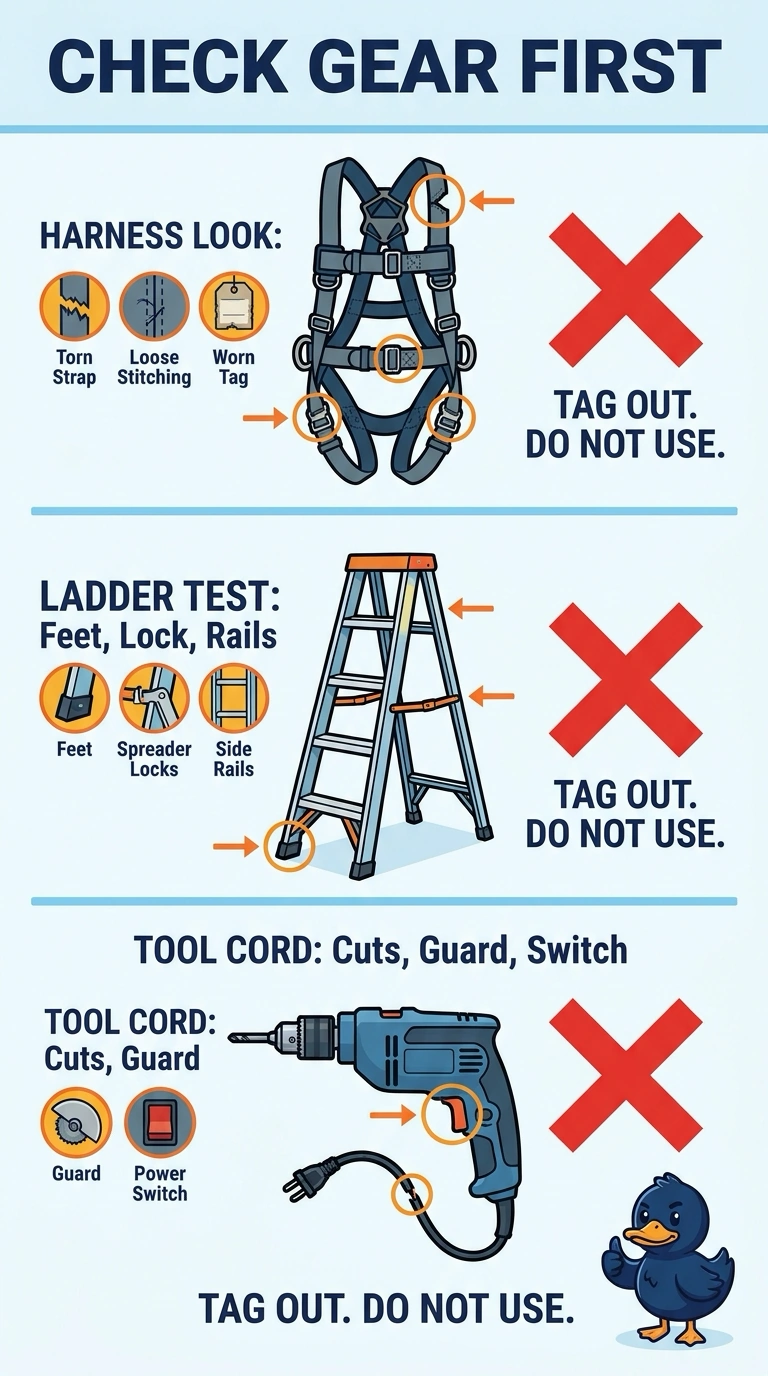
You’ll protect your crew by checking each tool and piece of gear before anyone climbs or drills. This pre-use-check habit helps you catch wear, unstable ladder parts, and cord damage while everyone is still on the ground.
Full Explanation
The routine that inspects harnesses for cuts and stitch wear, tests ladder locks and feet, and checks the drill cord and guard before powering it is correct because it covers each item before exposure. It addresses the damp-truck risk by checking the cord and guard before energizing the drill, and confirms ladder and fall-protection equipment are ready before anyone climbs. A routine that inspects harnesses and ladder setup but briefly powers the drill first fails an electrical-inspection principle: a successful run does not prove insulation is intact or dry, or that the guard works, and powering it before inspection creates exposure. A routine that checks the damp cord, guard action, and harness webbing but skips retesting ladder locks and feet fails an access-equipment principle: transport, soil, slope, and handling call for fresh checks at each placement. A routine that tests ladder locks and feet and checks the cord and guard but confirms harness fit without checking stitch wear fails a fall-protection principle: fit cannot reveal cut fibers, pulled stitching, or degradation that requires retirement. Exam caveat: everyday use or a clean appearance never replaces documented pre-use checks; visual and manual inspection comes before any functional test. Practical check: tug stitch lines, shake locked rails, flex cord insulation, and cycle the guard; do not climb or power the drill until every item passes.