
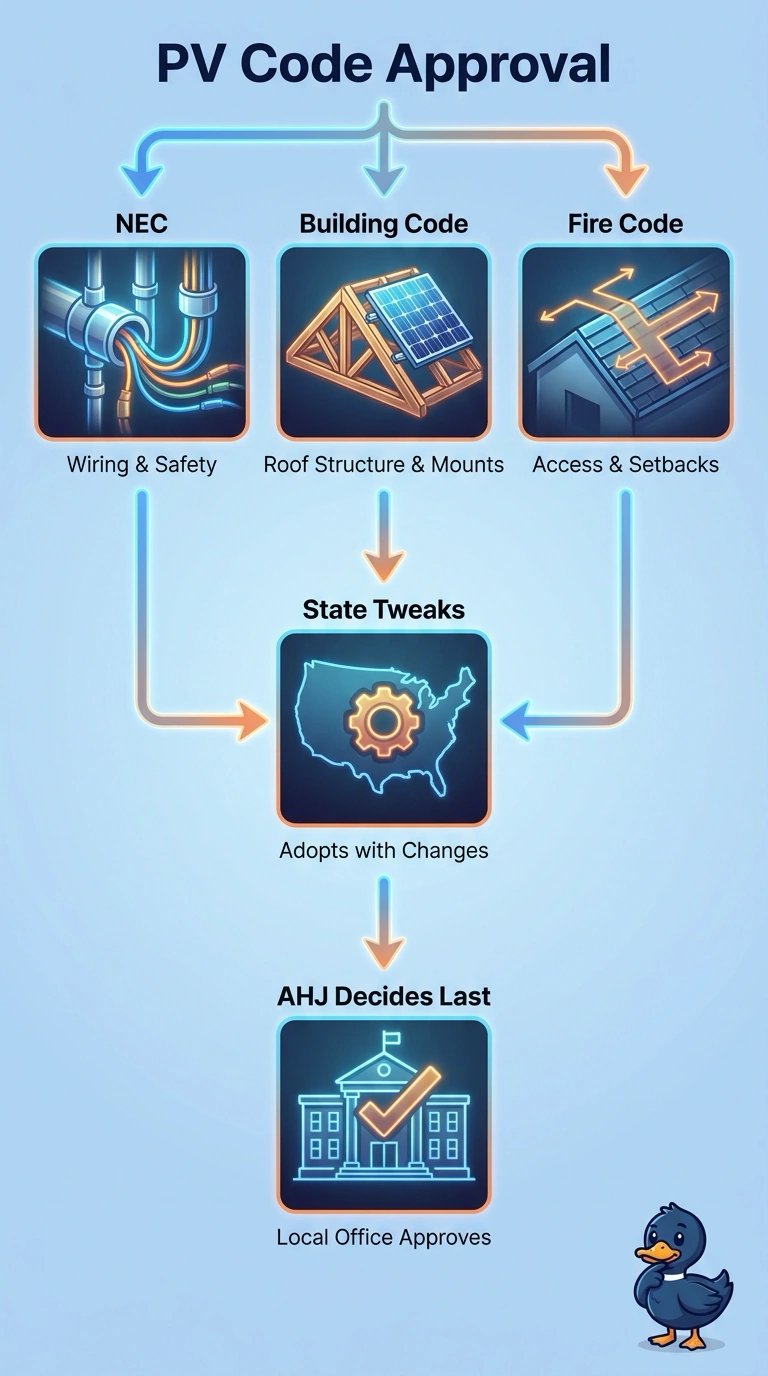
You design a 12-kW home system where the city permit desk cites NEC for wiring, IBC for roof loading, and IFC with local setback amendments for fire access. The state adopts NEC with amendments and the AHJ has final say. Which allocation correctly distinguishes electrical, building, and fire code roles?
Select an answer to reveal the explanation.
Short Explanation
You’re matching each requirement to the code that governs it: NEC for wiring, building code for roof loading, and fire code for access setbacks. Keep the AHJ in the picture, too, because it has final say.
Full Explanation
The correct allocation follows each code’s primary role: NEC provisions govern electrical wiring methods, the building code governs structural roof loading, and the fire code governs fire-department access, including applicable local setback amendments. Assigning fire access to an unamended IFC gets the electrical and structural roles right, but omits the local fire-access amendments stated in the scenario. Assigning wiring to the base NEC also places roof loading and fire access in the appropriate codes, but overlooks the state’s adoption of the NEC with amendments, which is the governing electrical text. Treating published fire-code text as controlling over the AHJ’s final interpretation identifies the relevant subject areas but contradicts the scenario’s assignment of final authority to the AHJ. Exam caveat: code names do not always map neatly to every technical detail, and adopted editions, amendments, and local provisions can change the applicable requirements. Practical check: before design or permit submission, verify adopted code editions and amendments with the AHJ, then confirm the project’s roof-load criteria and fire-access setbacks against the approved plans.