
A two-person crew arrives for a July rooftop survey in Arizona, 102F with high sun, no wind, and finds pigeons nesting under a prior array plus wasp activity at the eave. One tech feels dizzy and the tile is too hot to kneel on. Which control should the lead apply first to address environmental hazards from heat and animals?
Select an answer to reveal the explanation.
Short Explanation
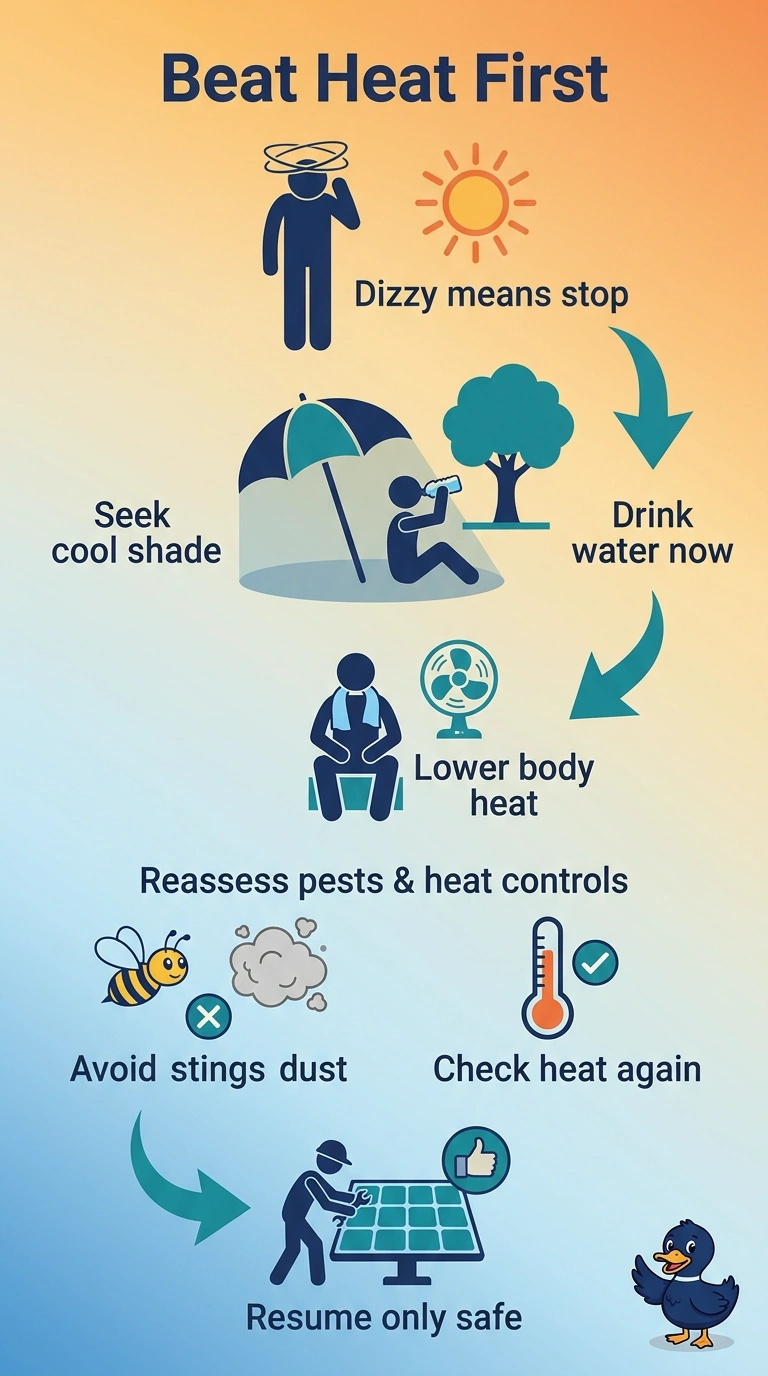
You're the safety net when heat and critters stack up together. Stepping back to cool down and reset the plan beats pushing through, like calling a timeout when players overheat. Your heat illness response must come before pests or production.
Full Explanation
The correct response addresses the immediate heat concern first: dizziness in 102°F sun with no wind is a warning sign, and the dangerously hot tile adds exposure risk. Moving the crew to shade for cooling and hydration stops the exposure; only after the symptomatic worker is reassessed should the lead decide whether conditions and controls allow work to resume. Reassessment must also account for the wasps and nesting pigeons, rather than disturbing them during the survey. Suspending work and arranging a qualified pest assessment before a cooler-morning return is a sensible plan, but it does not get the dizzy worker promptly off the roof and into shade for cooling and hydration. A monitored work-rest schedule, buddy checks, and heat monitoring are established heat controls, but resuming measurements without addressing the active wasp and bird hazards leaves a stated exposure uncontrolled. Isolating the eave and bringing in qualified pest staff is also prudent, but it omits immediate heat relief for the dizzy worker; pest controls alone do not manage a possible heat-related illness. Exam caveat: dizziness can signal serious heat illness; worsening symptoms, confusion, fainting, or failure to improve after cooling calls for urgent medical help, not simply a return-to-work decision. Practical check: confirm the worker is alert and improving in a genuinely cool shaded area, and verify a safe pest-control plan and current heat controls before anyone re-enters the roof.