
A two-person crew mixes and pours six concrete piers for a ground-mount array on a hot morning. Wet mix splashes at ankle height, bagged mix puffs dust when opened, the mixer runs continuously, and cut rebar tails stand above every form. Which combination of PPE and site controls addresses every hazard present during this pour?
Select an answer to reveal the explanation.
Short Explanation
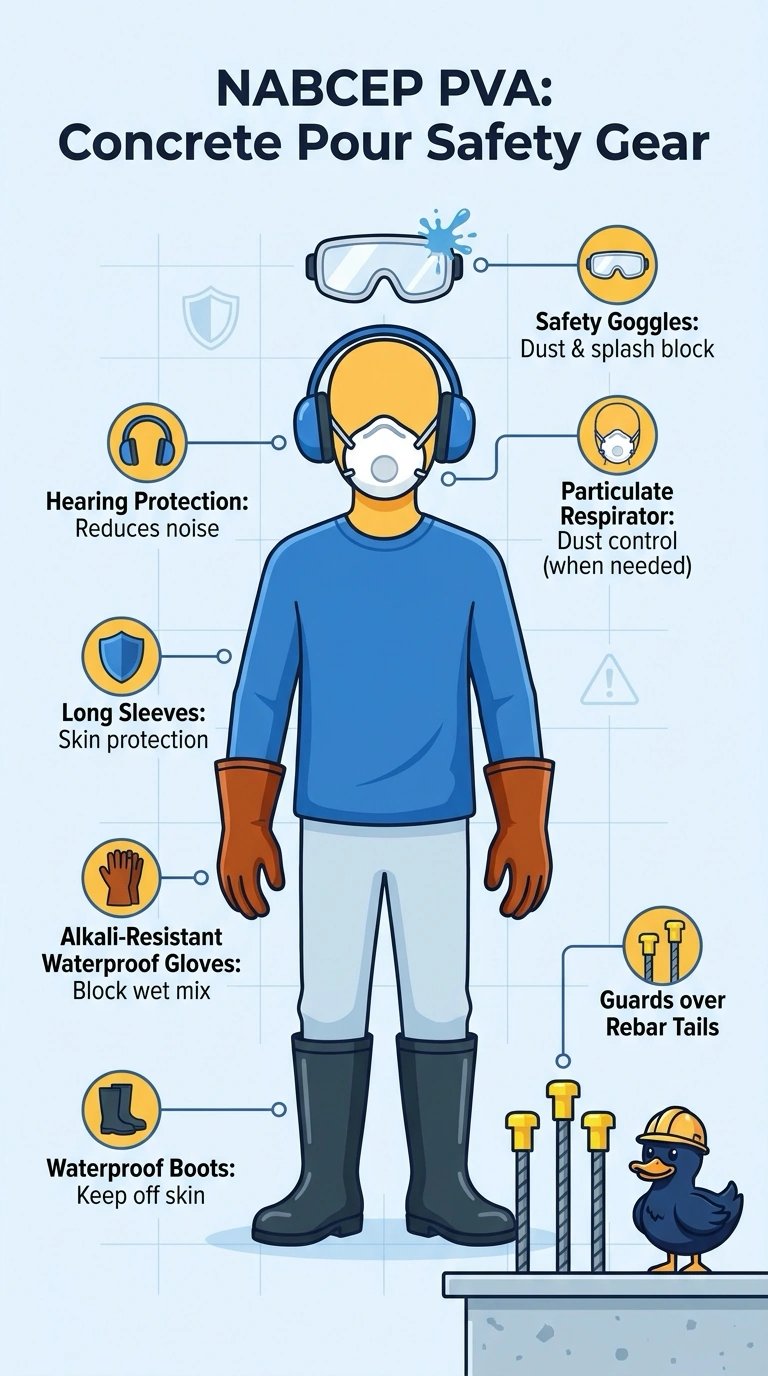
Your pour needs protection like a toolbox needs the right tool for each job: wear goggles, a properly selected particulate respirator, alkali-resistant waterproof gloves and boots, and long sleeves for splashes and dust. Add hearing protection for the mixer and guards over the rebar tails, since PPE can’t replace that impalement control.
Full Explanation
The correct combination controls each exposure through the protection suited to its mechanism. Safety goggles shield the eyes from low-level splashes of wet concrete; a properly selected particulate respirator limits inhalation of dust released when bagged mix is opened. Alkali-resistant waterproof gloves and boots, together with long sleeves, reduce skin contact with wet concrete, which can cause chemical burns. Hearing protection addresses the mixer’s continuous noise, and guards over projecting rebar tails help prevent impalement. The distance-based noise-control approach fails because standing farther from the mixer does not establish that exposure is safe or replace hearing protection. The face-shield substitution approach fails because a face shield does not replace protective eyewear; goggles are needed for splash protection. The cut-protection and ordinary-footwear approach fails because cut-resistant gloves and ordinary work boots do not provide the same protection against wet concrete as alkali-resistant waterproof gloves and boots. Exam caveat: respirator selection must match the dust exposure, and a respiratory-protection program is required when applicable; reduce dust at the source where feasible, and select controls for actual hazards and applicable requirements. Practical check: before pouring, verify the respirator is suitable and properly used, PPE is intact, rebar tails are guarded, and noise and dust controls are in place.