
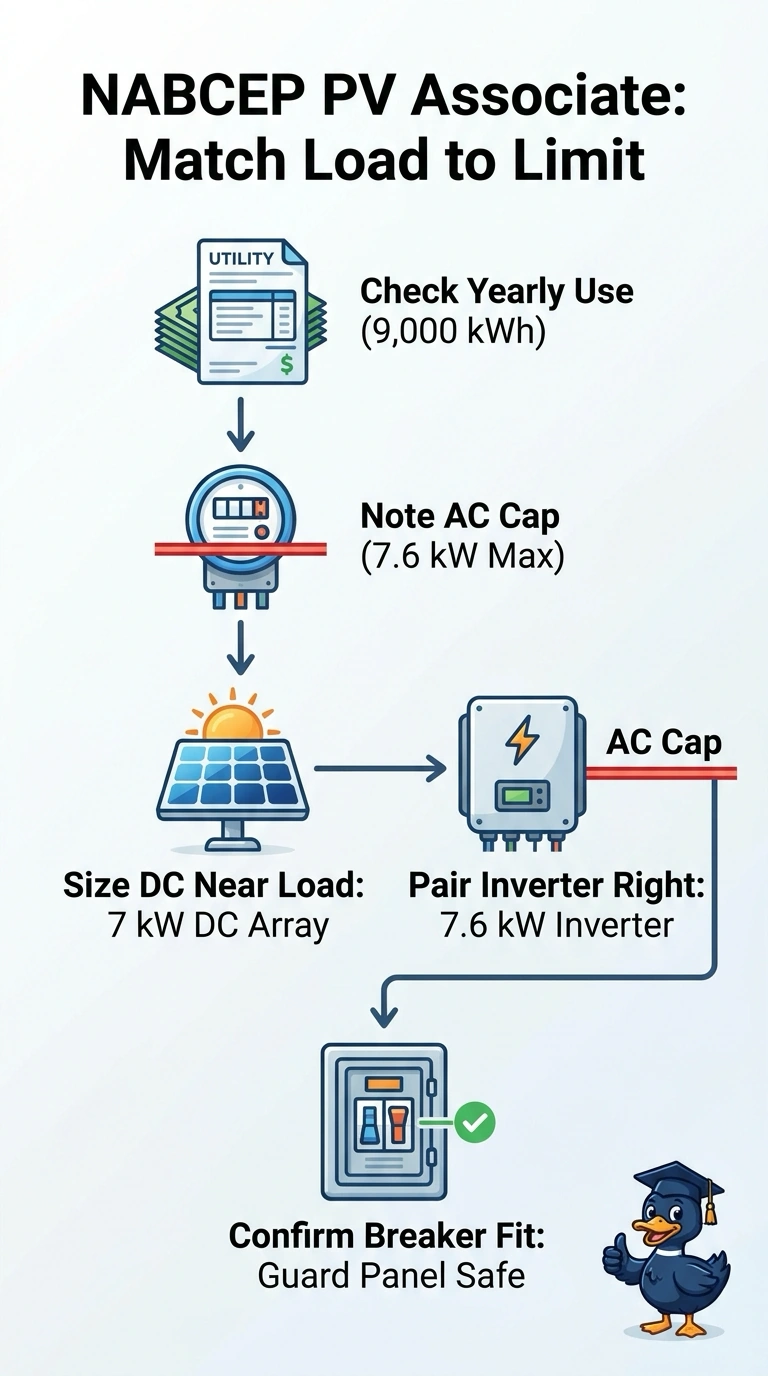
A 1,600 sq ft home uses about 9,000 kWh per year with steady daytime loads, good south roof space for 9 kW, and the utility limits residential net-metered systems to 7.6 kW AC output with a 40A backfeed breaker. The designer estimates a 7 kW DC array makes about 10,000 kWh yearly with a 7.6 kW inverter. Which array size best balances load coverage with interconnection limits?
Select an answer to reveal the explanation.
Short Explanation
You've got to thread the needle between usage and utility rules. A right-sized array covers your yearly need without tripping interconnection caps, like shoes that fit just right for a long walk. Your sizing balance keeps approvals smooth and savings strong.
Full Explanation
Annual load analysis sets the energy target while the utility AC limit and backfeed breaker set the hard ceiling, so the design must satisfy both at once. A 7 kW DC array producing near 10,000 kWh covers the 9,000 kWh load with margin for weather variation, and pairing it with a 7.6 kW inverter stays exactly at the allowed AC output and fits the planned 40A protection. Maximizing roof use with a 9 kW DC array on a 7.6 kW inverter increases clipping losses and can trigger additional utility study or rejection for exceeding DC-to-AC expectations on this program. Undersizing to 5 kW stays safe electrically but leaves roughly 40% of the load unserved, hurting economics after fixed permitting and mobilization costs. Oversizing the inverter to 9 kW does not create more roof energy and directly violates the 7.6 kW AC interconnection cap. Exam caveat is that usable roof space never overrides utility and service limits. Practical check is to confirm yearly kWh target, inverter nameplate AC watts, and backfeed breaker math before submitting the interconnection application.