
A technician at a 750 kW carport array is told the SCADA power trend has been flat since 06:12, while every inverter's front panel shows normal output and no alarms. The site collects field data through a data logger that polls the inverters and meter before sending values to the SCADA host. Which data acquisition check should the technician run first to locate the break in the monitoring path?
Select an answer to reveal the explanation.
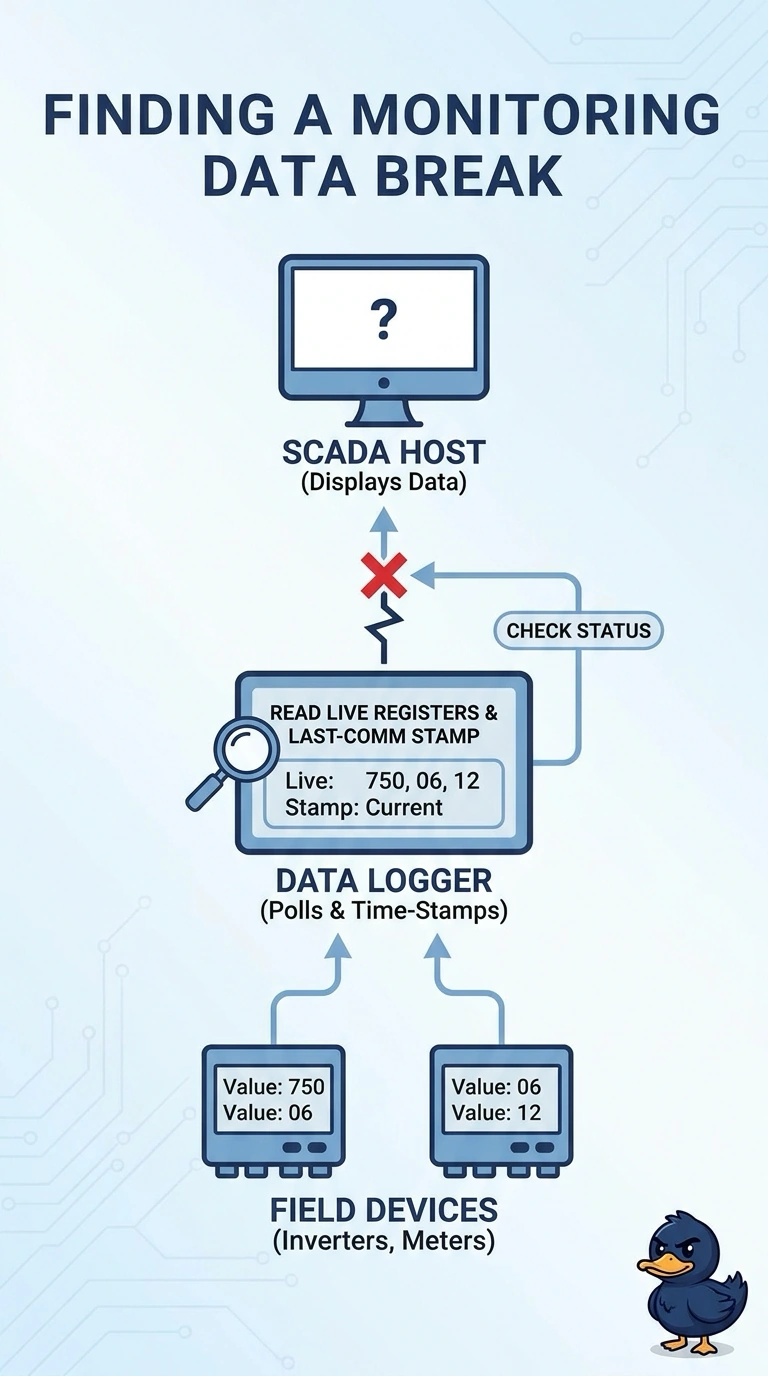
Short Explanation
Your dashboard is only as honest as the pipe feeding it, so start where field wires become numbers: the data logger. Check its live registers and communication status to see whether it is receiving current field data.
Full Explanation
Reading the logger’s live registers and last-communication stamp is the best first check because the logger is the stated intermediary: it polls both the inverters and meter before forwarding values to SCADA. The register values show whether field data is reaching the acquisition point, while the communication stamp indicates whether polling is current. Together, these checks help distinguish a field-side collection problem from a logger-to-host or SCADA-side problem without changing system state. Reviewing SCADA tag quality and historian timestamps is a useful downstream diagnostic, but it examines data after the logger and cannot establish whether the logger is receiving current field values. Capturing traffic between the logger and host can reveal transport loss or delay, but healthy link traffic does not prove that the logger’s inverter and meter polls are succeeding; it skips the acquisition check needed to localize the break. Reading device communication counters and meter status can confirm activity at those endpoints, but it does not verify that the logger is polling them successfully or forwarding their values. Exam caveat: a normal inverter display confirms local output, not end-to-end telemetry, and absence of alarms does not prove that monitoring data is current. Practical check: record the logger’s live values and communication timestamps, then compare them with the SCADA tags and host ingest times to identify where fresh data stops.