
During O&M on a 50-kW roof system the dashboard shows low output, the crew hears buzzing at a combiner, and smells hot plastic near cracked conduit. Which fault recognition should the tech apply to distinguish arc faults from ground faults?
Select an answer to reveal the explanation.
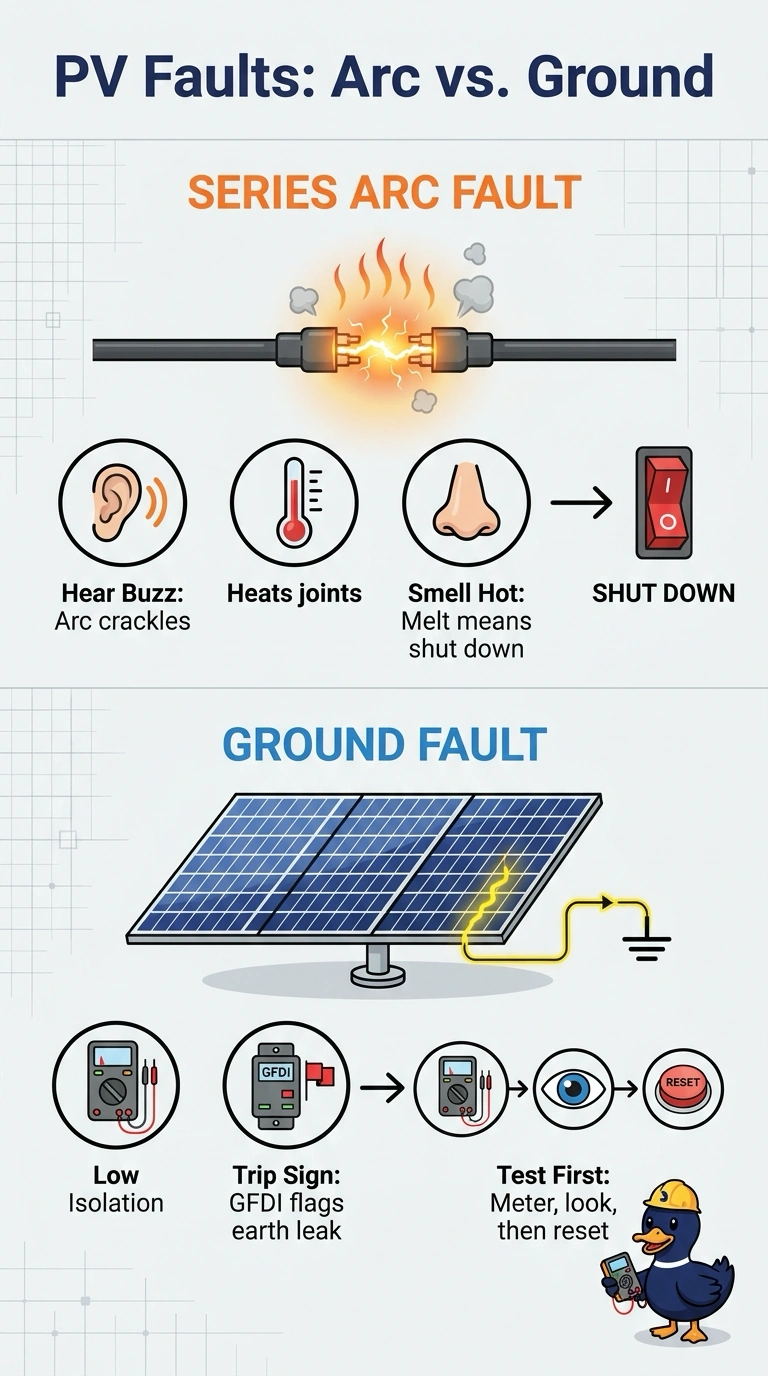
Short Explanation
You can read buzzing and localized heat as warning signs of a possible series arc, while low isolation and a tripped GFDI point toward a ground fault. Spotting arcing early helps you respond to heat before it becomes a fire.
Full Explanation
Buzzing and localized heat at the combiner can indicate a series arc, while low insulation resistance or a tripped ground-fault detector (GFDI) points toward leakage to ground. Low array output alone does not distinguish these faults. Checking insulation resistance and GFDI status is relevant to a ground fault, but using low output to diagnose a series arc overstates what that clue shows. Reviewing arc-fault logs and inspecting the combiner are relevant to arc detection, but low insulation resistance supports a ground-fault investigation, not a series-arc conclusion. Treating buzzing and heat as possible series-arc clues and low isolation with a tripped GFDI as ground-fault clues correctly distinguishes the evidence. Using insulation testing and arc-fault logs can help investigate, but a tripped GFDI indicates a ground-fault condition or detected leakage, not confirmation of a series arc. Exam caveat: indicators are clues, not proof; alarm behavior and protection functions vary by inverter, detector design, and applicable code, so confirm findings against manufacturer procedures and measurements. Practical check: follow site safety and isolation procedures, inspect the cracked conduit and combiner, review fault logs, and perform the specified insulation and grounding checks before restoring service.