
A grocery store pairs its rooftop PV with storage to shave demand peaks. The bank will cycle daily to about 40% depth of discharge, sit in a battery room reaching 40 °C in summer, and get service only once a quarter, with a ten-year life target. Which battery type best fits that duty cycle?
Select an answer to reveal the explanation.
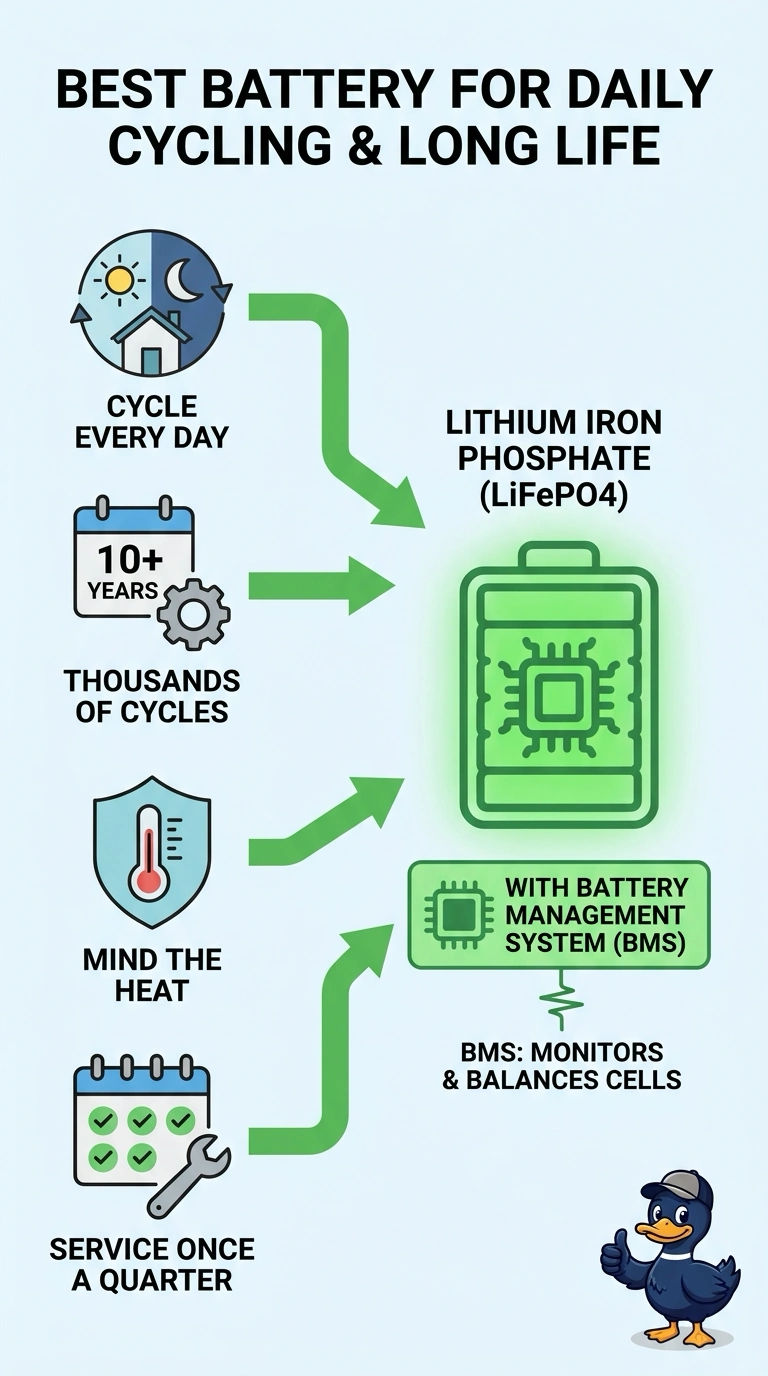
Short Explanation
For your store’s daily cycling, you need a battery rated for thousands of cycles at about 40% depth of discharge; lithium iron phosphate (LFP) with a battery management system is a strong fit for the ten-year target. It’s like choosing a dependable commuter car rather than a vehicle meant to sit in reserve, and the system can monitor and balance cells while avoiding the watering needs of flooded batteries.
Full Explanation
A battery bank fits its application only when its construction and ratings match the duty it will actually perform. Cycling to roughly 40% depth of discharge every day for ten years adds up to thousands of cycles, so compare manufacturers’ cycle-life data at the stated depth of discharge and operating temperature. Lithium iron phosphate can be a good fit for this pattern, and a battery management system monitors cells and may balance them or interrupt abusive conditions, depending on its design. Heat can accelerate battery aging, so the specified operating-temperature range and any thermal management matter in a room reaching 40 °C. Flooded lead-acid batteries require watering, with service frequency depending on the battery and operating conditions. AGM batteries avoid watering but must still be selected for the required cycle life. Standby float batteries are designed primarily for reserve service, so frequent cycling may wear them out sooner. Exam caveat: budget and footprint can affect the choice, since lithium batteries often cost more up front. Practical check: compare cycle-life data at the stated depth of discharge and temperature rather than relying on the amp-hour label.