
A rooftop crew wires a 12-module string to a string inverter where the plan calls for module-level rapid shutdown and one shaded module needs voltage boosting. Which power-electronics choice should the associate verify to meet shutdown and DC-to-DC conversion needs?
Select an answer to reveal the explanation.
Short Explanation
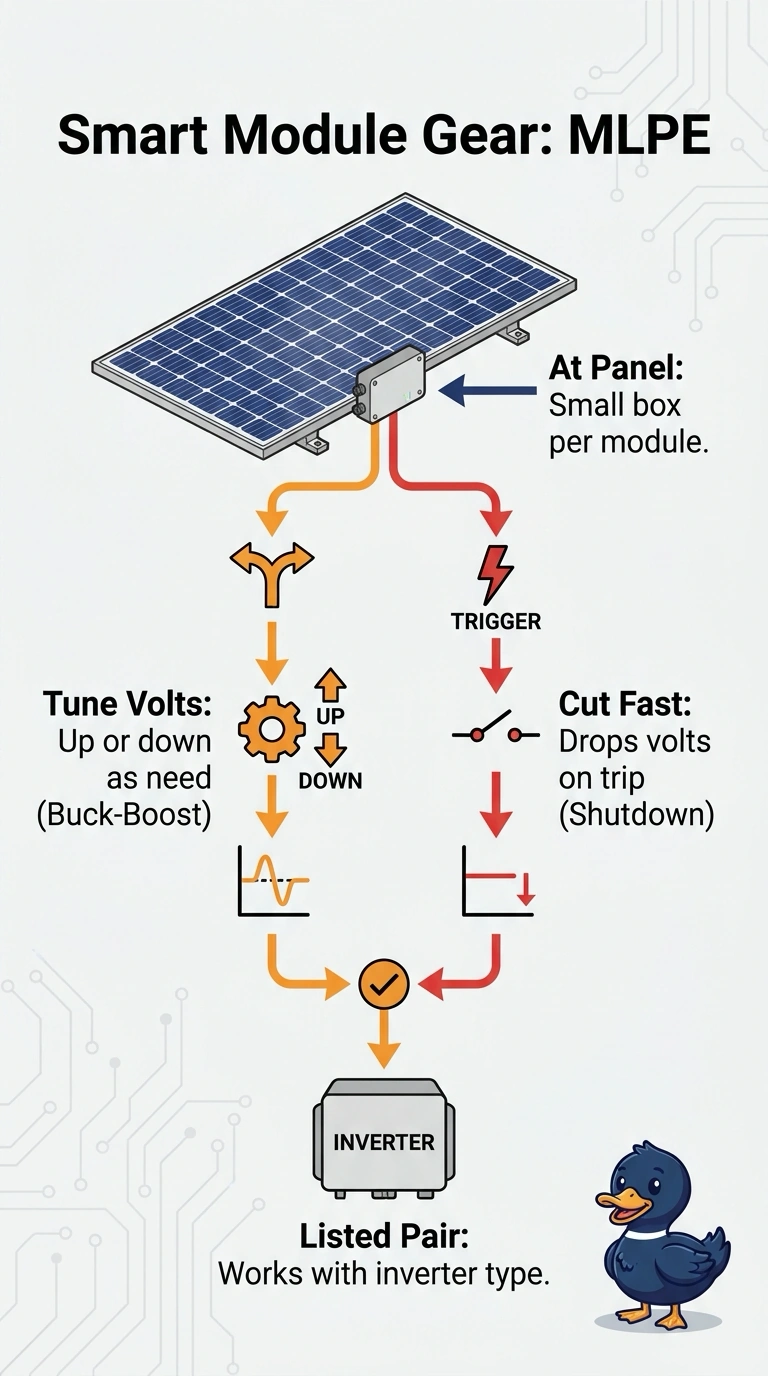
You can meet both needs by choosing module-level equipment that boosts the shaded module’s voltage and reduces output when rapid shutdown is triggered. That combined MLPE approach keeps the planned string-inverter system in view while addressing safety at each module.
Full Explanation
Verify listed module-level power electronics that provide both buck-boost voltage conversion and triggered output reduction. The voltage conversion can help the shaded module operate effectively, while the triggered reduction supports the planned rapid-shutdown function alongside the string inverter. Module-level rapid-shutdown devices that reduce output when triggered address the safety need, but do not provide voltage boosting, so they leave the shaded-module conversion need unmet. Buck-boost optimizers can address the voltage need, but relying on the string inverter’s AC disconnect does not provide module-level output reduction when rapid shutdown is triggered. Module microinverters can manage module output under shade and shut down at each module, but they convert DC to AC rather than providing the requested DC-to-DC conversion in the planned string-inverter system. Exam caveat: rapid-shutdown rules and approved equipment combinations vary by jurisdiction and system design; a generic optimizer or shutdown label alone does not establish compliance. Practical check: confirm the device’s listing, triggered output behavior, buck-boost specifications, and compatibility with the specified string inverter in manufacturer documentation.