
During a walk-through of a 400-module commercial rooftop job, the general contractor's safety officer asks who attended last Friday's safety meeting and where the crew finds hazard information for the roof sealant. Which pair of records answers both the attendance and the hazard-location questions?
Select an answer to reveal the explanation.
Short Explanation
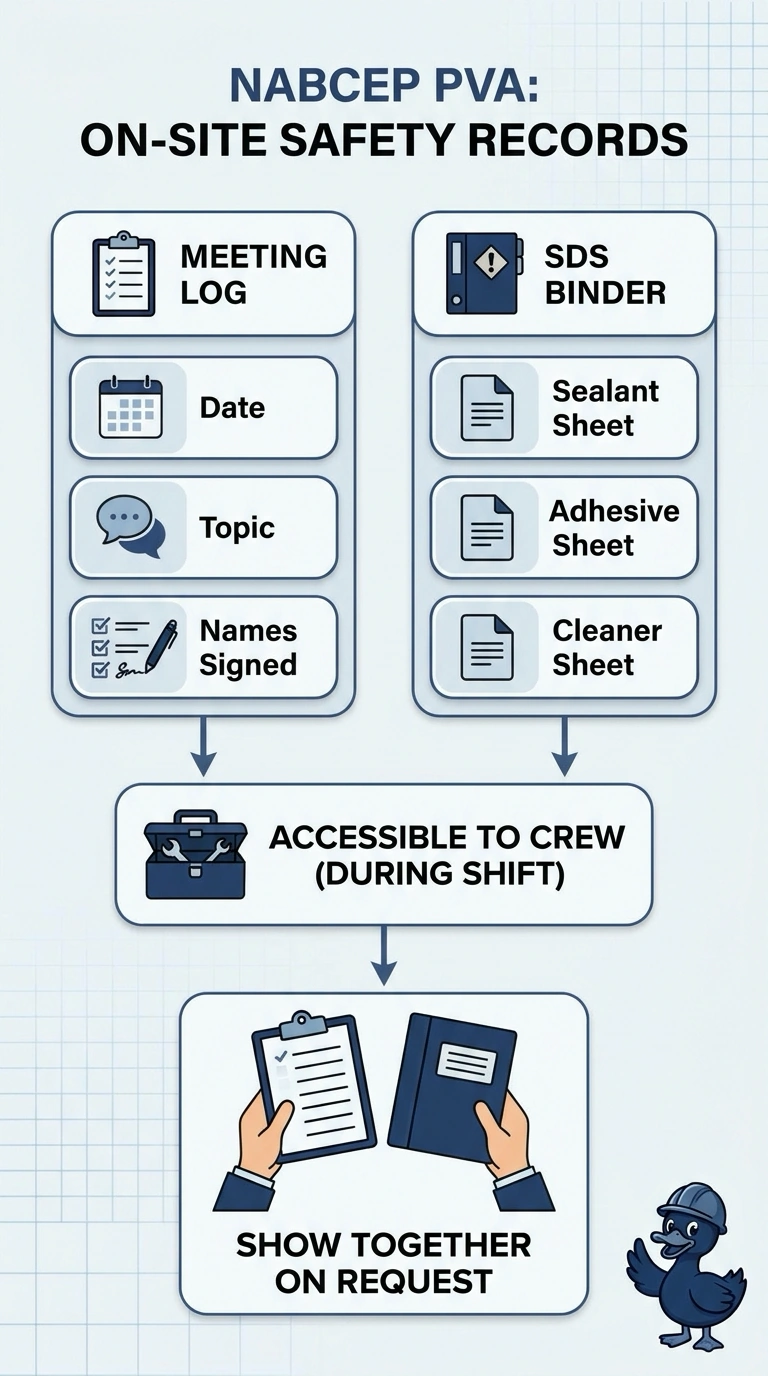
You need two different records: one showing who attended the meeting, and one making the hazard information accessible to the crew. A signed attendance sheet plus an on-site safety data sheet (SDS) binder answers both halves. An injury log records past incidents, and a prevention program states general policy, so neither answers both questions.
Full Explanation
Safety records answer two different questions, so they need two different records. Meeting documentation can include the date, topics covered, and names of attendees; a signed attendance sheet can supply that information. Hazard communication requires safety data sheets to be readily accessible to employees during each work shift. An on-site SDS binder is one way to provide that access. An injury and illness log records incidents that already occurred, saying nothing about who attended Friday's meeting. A written injury and illness prevention program describes how hazards are managed in general terms, but it is not the sealant's hazard data. SDSs filed at a regional office would not answer the location question if they are not readily accessible to the crew during the work shift. Exam caveat: phrases like “readily accessible” often signal that document access is the tested requirement. Practical check: make sure the crew can readily access the sign-in sheet and SDS information at the worksite.