
A junior designer reviews three services: a small cabin with 120 V lighting, a suburban home with 120/240 V appliances, and a warehouse with 208 V motors, and must explain wiring and power differences to the crew. Which comparison of single-phase, split-phase and three-phase circuits best fits each site?
Select an answer to reveal the explanation.
Short Explanation
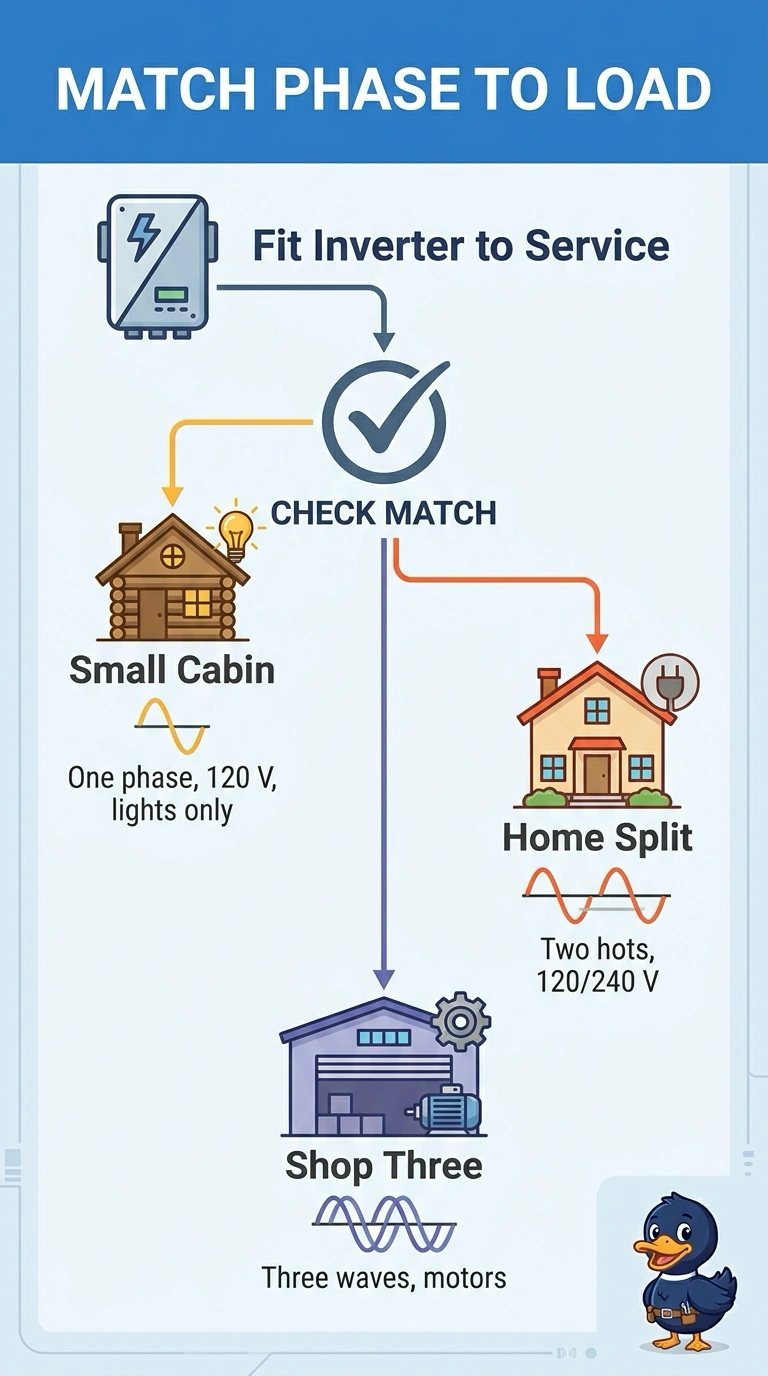
You can match the cabin with single-phase 120 V, the home with split-phase 120/240 V, and the shop with three-phase power. Phasing is like choosing the right-sized engine for each load.
Full Explanation
The suitable comparison is a cabin with 120 V lighting supplied by single-phase 120 V, a typical home supplied by split-phase 120/240 V, and a warehouse with 208 V motors supplied by three-phase power. Split-phase provides 120 V line-to-neutral and 240 V line-to-line, while three-phase power suits motor loads and can provide the warehouse’s required voltage. A cabin supplied with single-phase 240 V may lack the 120 V leg and neutral needed to serve its stated lighting directly. A home supplied with 120/208 V single-phase service from a wye system can serve 120 V loads, but it does not provide the required 120/240 V split-phase supply, so 240 V appliances may not operate as intended. A shop supplied with three-phase 240 V has a phase arrangement suitable for motors, but that voltage does not match the warehouse’s specified 208 V motors; voltage compatibility matters as well as phase count. Exam caveat: “single-phase” describes the supply waveform, while split-phase is a particular 120/240 V single-phase arrangement, not a separate phase count. In practice, check equipment nameplates and verify the service voltage, phase, and wiring configuration before selecting or connecting a supply.