
During maintenance on a flooded lead-acid off-grid bank, one string shows low voltage under load, full electrolyte levels, and clean terminals after an equalize charge. Which electrical test equipment choice correctly uses a load tester, hydrometer, and refractometer to diagnose battery condition?
Select an answer to reveal the explanation.
Short Explanation
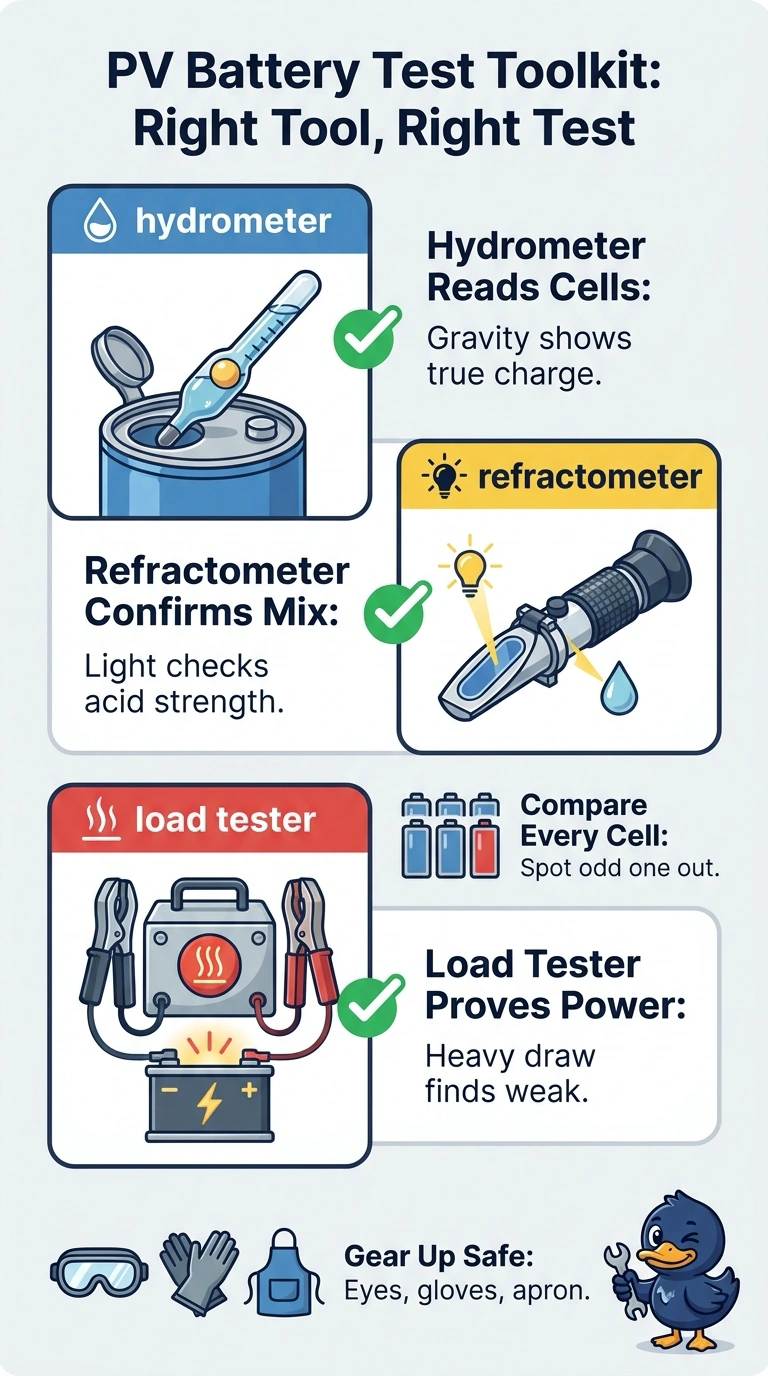
You let each tool answer its own question. Gravity shows charge, optics confirm it, and a real load proves strength.
Full Explanation
The correct approach assigns each instrument its relevant measurement: a hydrometer measures electrolyte specific gravity in individual flooded cells, a refractometer provides an independent check of acid strength, and a load tester evaluates performance while current is drawn. These measurements address different aspects of condition; full electrolyte levels, clean terminals, and a completed equalize charge do not rule out a weak cell or string. A conductance tester can provide a useful rapid estimate of battery condition, but it does not substitute for the specified load test of capacity under draw. Compensated voltage can help assess a battery, yet it cannot reveal cell-specific gravity, so omitting hydrometer readings leaves an important diagnostic check undone. Hydrometer readings alone may indicate electrolyte condition, but they do not provide the requested refractometer confirmation of acid strength. Exam caveat: specific gravity and refractive index are related indicators, but the instruments measure them differently, and neither by itself proves usable capacity. Practical check: take gravity readings from every cell at a consistent temperature, verify the refractometer is calibrated, and perform the load test using the battery maker’s specified test current and duration; compare results across cells and strings.