
A crew must trench 24 inches for conduit to a ground-mount footing area where old paint shop runoff stained soils and utility flags look faded. Overnight rain has left standing water in the open trench. Which digging hazard control should the lead enforce to address trenching, utilities, footings, and soil risks?
Select an answer to reveal the explanation.
Short Explanation
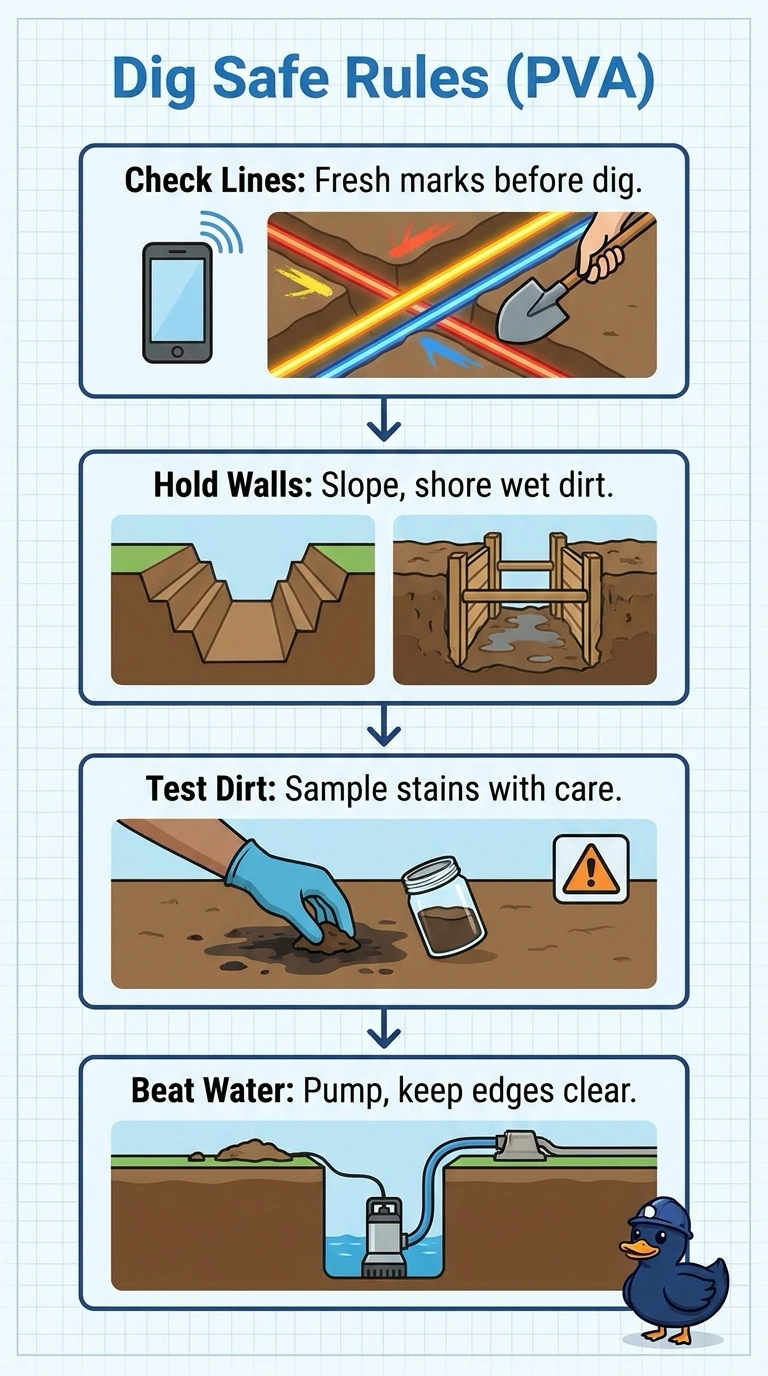
You’re managing several hazards at once, so make sure the crew has a current locate, supported trench walls, tested soil, and pumped-out water before entry. Those checks help you address buried utilities, unstable ground, possible contamination, and rainwater together.
Full Explanation
Refreshing utility marks, shoring the trench walls, testing suspect soil, and pumping out standing water before entry address the distinct hazards described: faded flags leave utility locations uncertain, trench walls can collapse, paint-shop runoff may have contaminated the soil, and accumulated water makes entry unsafe. Diverting runoff along with locating, shoring, and testing does not remove water already standing in the trench, so it does not make entry safe. Locating, shoring, and testing while allowing entry with standing water leaves the water hazard unresolved and can undermine trench stability. Using the current ticket, hand-exposing crossings, shoring, testing, and pumping addresses several risks, but the visibly faded marks call for refreshed utility locating rather than reliance on the existing ticket. Exam caveat: a 24-inch trench depth alone does not establish that entry is safe or determine which protective-system requirements apply; conditions and governing rules matter. Practical check: before entry or footing work, verify that utility marks are refreshed, trench walls are shored, suspect soil is tested, and standing water has been pumped out.