
You terminate #10 copper PV wire into an inverter lug marked AL7CU, 75C, with torque specs, in a hot garage where a prior job mixed metals and overheated. The apprentice asks if any lug and wire will do. Which conductor and termination compatibility check should the installer make for safe current flow?
Select an answer to reveal the explanation.
Short Explanation
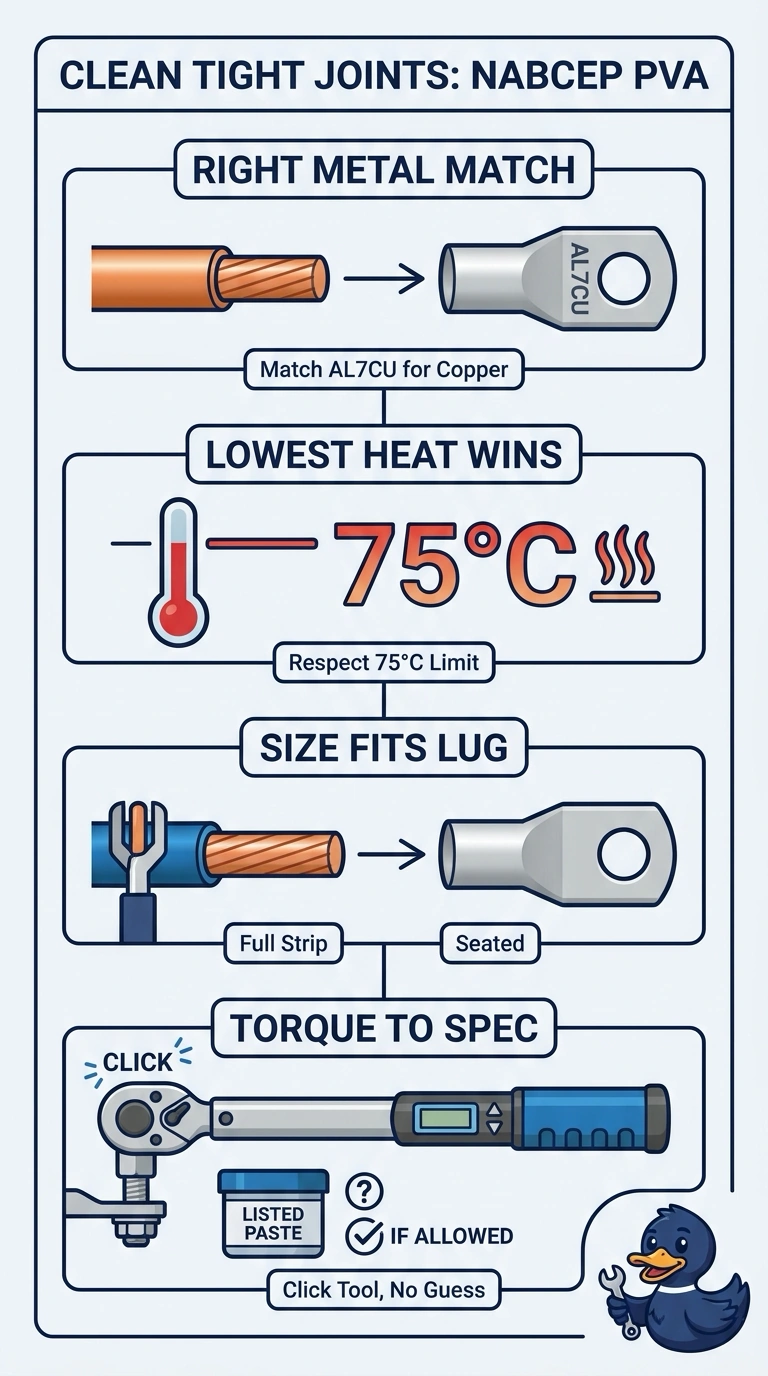
You get cool joints when metal, heat rating, and twist force all agree. A lug match is a handshake where rated torque seals clean copper to the right port.
Full Explanation
The correct check brings together the conductor material, the terminal temperature rating, and the specified termination procedure. AL7CU identifies a lug listed for aluminum or copper, so the existing #10 copper conductor is compatible when installed as directed. The 75°C marking limits the temperature rating used for the termination, and the specified torque is essential for a reliable connection. Any paste must be listed for the application and used only when the lug or equipment instructions permit it. Using a 90°C ampacity value is a familiar way to work with conductor insulation ratings, but it does not override the lug’s 75°C terminal limitation; the applicable ampacity must respect the lowest relevant rating. Applying listed antioxidant paste routinely also misses a key condition: listing alone does not authorize its use on every lug, and it must not conflict with manufacturer instructions. Aluminum can be suitable in an AL7CU lug, but substituting it here fails to match the stated #10 copper conductor; an aluminum conductor would also need to be properly sized and prepared for the specific installation. Exam caveat: a conductor’s insulation temperature rating is not interchangeable with the terminal’s marked temperature rating. Practical check: verify the lug markings and equipment instructions, confirm the conductor material and size, and use a calibrated torque tool at the specified value.