
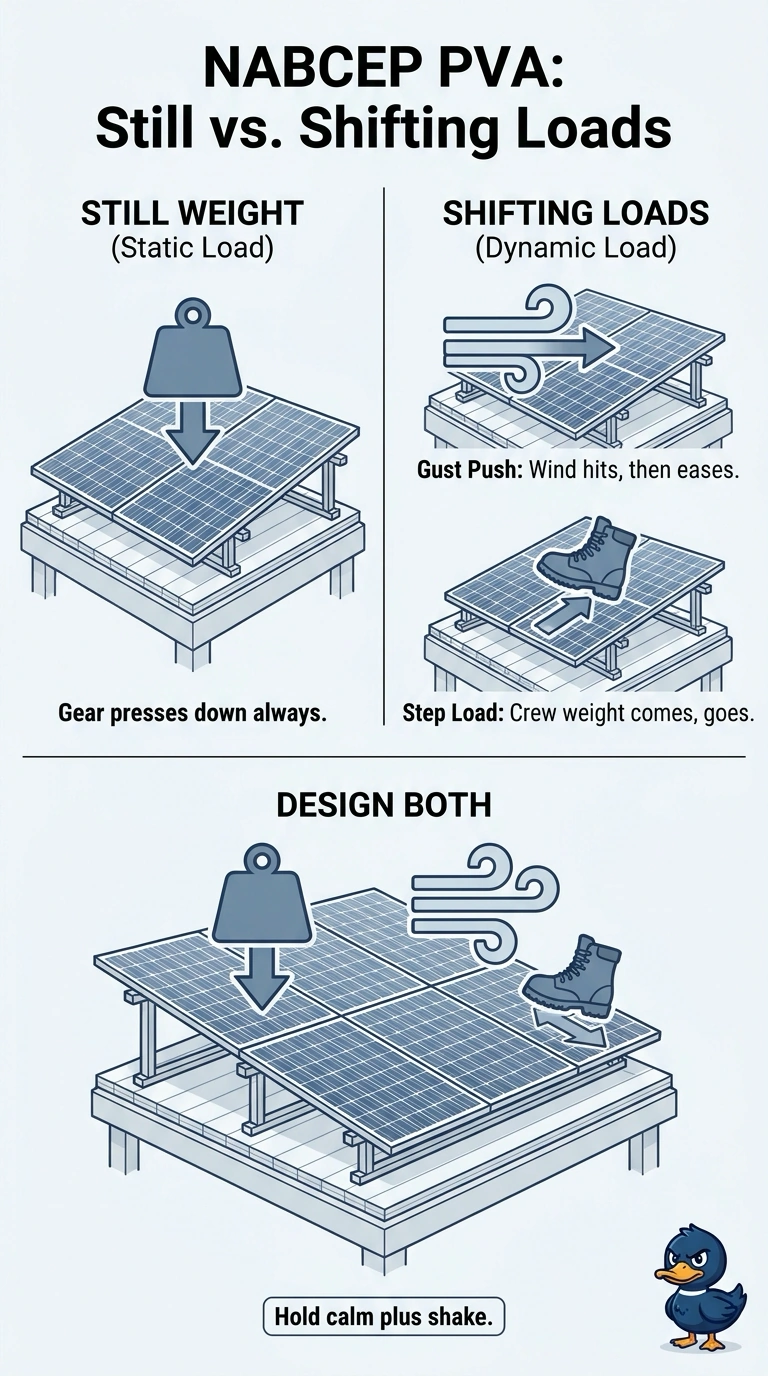
An engineer reviews a coastal ground-mount where heavy panels sit still but winter gusts shake racks and crews walk rows for cleaning. Which load distinction should the associate state to separate structural considerations for static from dynamic loads?
Select an answer to reveal the explanation.
Short Explanation
You’re weighing what stays in place against what changes or moves. Getting steady versus dynamic forces right helps you choose stronger rack designs.
Full Explanation
Panel and rack self-weight is essentially steady, so it is classified as static; wind gusts vary over time, and walking crews create moving contact forces, so both are identified as dynamic in the requested distinction. Treating crew traffic as a conventional static live load may be appropriate for some design checks, but it does not capture the dynamic character of walking asked about here. Using an equivalent-static wind case is a design procedure for representing wind effects; it does not make gusts physically static, and classifying crew traffic as dynamic alone leaves out that distinction. Representing crew walking as a stationary maintenance surcharge can check a sustained imposed load, but it likewise misses the changing forces produced by people moving along the rows. Exam caveat: codes may prescribe equivalent-static procedures or define worker loads as live loads for particular checks, so distinguish the design model from the physical load category the question asks you to state. Practical check: verify the governing code and load combinations, and confirm that wind response and maintenance foot traffic are addressed in relevant strength, serviceability, and vibration checks.