
An install lead is setting aluminum rail on shingle mounts for a 7-kW crew build with L-feet, lag screws, and torque-marked rail bolts, working on a hot roof with limited time. The foreman wants fast but spec-ready rails. Which common power and hand tool practice should the crew use for the mounting structures?
Select an answer to reveal the explanation.
Short Explanation
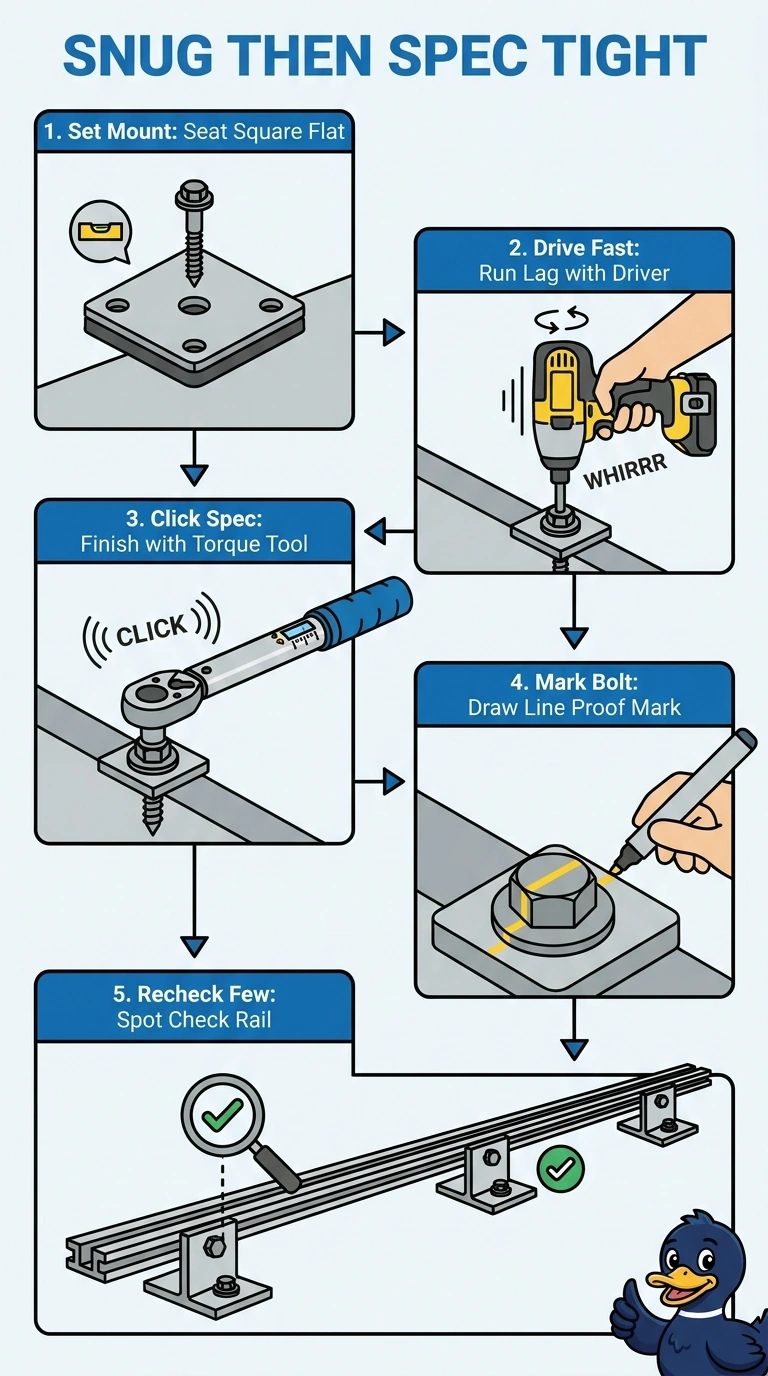
You can drive the lags quickly with an impact driver, then use a calibrated torque wrench to set the final torque and mark each bolt. That gives you the speed you need while leaving a clear, spec-ready check on the hardware.
Full Explanation
The specified practice uses an impact driver to install the lag screws quickly, then a calibrated torque wrench to set final torque and a visible mark to show the check was completed. Separating rapid driving from final torque control avoids relying on impact-tool output, which can vary with battery condition, fastener resistance, and tool settings. Impact-driving the lags, using a calibrated wrench for final torque, and recording values instead of marking the hardware does not provide the requested visible on-hardware indication; records may aid traceability, but they do not replace the marks. Using the driver’s torque setting and marking each bolt fails because that setting is not a substitute for a calibrated torque wrench and does not verify final torque to the specified value. Hand-ratcheting the lags before calibrated final torque and marking retains the final check, but is slower and conflicts with the need to work quickly on a time-limited build. Exam caveat: follow the mounting-system manufacturer’s sequence and torque values; do not infer a universal torque from the tool choice or fastener size. Practical check: confirm the wrench’s calibration status and setting, use it on the specified fasteners, and verify each required mark is visible after tightening.