
A designer lays out rails on a home with 24-inch truss spacing, 5/8-inch plywood deck, and a hip roof needing rails across three supports with short overhang. Which structural locating and span judgment should the installer use to set safe attachments?
Select an answer to reveal the explanation.
Short Explanation
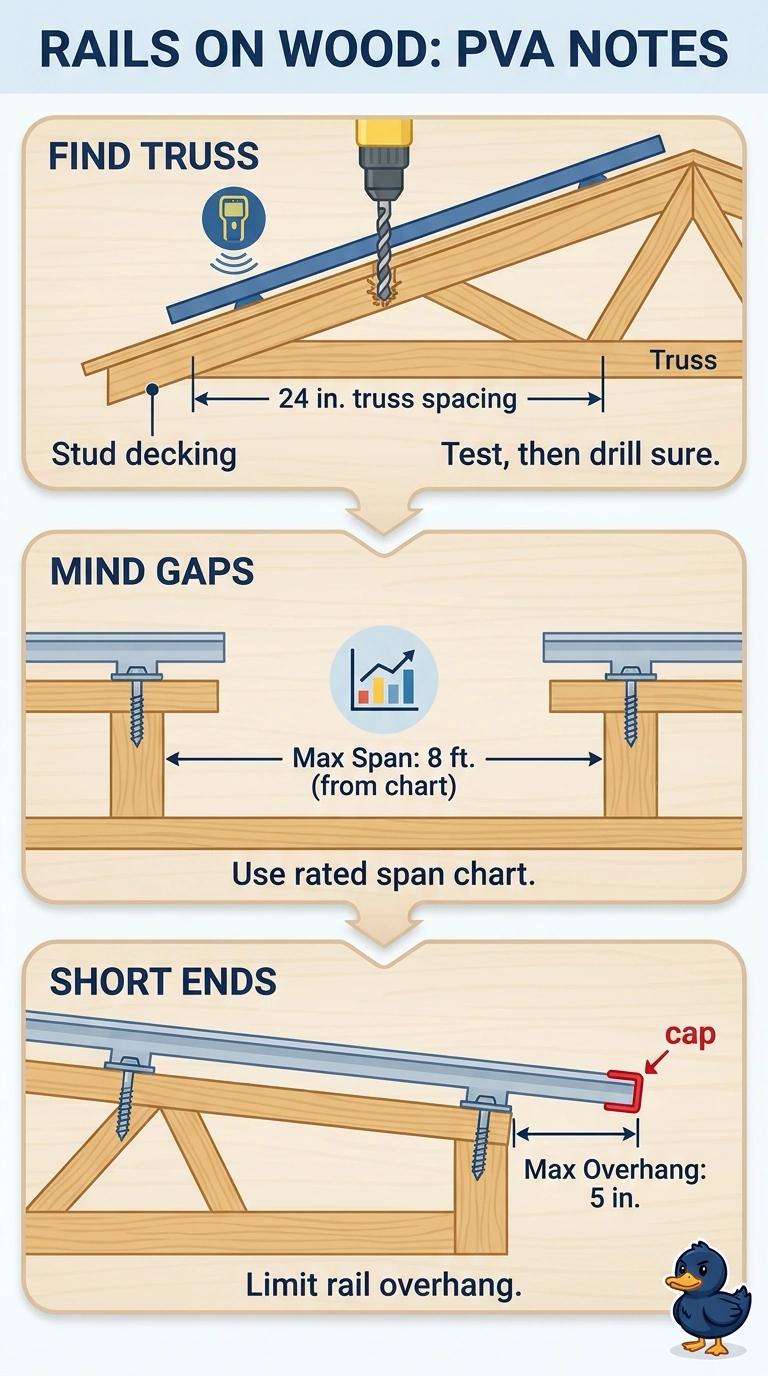
You need to land each attachment on a truss, not just the plywood deck. Keeping the end projection within span limits helps your rails stay secure and your roof protected.
Full Explanation
The sound judgment is to locate the truss lines in the field, confirm them with pilot holes, use span tables to set lag spacing for the actual rail and support conditions, and limit the rail’s overhang past the end mounts. The 5/8-inch plywood deck is sheathing, not a substitute for attachment to trusses; the 24-inch spacing and three-support layout affect the span judgment. Using two-support tables does not match the stated three-support arrangement, so the lag schedule may not suit the actual conditions. Using three-support tables but following a longer manufacturer-allowed cantilever disregards the specified short overhang; a maximum allowance does not require using it. Relying on the framing plan’s 24-inch layout without field verification can put attachments between supports if the built trusses differ from the plan. Exam caveat: approved rail instructions and applicable structural requirements govern, and tables must match the actual rail, support spacing, and loading. Practical check: confirm each proposed attachment with a locator and small pilot hole, then verify the support count, lag schedule, and end projection against the product documentation.