
A retrofit adds a shaded dormer string to a high-voltage residential inverter, and the local code requires module-level rapid shutdown with shade-tolerant harvest on the affected roof face. Which power electronics choice correctly explains rapid shutdown devices and DC-to-DC converters for this need?
Select an answer to reveal the explanation.
Short Explanation
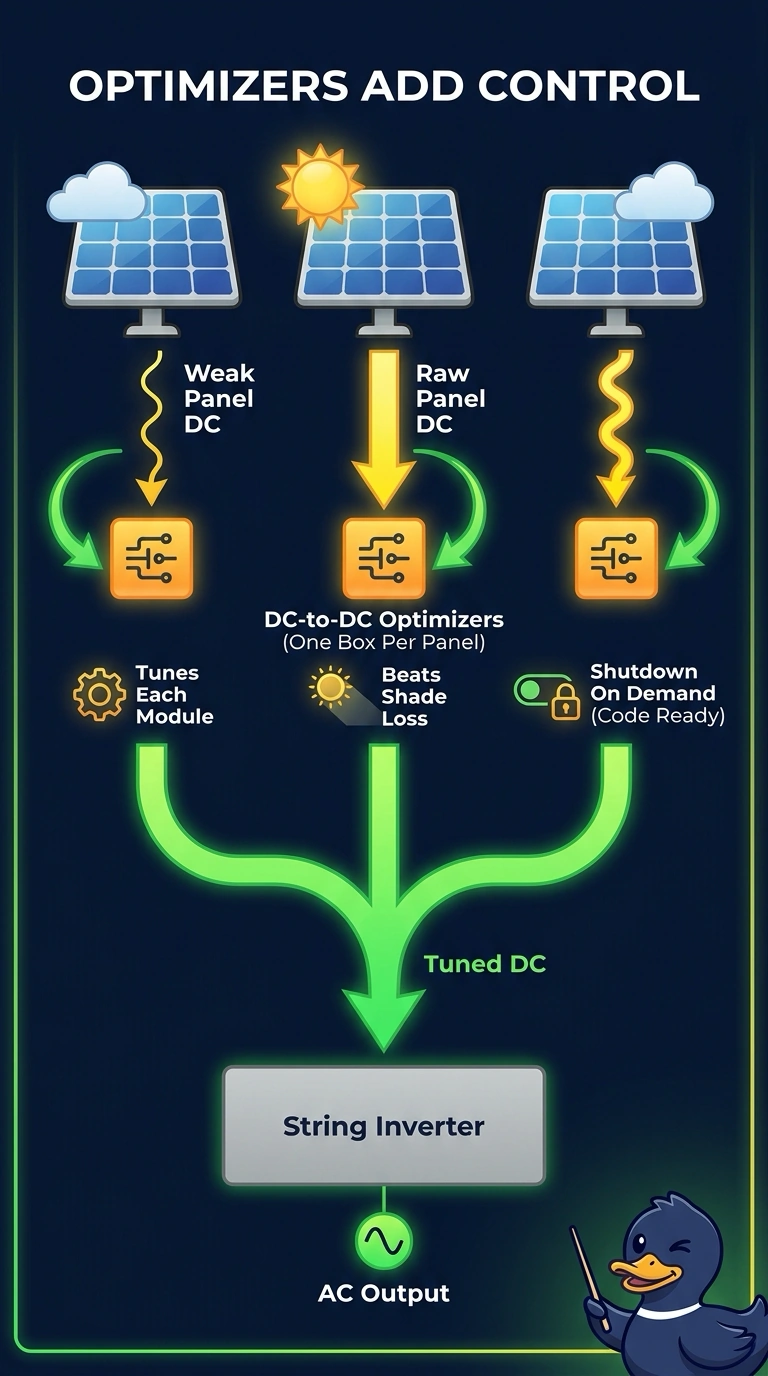
You give each shaded panel its own helper. Per-panel tuning plus built-in shutdown delivers both harvest and safety.
Full Explanation
Module-level DC-to-DC optimizers with integrated rapid shutdown are the right fit because each unit conditions its panel’s output, helping limit mismatch losses when dormer modules are shaded, while the integrated function can reduce voltage to the required safe level on command. Module-level optimizers with shade-aware tracking but only string-level shutdown can help harvest, yet inverter-level shutdown does not provide the required module-level shutdown. Replacing the high-voltage string inverter with microinverters provides module-level conversion and shutdown, but changes the specified inverter architecture; microinverters convert DC to AC at each module rather than serving as DC-to-DC optimizers with that string inverter. Module-level rapid-shutdown devices plus a dedicated MPPT can separate the dormer string, but string-level conversion still processes its modules together, so mismatch can reduce harvest rather than providing module-level shade-tolerant conditioning. Exam caveat: rapid-shutdown compliance depends on listed equipment, system design, and applicable local rules, not merely on the presence of optimizers. Practical check: confirm inverter compatibility, optimizer and shutdown-device listings, required shutdown boundaries, and the manufacturer’s commissioning procedure before installation.