
You size racking for a lakefront home with open wind fetch, heavy lake-effect snow, and a mapped quake zone, using flush-mount rails on comp shingles. The building office flags structural review. Which location-load review for wind, snow, and seismic forces should the designer document for the racking choice?
Select an answer to reveal the explanation.
Short Explanation
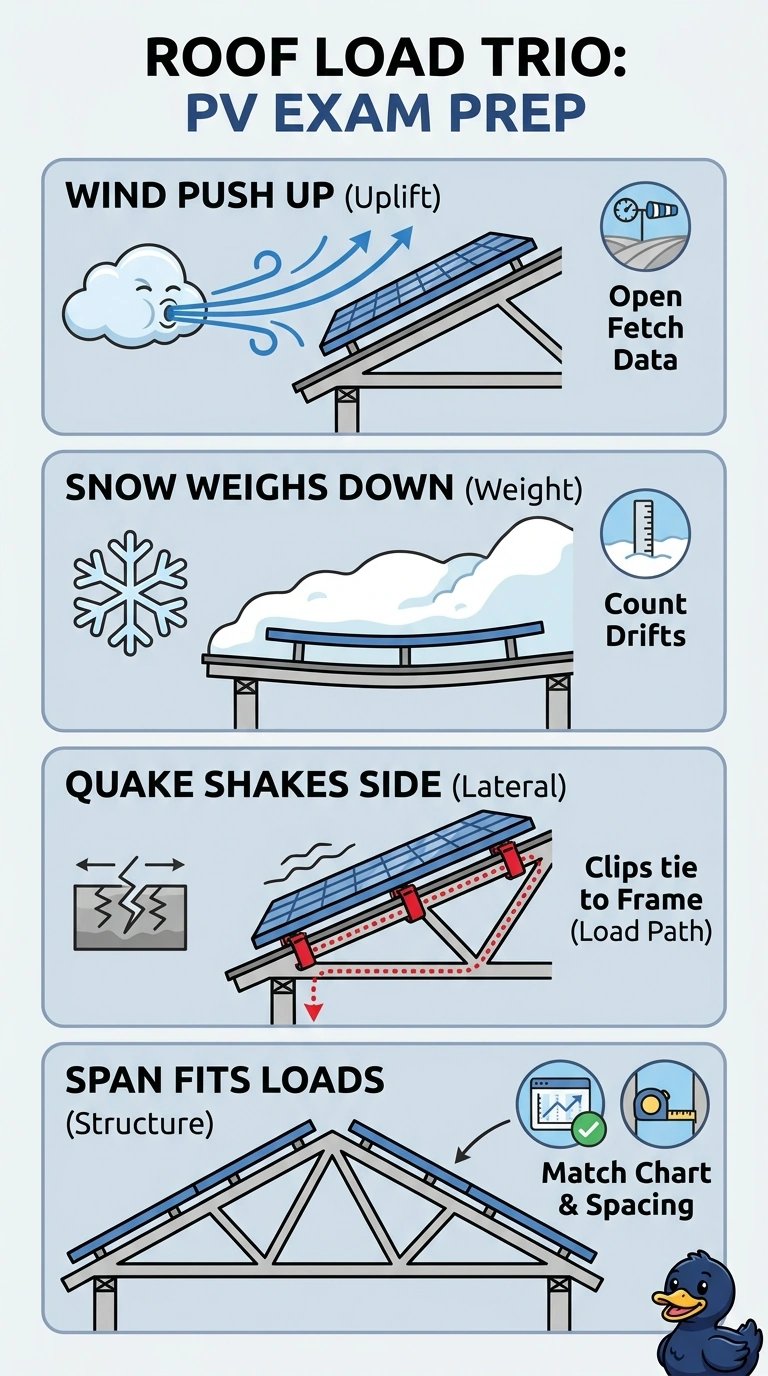
You keep the rails secure when you account for wind, snow, and seismic forces together. Matching the racking to local loads is like choosing gear for wind, deep snow, and shaking all at once.
Full Explanation
The review should document wind uplift and snow weight using data appropriate to the actual location, then address seismic forces with compatible clips and a continuous load path into the supporting frame. This accounts for the open lakefront exposure, heavy lake-effect snowfall, mapped seismic hazard, and the building office’s request for structural review. Treating the shoreline as sheltered can understate wind pressure and uplift; the exposure classification must reflect the actual upwind terrain and fetch. Using the county’s ordinary ground-snow value may fail to represent the stated lake-effect accumulation and can understate roof loading, even when site wind and seismic forces are checked. Applying local wind and snow loads but omitting a verified seismic load path leaves unaddressed how seismic forces reach the building frame. Exam caveat: code load terms and required combinations vary by jurisdiction, so a product’s published capacity does not replace the governing site-specific design review. Practical check: confirm the adopted code, site wind exposure, and snow criteria with the building office, then verify rail, attachment, roof-framing, and load-path capacities against the actual flush-mount installation details.