
A crew adds a second battery cabinet to a basement system with PV disconnects, a battery disconnect, and an exterior rapid-shutdown switch, the inspector flagged missing directional cues last time, and the owner needs clear emergency actions. Which storage labeling and marking approach best meets field expectations?
Select an answer to reveal the explanation.
Short Explanation
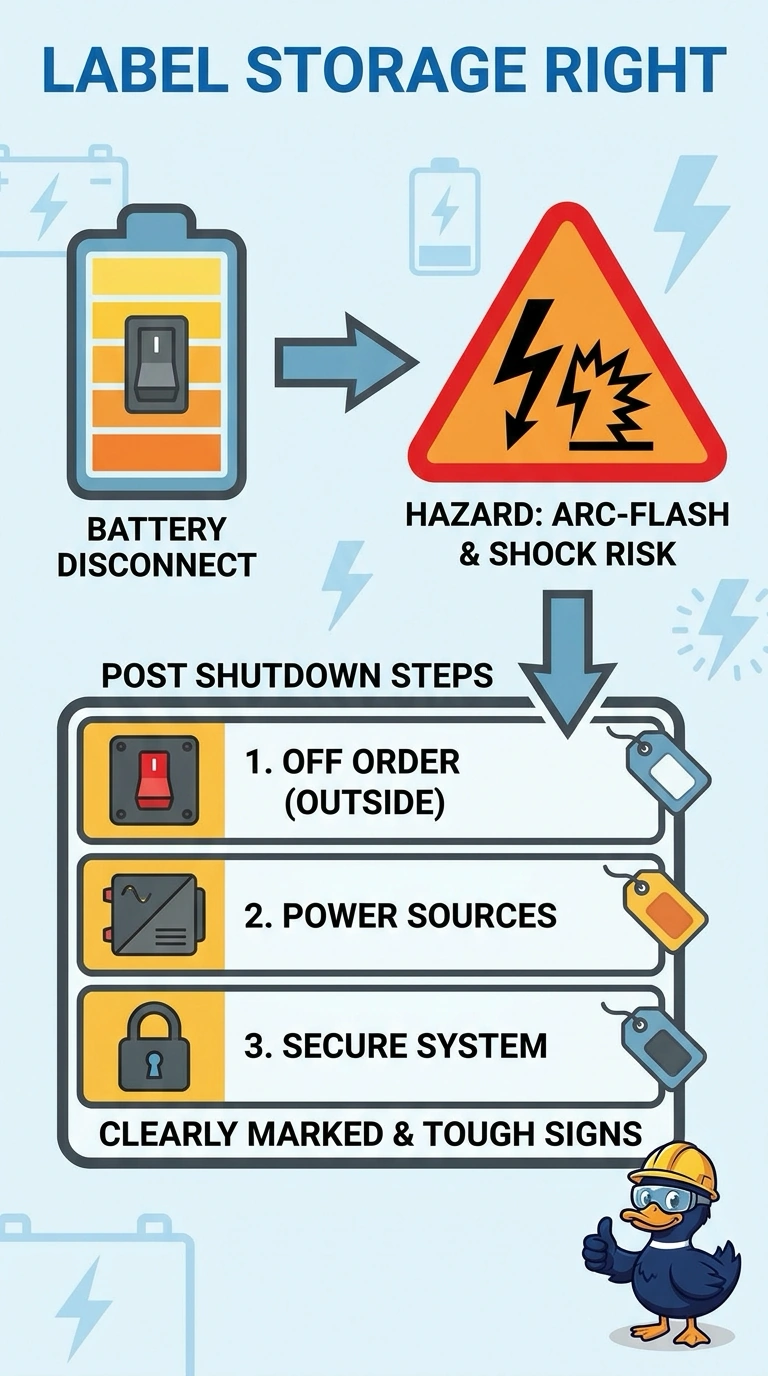
You’ll give responders the key information by labeling battery disconnects with arc-flash and shock warnings and clearly identifying power sources and shutdown steps. Those cues help responders understand hazards and act quickly under pressure.
Full Explanation
The approach that best meets the stated field needs labels battery disconnects with arc-flash and shock warnings and clearly marks power sources and shutdown steps. In a system with PV, battery storage, and an exterior rapid-shutdown switch, responders need hazard information and usable instructions for locating and operating the relevant controls. Durable source and shutdown labels at every disconnect are useful, but omitting directional arrows between the basement equipment and exterior switch leaves the inspector’s concern about directional cues unaddressed. Directional labels identifying PV and battery sources and shutdown steps provide useful guidance, but omitting arc-flash and shock warnings at battery disconnects fails to communicate important electrical hazards. Applying hazard, source, and directional labels throughout is also incomplete if the added battery cabinet is left out of the shutdown sequence; responders need instructions that account for all installed storage. Exam caveat: exact label wording, format, and placement can depend on the adopted electrical code, equipment instructions, and local authority requirements, so broad field principles do not replace those rules. Practical check: walk the actual shutdown route, confirm every source and disconnect—including both battery cabinets—is identified, and verify that a responder can follow the marked directions and instructions without relying on memory.