
A caller wants a quote for a suburban home with a south roof, mentioning high bills, a co-op utility, and that they rent with plans to move in two years. Your manager needs only viable leads passed to design. Which qualifying check on location, utility, and ownership should the sales associate complete before a site visit?
Select an answer to reveal the explanation.
Short Explanation
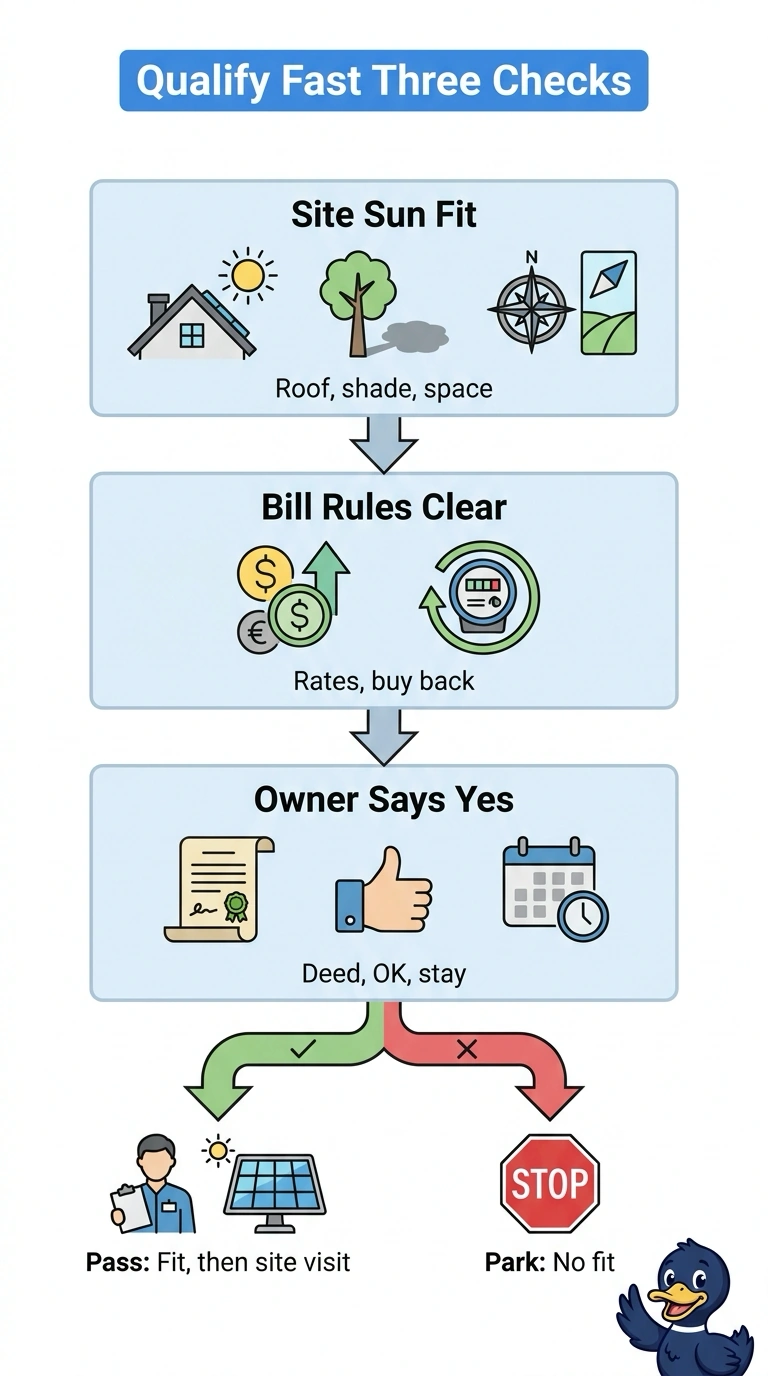
You save site trips when you check sun, utility economics, and who can approve the work before moving a lead forward. Strong qualifying checks roof and shade, co-op rules and rates, renter approval, and expected stay length.
Full Explanation
The viable check screens the three sources of project fit before committing design resources: the roof and shade affect physical suitability, the co-op’s purchase rules and rates affect whether solar makes financial sense, and renter approval plus the expected stay address permission and the caller’s likely occupancy horizon. Checking roof and shade, co-op purchase rules, renter approval, and expected stay but deferring rate review until design leaves out a key utility-specific economic factor; an eligible project may still be unattractive under the co-op’s rates or compensation rules. Checking the lease term and planned move date along with roof and utility details helps assess timing, but does not establish that the landlord permits rooftop work, so the site visit could be premature. Obtaining the landlord’s approval along with roof and utility details addresses permission but not whether the caller expects to remain long enough for the proposal to suit their plans. A caveat: utility rules and compensation can vary by co-op and may change, so general assumptions are not a substitute for current, account-specific confirmation. As a practical check, verify the service address and account’s applicable solar rules and rates, then document the roof’s apparent suitability, written owner permission, and the renter’s expected stay before passing the lead to design.