
A builder is comparing bids for eight townhomes with mixed roof faces, light chimney shade, and a request for panel-level data with no batteries and minimal single-point outage risk. The lots share one service trench. Which inverter comparison should the designer present to match string, micro, multimode, and central types to this need?
Select an answer to reveal the explanation.
Short Explanation
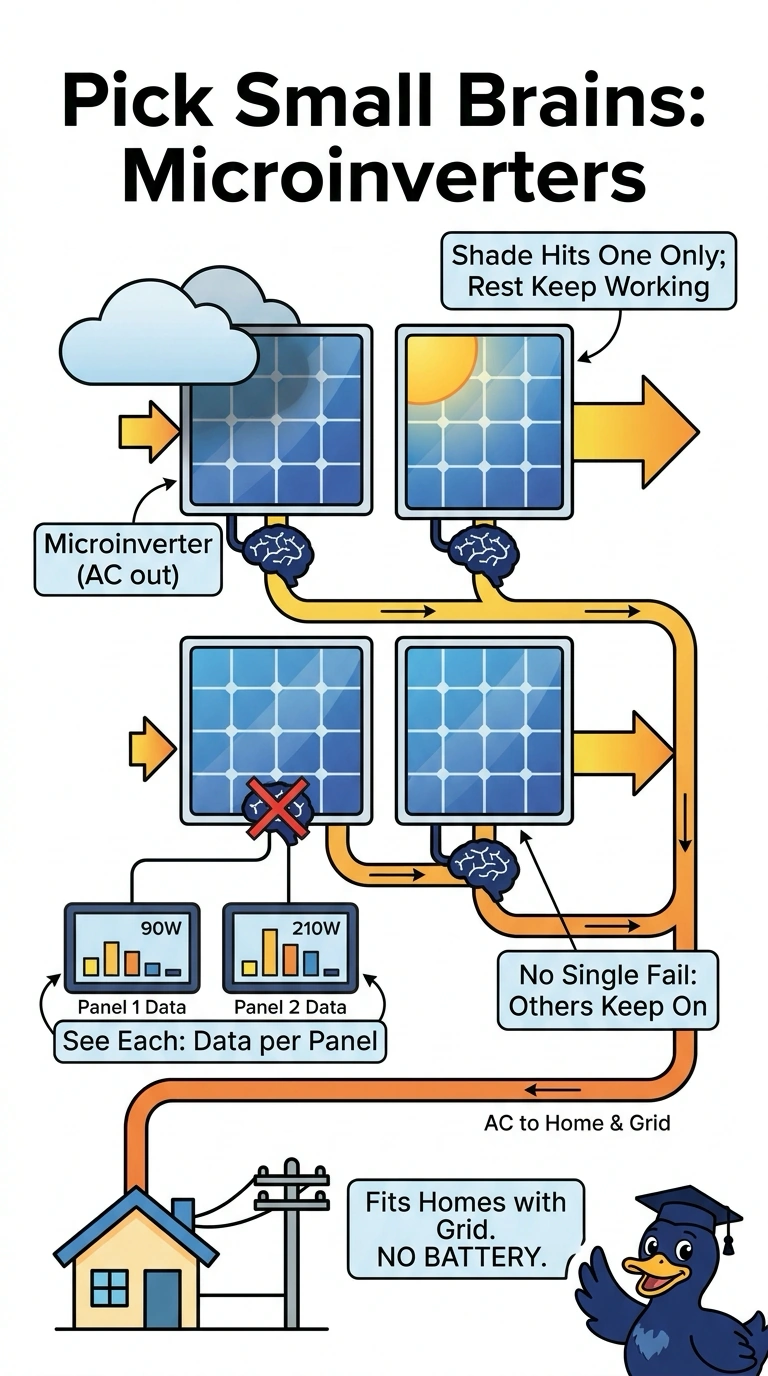
With mixed roof faces and chimney shade, you’ll get better shade tolerance and panel-level data from microinverters, with no single inverter becoming an outage point. It’s like giving each panel its own flashlight, so one shaded panel won’t dim the rest.
Full Explanation
The mechanism is architecture sets mismatch and failure domains: microinverters do MPPT and inversion per module for shade tolerance and panel data with distributed failure, string inverters centralize MPPT per series run, central units scale that to MW blocks, and multimode adds battery and grid-forming functions. Recommending microinverters satisfies mixed faces, light shade, monitoring, and no-battery distributed resilience together. Recommending string inverters fails by concept because one or two MPPTs per run keeps string mismatch and a whole-array outage despite lower cost. Recommending central inverters fails by concept because utility-scale blocks mismatch scale, footprint, and use case for townhomes. Recommending multimode fails by concept because battery-interactive features add cost and complexity with no batteries requested. Exam caveat is to still verify rapid shutdown and monitoring gateway needs per plan. Practical check is to map shade by face to show per-MPPT gain.