
A pallet of flooded lead-acid batteries arrives at the warehouse and one case has cracked, spilling electrolyte onto the wooden pallet. The receiving lead and helper are already in acid-rated gloves and face shields, and the spill is small enough for the crew to handle. Cleanup must stay at the pallet so the dock keeps running, and the acid must be neutralized before anything is wiped up or discarded. Which spill-response step should they take first for the battery acid?
Select an answer to reveal the explanation.
Short Explanation
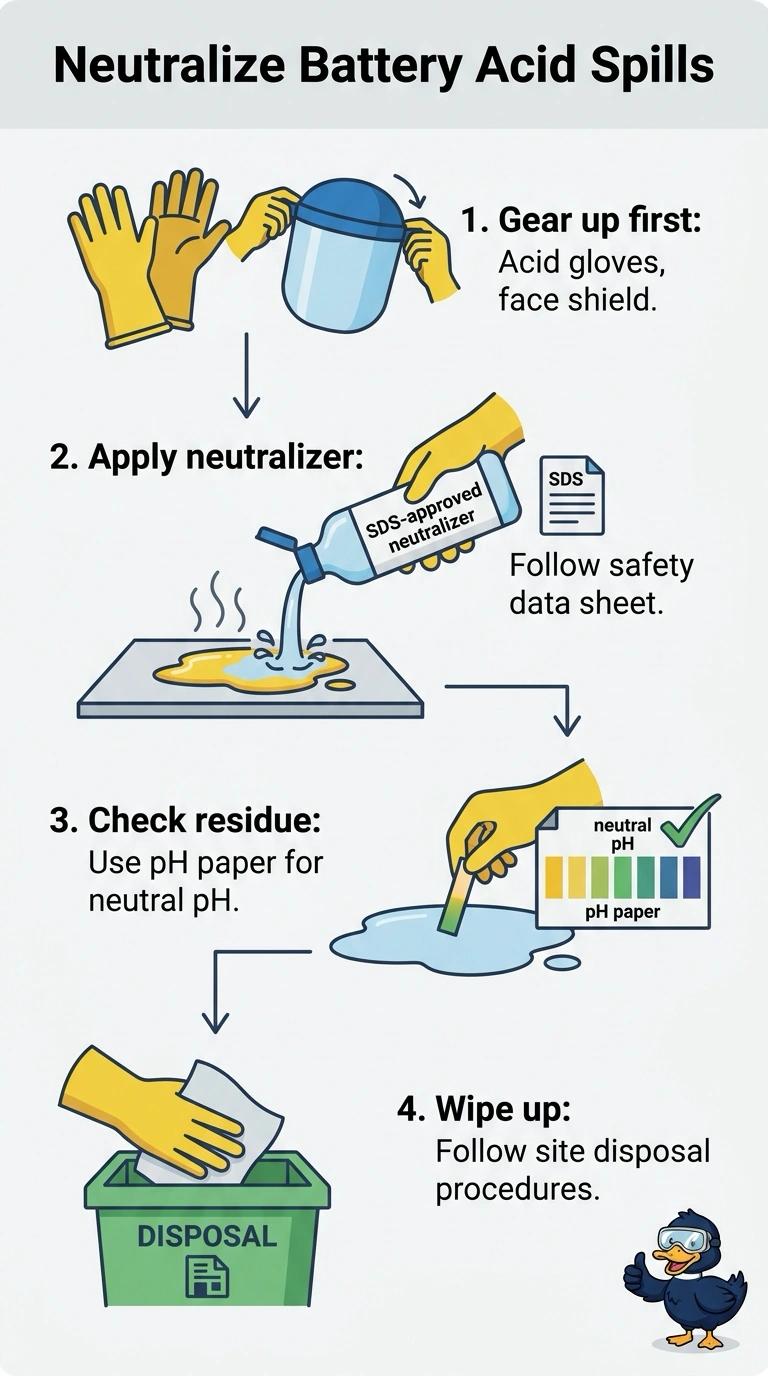
Use the neutralizer named in the battery’s SDS as directed, then check with pH paper to confirm the residue is neutral before you wipe it up; fizzing stopping isn’t an all-clear. It’s like checking a thermometer instead of guessing by feel: neutral pH confirms the acid’s been neutralized, while absorbent pads or a water rinse alone won’t do that.
Full Explanation
The correct first step is to apply a neutralizer approved by the battery or spill-kit SDS, following its directions, and confirm the residue has reached neutral pH before wiping it up or disposing of it. This controls the acid at the source and meets the stated sequence and location constraints. Acid-compatible absorbent can be useful for containment, but applying it before neutralization treats the spill as ready for collection without first meeting the required neutralization step. Flushing into a compatible collection tray may capture liquid, but dilution is not neutralization; recovering or handling that liquid before neutralizing it still misses the required sequence. Pausing dock traffic while using the spill kit at the pallet follows the neutralization procedure, but it fails the explicit requirement to keep the dock running. Exam caveat: response procedures vary by battery type, neutralizer, and site rules, so do not assume water dilution is an approved substitute for neutralization. Practical check: consult the applicable SDS and spill-kit instructions, verify neutral pH with suitable test material, and confirm the collected residue is packaged and disposed of as site procedures require.