
A sales rep is sizing a 1,800-sq-ft home that used 10,800 kWh last year, runs a pool pump mostly in summer afternoons, and plans to add an EV next spring with night charging. The utility has high summer time-of-use rates. Which preliminary system estimate method accounts for current and anticipated usage with daily and seasonal profile?
Select an answer to reveal the explanation.
Short Explanation
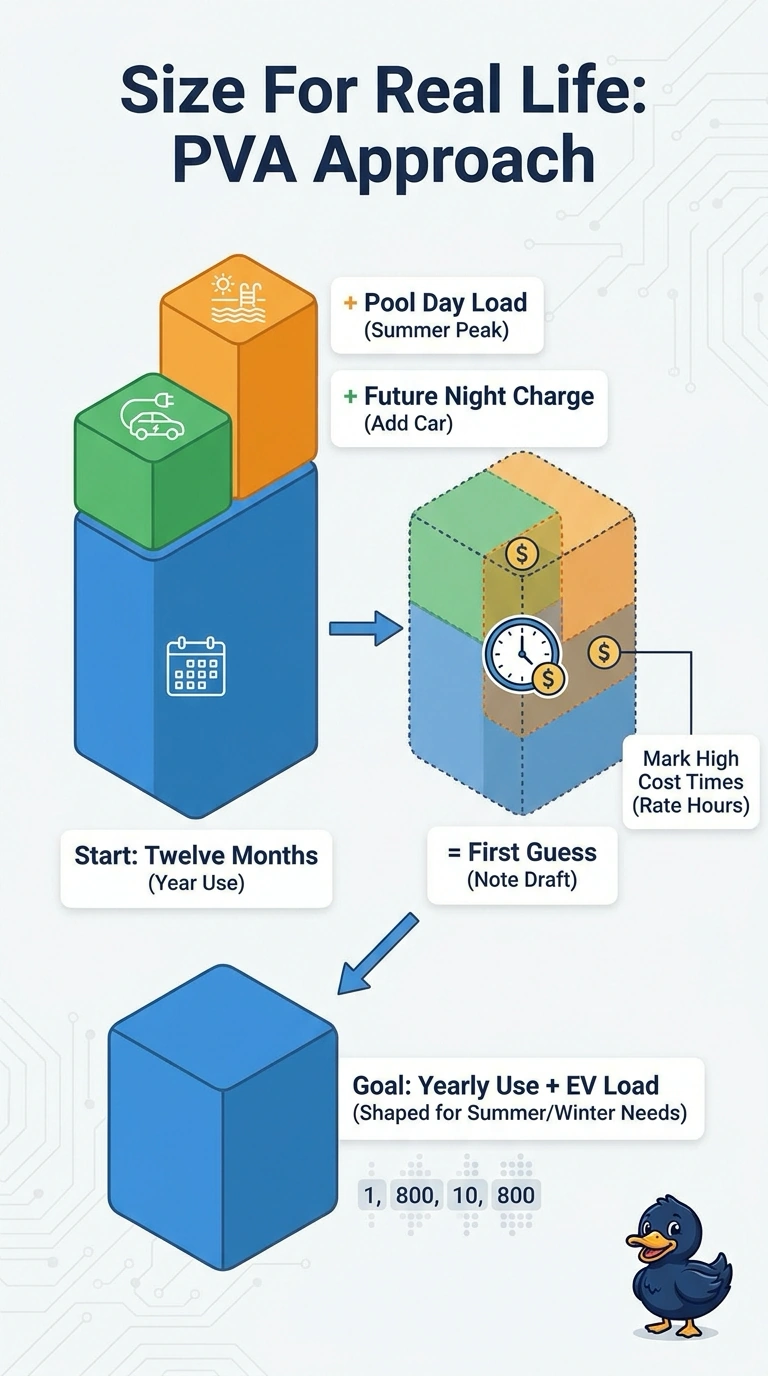
You’re sizing for the life they plan to live, not just last year’s use. Adding the EV and summer pump to the yearly profile keeps your estimate grounded in daily and seasonal needs.
Full Explanation
The correct method starts with weather-normalized annual consumption to represent the home’s underlying current demand, then adds the planned EV load and shapes use for summer days and winter nights. This captures the pool pump’s summer-afternoon contribution and the EV’s anticipated night charging, both relevant when summer rates are high. Using metered annual use plus the EV and seasonal timing accounts for those loads, but without weather normalization an unusually hot or mild year can distort the preliminary estimate. Using normalized yearly use and projected EV energy with seasonal allocation recognizes seasonal differences, but not when loads occur within each day, so it misses the daily profile. Using normalized yearly use plus the EV while shaping summer afternoons and daytime charging in both seasons recognizes summer demand, but places the EV load in the wrong daily period because charging is planned at night. Exam caveat: this is a preliminary energy-based estimate, not a final array design; roof orientation, shading, system losses, export rules, and interval-meter data can change the result. Practical check: compare assumed seasonal and hourly load shapes with utility interval data, and confirm the EV’s expected charging schedule and annual mileage with the homeowner.