
A solar maintenance crew washes carport modules weekly with a concentrated caustic cleaner. Two workers still get stinging hands and red forearms even though they wear the gloves and goggles named on the safety data sheet, and the irritation mostly starts when they open the drum and dilute the concentrate. Handling training was refreshed last month. Which control should the safety officer prioritize to reduce the crew's chemical exposure?
Select an answer to reveal the explanation.
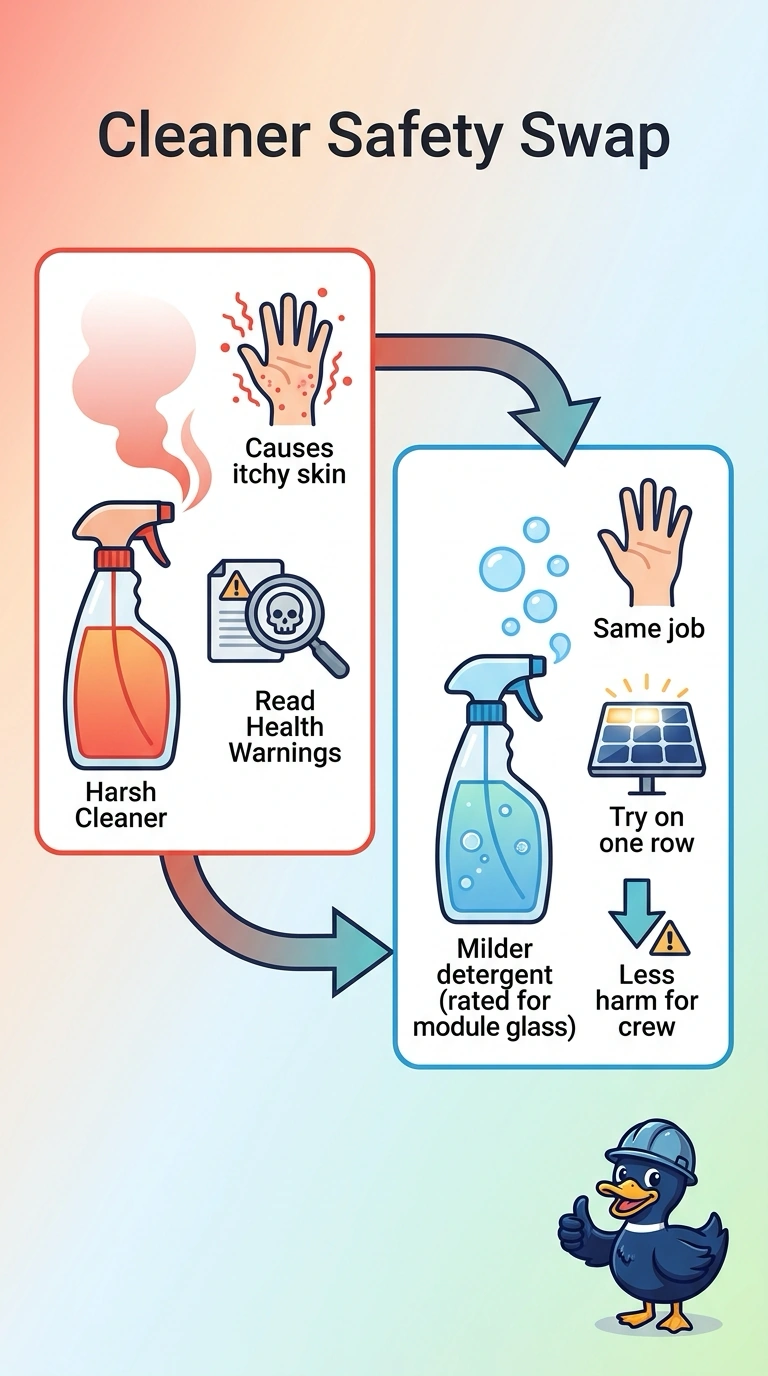
Short Explanation
You can reduce exposure at the source with substitution: switch to a milder detergent rated for module glass. It’s like replacing a harsh tool with a gentler one, but you’ll still need to check that the product is suitable and handle it safely.
Full Explanation
The hierarchy of controls places substitution high on the list because replacing a hazardous product with a less hazardous one can reduce exposure at multiple steps. It does not guarantee that exposure or risk disappears, so workers should continue using appropriate protective equipment and safe handling practices. PPE depends on proper selection, fit, condition and use. A rotate-and-rinse schedule is an administrative strategy that leaves the hazard in place and relies on compliance; refreshed training does not eliminate that hazard. A shrouded wand with a drip tray may help contain spray during module washing, but it does not address the opening and dilution steps where irritation starts. Check the product's safety information and confirm its compatibility with the modules and other system materials before use.