
A sales rep meets a homeowner with good credit, steady tax liability, and limited cash for a 6 kW rooftop system. The state offers an upfront rebate, the federal program offers a credit against taxes owed, and a local bank offers a low-rate loan. The customer asks how each dollar actually helps. Which economics comparison of tax credits, rebates, and low-interest loans best guides the purchase choice?
Select an answer to reveal the explanation.
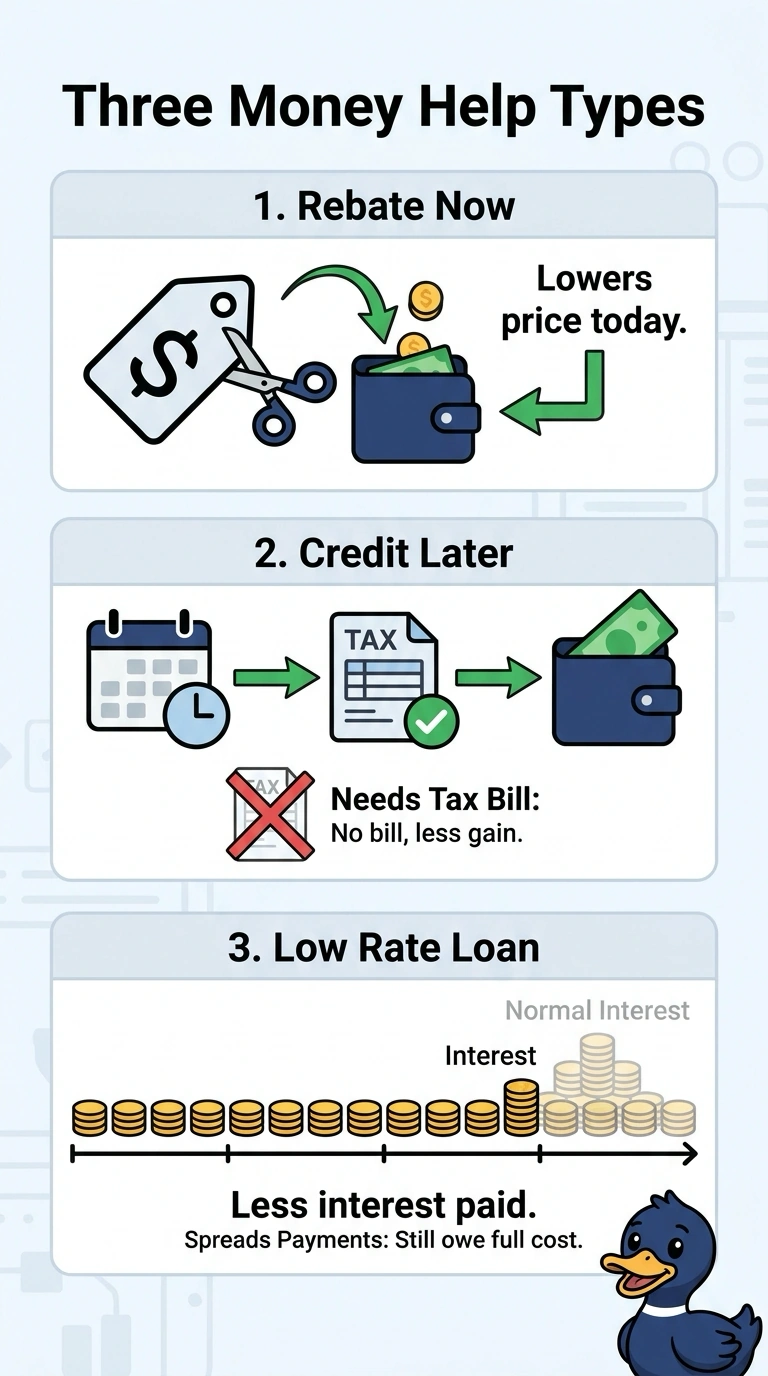
Short Explanation
Each benefit reaches your wallet on a different schedule: a rebate lowers your upfront cost, a tax credit offsets taxes you owe later, and a low-rate loan spreads payments with less interest. When cash is tight, timing helps you compare what you can use now, at tax time, and over time.
Full Explanation
The comparison that matches the homeowner’s situation is that a rebate lowers the system’s purchase price upfront, a tax credit offsets tax owed when claimed, and a low-rate loan spreads the cost over time with less interest. A standard-rate loan can spread payments, but it does not reflect the lower interest cost of the bank’s offered low-rate loan. A refundable credit may exceed taxes owed, but that describes a different credit design from the stated credit against taxes owed. A deduction reduces taxable income rather than directly offsetting tax owed, so it is not the same benefit as the federal credit in this scenario. Exam caveat: a tax credit is not automatically cash at purchase, and how much the customer can use depends on program rules and the taxpayer’s circumstances. Practical check: compare the installed price after the rebate, the credit the customer can actually use and when, and the loan’s APR, fees, term, and total repayment.