
A crew plans a 36-module array on a 10-year-old standing-seam metal shop roof pitched at 4/12. The panel maker's 30-year warranty is voided by any pierced fastener and no solar waiver exists, the panels carry a limited point-load rating between purlins, the roofer's spec caps ballasted roof mounts at 2/12, and the site has no yard space. Which mounting system satisfies the warranty, load, slope, and site limits?
Select an answer to reveal the explanation.
Short Explanation
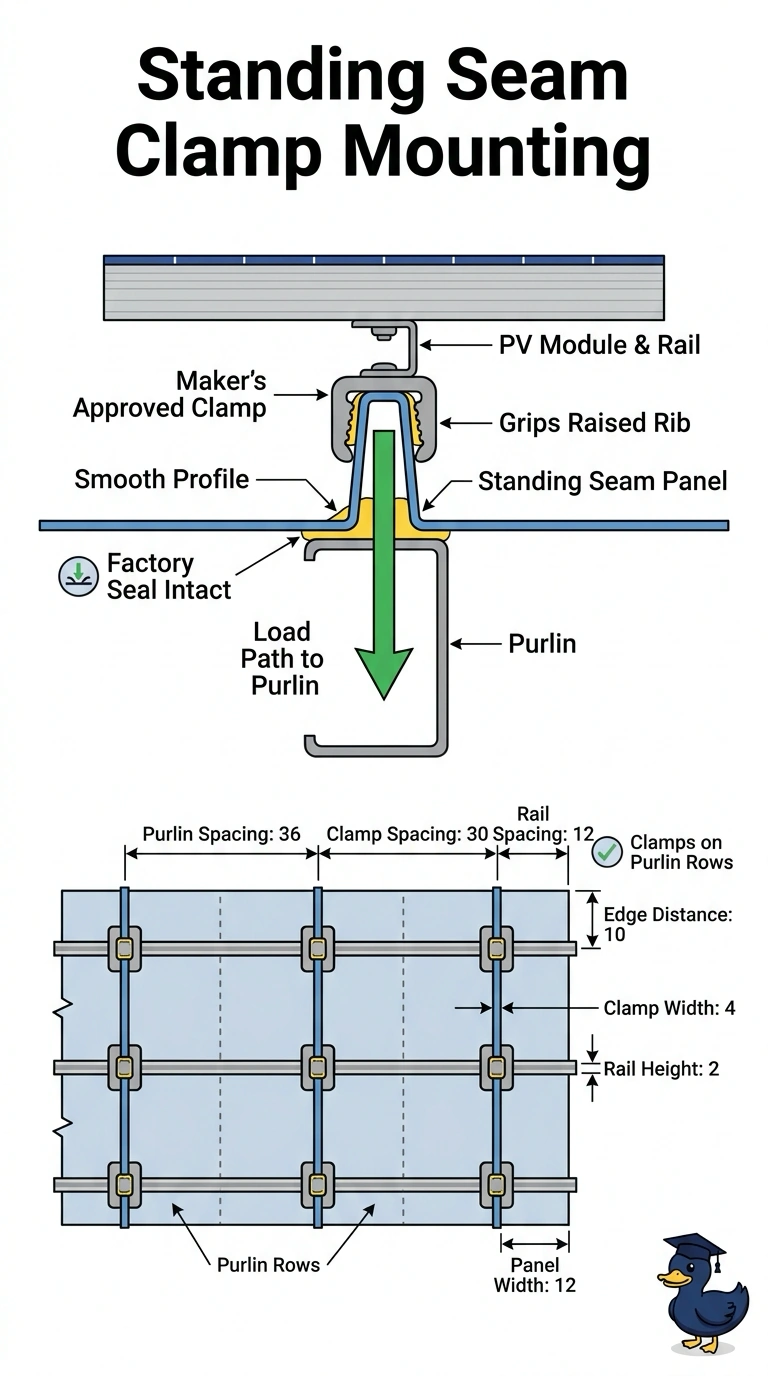
You can meet the limits with the maker-approved seam clamps, positioned over purlins so they avoid roof penetrations and support the panels at the framing. Nonpenetrating clamps between purlins still conflict with the panels’ point-load limit; flashed L-feet pierce the roof, and ballasted mounts exceed the roof’s slope limit.
Full Explanation
The maker-approved seam clamps, positioned over purlins, are the only system that meets all four constraints: they avoid roof penetrations, place support at the framing rather than between purlins, stay within the specified roof-mounting limits, and use no yard area. Approved clamps positioned between purlins avoid penetrations and otherwise suit the roof and site, but they conflict with the panels’ limited point-load rating between purlins; verifying seam capacity does not resolve that panel-support constraint. Flashed, gasketed L-foot attachments can transfer loads into purlins and use no yard space, but their fasteners pierce the roof pan, triggering the stated warranty exclusion. A ballasted rail system with protective pads and load spreaders avoids penetrations and yard use, but the 4/12 pitch exceeds the roofer’s 2/12 limit for ballasted mounts. Exam caveat: distinguish a mounting method’s general suitability from compliance with the project’s specific warranty and roof specifications; engineering approval alone does not waive either. Practical check: confirm the approved clamp model and installation details, then verify every clamp location against the purlin layout before installation.