
A designer sizes a 12-kW array for a house with a 10:12 clay tile roof, but the homeowner will not allow any penetrations through the 26-year-old tile. There is no attic access for rafter layout, the driveway is too narrow for a carport, and a level side yard large enough for the array sits unshaded beside the meter. Which mounting structure type matches these site facts best?
Select an answer to reveal the explanation.
Short Explanation
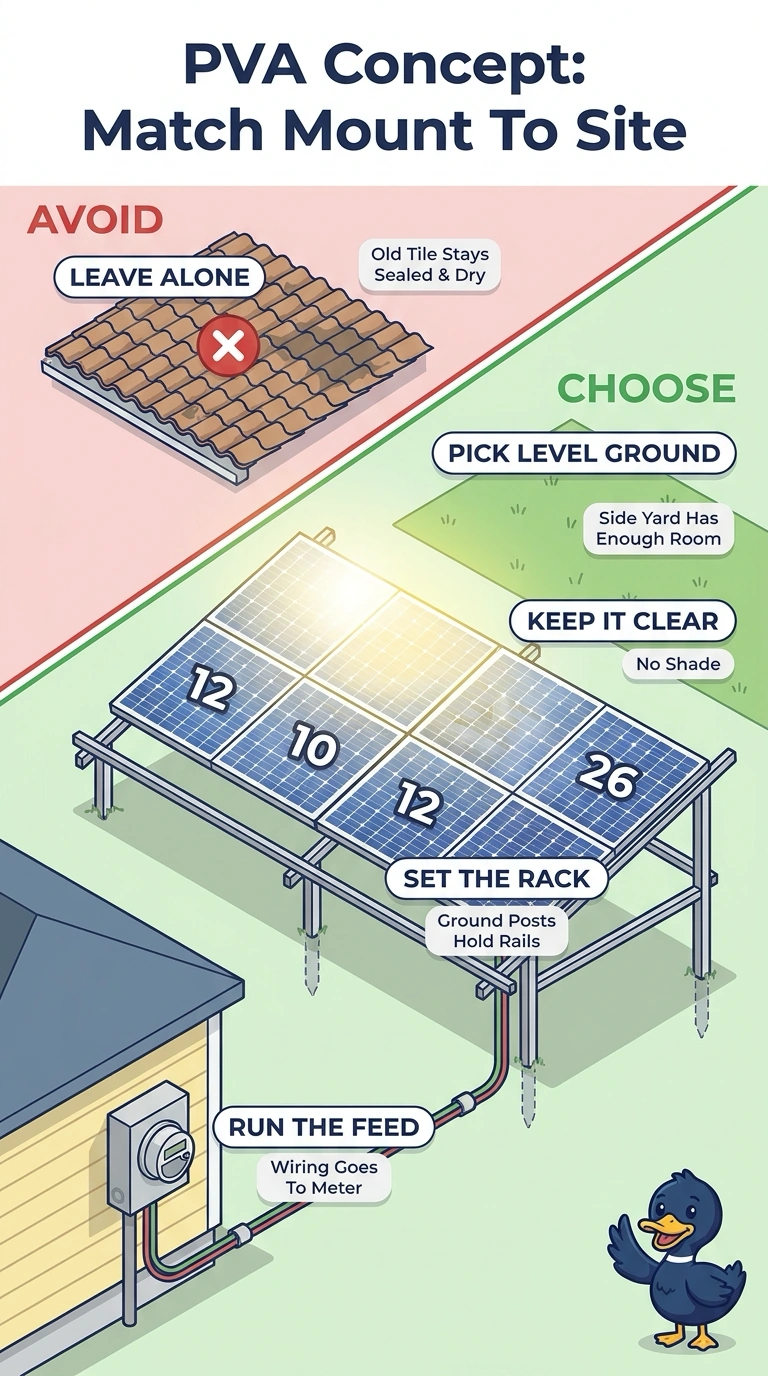
Putting the array on the ground clears every constraint at once, since nothing touches the aging tile and the side yard is ready to go. It's like setting a shed on open ground instead of balancing it on a weak porch. A ground mount also saves you from hunting for rafters you can't see.
Full Explanation
The ground-mounted rack is the best fit because the level, unshaded side yard has enough space, is beside the meter, and avoids attaching equipment to the aging tile roof. The array can be supported on an engineered foundation and connected to the service with an appropriately designed electrical run. Tile-replacement mounts can provide a conventional, secure rooftop attachment, and roof-side scanning may help locate rafters without attic access; however, anchoring the mounts to rafters requires roof penetrations, which the homeowner will not permit. A post-supported carport is a common way to mount an array while keeping the panels off the house, but this site’s driveway is too narrow for that structure, even if vehicle access is considered in the layout. Ballasted racks are commonly used on suitable low-slope roofs where penetrations are undesirable, but a 10:12 clay tile roof is not the low-slope roof surface those systems are designed for; ballast and rack geometry must suit the roof and its loading limits. Exam caveat: distinguish the mounting method from the array’s electrical connection—feeding the service does not determine whether the array is roof- or ground-mounted. Practical check: before final design, verify zoning setbacks, underground utilities, soil or foundation conditions, and the route and voltage drop for the feeder from the yard to the service.